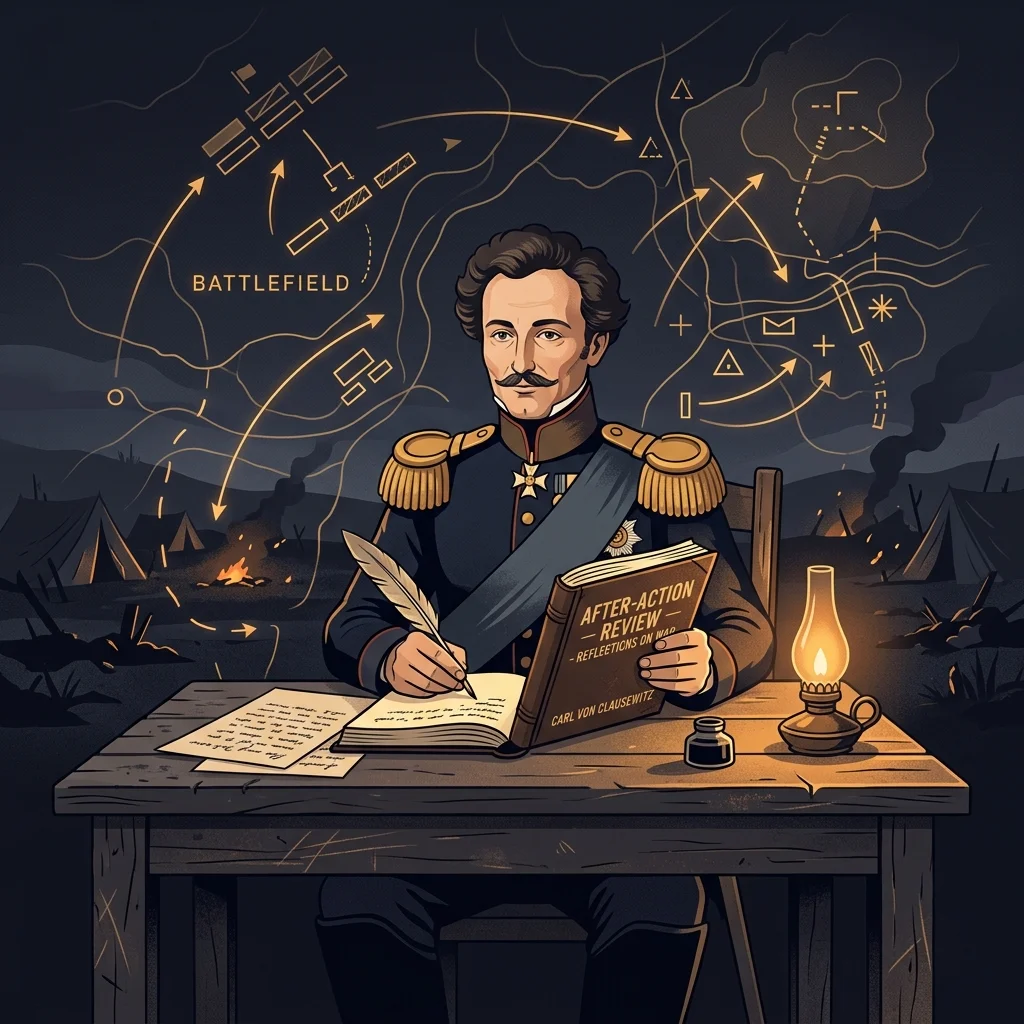
“Politics is the art of the possible, and to make the finest decisions, one must capture the brain’s clearest moment.” 🐎
Otto von Bismarck (1815–1898), known as the ‘Iron Chancellor’, unified the fragmented German states to proclaim the German Empire and dominated 19th-century European diplomacy through masterly Realpolitik. Amidst a daily deluge of complex diplomatic dispatches and hundreds of pressing state affairs, how did he avoid decision paralysis and consistently execute sharp, calculated statecraft?
Before sitting down at his desk each morning, Bismarck never missed his routine of riding a horse vigorously through foggy forest paths for an hour. Immediately after boosting cerebral blood flow and awakening his cardiovascular system through aerobic exertion, he sat at his desk and selected only the ‘TOP 3 Priorities’ of highest impact using a red quill pen. This obsession with filtering out trivial noise to concentrate entirely on the most crucial agenda served as the powerful decision engine that consolidated the German Empire and sustained its complex alliance network.
In today’s post, we analyze the brain science underlying Otto von Bismarck’s aerobic arousal and TOP 3 focus routine, presenting a 3-step practical action plan for modern individuals to prevent decision fatigue and unleash peak prefrontal executive function.
Historical & Academic Evidence
This content is based on Historical Verification from Otto von Bismarck's Autobiography *Gedanken und Erinnerungen* & A.J.P. Taylor's Biography *Bismarck: The Man and the Statesman* & Cognitive Neuroscience Research.
 BuildSelf
Inspired by historical greats? Make it your daily habit!
BuildSelf
Inspired by historical greats? Make it your daily habit!
















1. Aerobic Post-Exercise BDNF Secretion and Decision Simplification via the ‘Rule of 3’
When decision options exceed 4 or 5 items, a bottleneck occurs in the prefrontal executive control circuits, rapidly causing decision fatigue. Applying the ‘Rule of 3’ right after triggering Brain-Derived Neurotrophic Factor (BDNF) and dopamine release through morning aerobic exercise—as Bismarck did—preserves the prefrontal cortex’s glucose budget and prevents cognitive overload. Within the structured boundary of just three items, the brain filters out noise and unleashes peak cognitive energy on key problem-solving.
2. 3-Step Practical Routine for Modern Professionals
Step 1: 15 Minutes of Morning Aerobic Activation
Raise body temperature and boost cerebral blood flow for 15 minutes through morning jogging, brisk walking, stationary cycling, or Tabata stretching.
Step 2: Selecting & Recording TOP 3 Priority Tasks
Right after exercise, using a prefrontal cortex cleared by BDNF and dopamine, clearly write down in a notebook only the 3 high-impact tasks that must be accomplished today.
Step 3: Sequential Deep Work Execution & Deferring Trivialities
Immerse yourself completely in task #1 until finished, moving sequentially through the list, and defer checking inboxes, responding to messages, or organizing until all 3 are done.
3. Caution & Tips: Excluding Trivial Tasks Before TOP 3 Completion & Environmental Design
Tackling easy, trivial tasks first provides the brain with a momentary sense of ‘fake accomplishment’, but it ultimately delays the execution of core priority tasks. Until all TOP 3 tasks are finished, defer minor chores such as checking emails or organizing your desk. Rather than relying solely on raw willpower, the key to sustainability is pre-designing a physical environment that blocks distractions—like turning off email notifications.
📌 Frequently Asked Questions (FAQ)
What if I fail to complete one of the TOP 3 tasks during the day? ▼
That is completely fine. It is not a failure, but proof that you concentrated your energy on a high-impact, substantial project. Simply carry over the unfinished item as tomorrow morning's #1 task when your prefrontal cortex is freshest.
What are modern exercise alternatives to morning horse riding? ▼
15 minutes of jogging, stationary cycling, kettlebell swings, Tabata stretching, or brisk walking provide the exact same neurophysiological effect of boosting cerebral blood flow and releasing BDNF and dopamine.