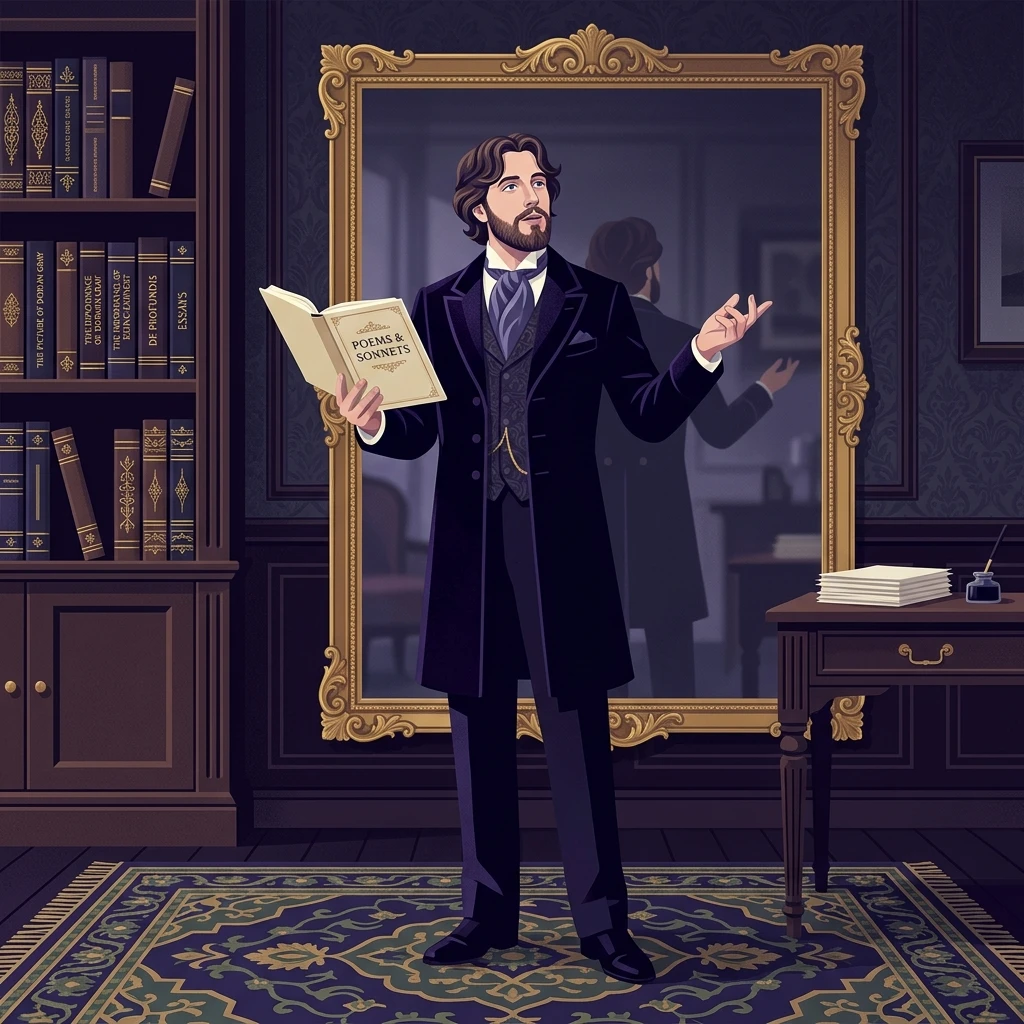
“As long as the universe operates in order, the place where humans seek truth must remain unshakeably consistent.” 🔭
Nicolaus Copernicus (1473–1543) was the Polish astronomer who triggered one of history’s greatest scientific revolutions by formulating the heliocentric model, placing the Sun rather than Earth at the center of the universe. Where did he conduct the decades of astronomical observations that produced his masterwork, ‘De revolutionibus orbium coelestium’? It was a narrow, isolated stone tower at the northwest wall of Frombork Cathedral.
For over thirty years, Copernicus refused to change his observation equipment or shift locations. Rather than seeking novel environments or changing study rooms, he strictly dedicated a single, invariant physical space solely to celestial calculation and observation. Neuroscientifically, this strict spatial isolation established powerful ‘Environmental Conditioning’. Sitting in that exact tower immediately signaled his prefrontal cortex to disengage peripheral distractions and enter deep mathematical immersion with zero cognitive warmup delay.
In today’s post, we analyze the brain science underlying Nicolaus Copernicus’s ‘fixed observatory tower’ routine and present a 3-step practical action plan for modern individuals to eliminate transition friction and enter Deep Work instantly.
Historical & Academic Evidence
This content is based on Historical Verification from Nicolaus Copernicus's *De revolutionibus orbium coelestium (On the Revolutions of the Heavenly Spheres)* & Cognitive Neuroscience Research.
 BuildSelf
Inspired by historical greats? Make it your daily habit!
BuildSelf
Inspired by historical greats? Make it your daily habit!

















1. Why Fixing Workspaces Eliminates Brain Warmup: Context-Dependent Memory and Spatial Conditioning
A primary drain on cognitive processing efficiency is ‘Context Switching Cost’. Working in varying environments forces the brain to spend precious prefrontal energy mapping new sensory cues, creating unnecessary cognitive warmup lag. However, dedicating an exclusive physical workspace strictly to a single intellectual task establishes ‘Context-Dependent Memory’ through hippocampal-prefrontal networks. The moment you sit at that designated station and encounter familiar visual triggers, the brain skips the warmup phase, triggering automatic associative retrieval and shifting prefrontal networks into Deep Work mode within seconds.
2. 3-Step Practical Routine for Modern Professionals
Step 1: Designating an Exclusive Fixed Workspace & Physical Isolation
Select and fix a dedicated desk or workspace at home or in the office that is strictly separated from non-work entertainment media and distinct from rest areas (bed, dining table).
Step 2: Blocking Non-Work Stimuli & Pre-Setting Target Action Tools
Keep smartphones away from the desk and strictly prohibit non-work web browsing. Place solely the books, notes, or software required for your target cognitive task to build space-action spatial conditioning.
Step 3: Scheduled Seating & Instant 5-Minute Deep Work Initiation
Sit at the anchor workspace during scheduled time blocks and immediately launch your first 5-minute task without hesitation, solidifying the neural spatial association in your prefrontal cortex.
3. Caution & Tips: Preventing Environmental Cue Contamination & Binding a Single Action
The primary pitfall when building a fixed workspace routine is contaminating environmental cues by engaging in non-work behaviors—such as watching videos, gaming, or scrolling social media—at that designated desk. Using a dedicated workspace for entertainment destroys the neural association between space and executive focus, causing the brain to hesitate rather than enter Deep Work. Strictly bind ‘a single core cognitive action’ to your anchor space. When taking a break or using a smartphone, physically step away to another area to preserve prefrontal spatial conditioning.
📌 Frequently Asked Questions (FAQ)
How can I apply this routine if I live in a small studio apartment and cannot physically isolate a workspace? ▼
If physical separation is impossible, establish artificial sensory conditioning triggers: use a 'dedicated desk lamp' turned on strictly during work, or unroll a specific 'desk mat' exclusively for focus sessions. Creating a consistent visual cue effectively trains prefrontal networks to induce focus even on a multi-purpose table.
What should I do if I sit at my designated desk but still feel distracted and fail to start within 5 minutes? ▼
Do not remain seated while engaging in distracted behavior. Instantly stand up and step out of the dedicated zone. Take a 3-minute break to stretch, then return to the desk to execute a single micro-task (e.g., typing a document title) to reset spatial focus without corrupting the conditioning.