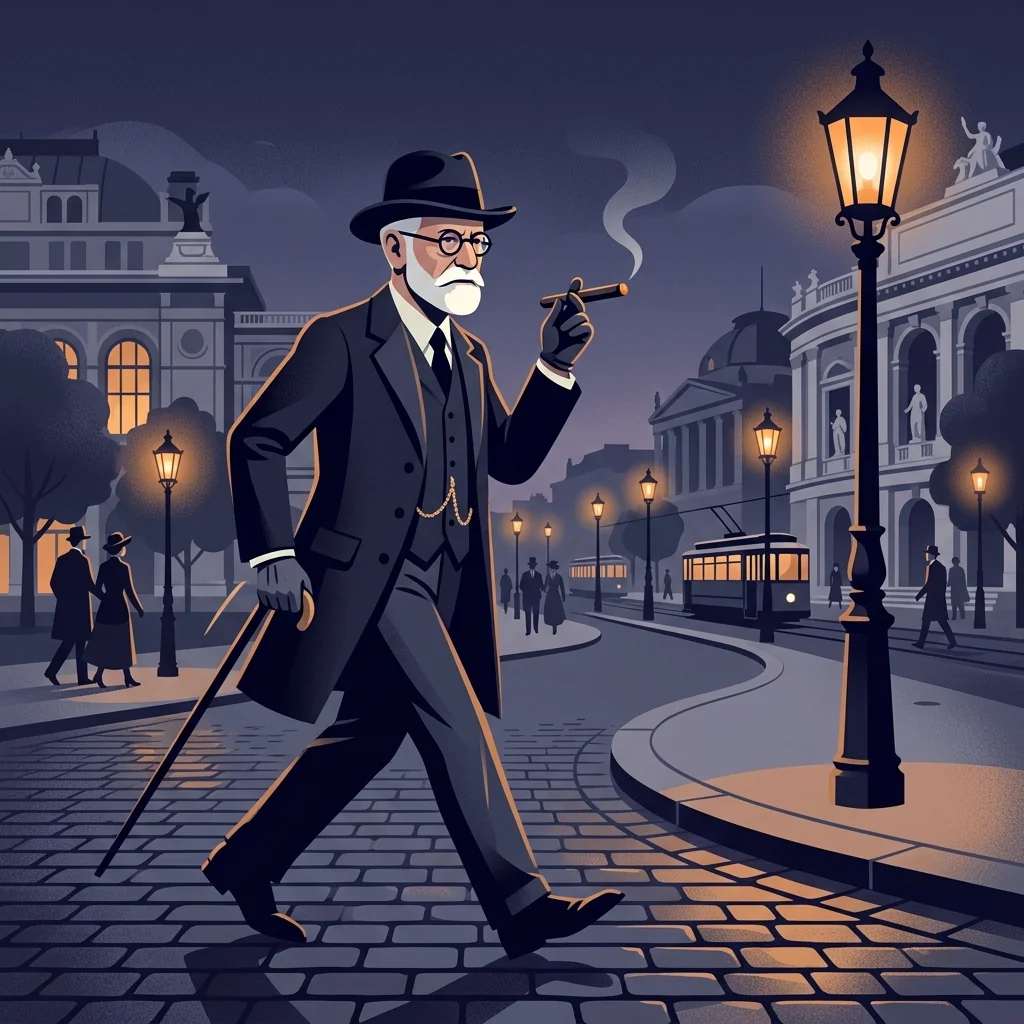
“The mind is like an iceberg, it floats with one-seventh of its bulk above water.” 🧠
Sigmund Freud (1856–1939) was the legendary founder of psychoanalysis whose seminal 1899 work, The Interpretation of Dreams, revolutionized humanity’s understanding of the unconscious mind, repression, and human behavior. Unlocking the deepest hidden realms of human psyche, what was the daily evening ritual that fueled his extraordinary clinical and theoretical insights?
Inside his famous consultation room at Berggasse 19 in Vienna, Freud spent grueling hours listening to and analyzing intense psychiatric cases. To recharge his exhausted prefrontal cortex after clinical hours, Freud maintained a strict evening habit: taking a brisk 3-mile (approx. 4.8 km) walk along Vienna’s Ringstraße boulevard at a furious speed. He viewed fast walking not merely as physical exercise, but as a vital release that cleared mental clutter and allowed unconscious thoughts suppressed during the day to bubble to the surface. Returning to his study immediately after his walk, Freud picked up his fountain pen, frantically capturing the psychological insights that emerged during his walk.
In today’s post, we unpack the brain science behind Sigmund Freud’s ‘brisk walking and unconscious journaling’ routine and present a practical framework for modern mental reset.
Historical & Academic Evidence
This content is based on Historical Verification from Sigmund Freud's *An Autobiographical Study*, Sigmund Freud Museum Archives (Vienna) & Cognitive Neuroscience Research.
 BuildSelf
Inspired by historical greats? Make it your daily habit!
BuildSelf
Inspired by historical greats? Make it your daily habit!

















1. Bilateral Stimulation and Prefrontal Emotional Regulation
Alternating foot strikes at a rapid cadence provide alternating sensory and motor input to the left and right hemispheres—a phenomenon known as Bilateral Stimulation. Used in clinical trauma therapy (such as EMDR), this rhythmic cross-lateral processing downregulates hyperactivation in the Amygdala, dampening emotional reactivity and inducing deep psychological calm. Furthermore, practicing handwritten journaling immediately after walking to externalize subconscious thoughts engages prefrontal cognitive networks, restoring Working Memory capacity and organizing mental residue.
2. 3-Step Practical Routine for Modern Professionals
Step 1: 30 Minutes of Energetic Brisk Walking
In the late afternoon or evening as your workday winds down, put on comfortable shoes and walk outdoors briskly for 30 minutes taking long strides. Keep your smartphone stowed in your pocket to block screen stimuli, focusing on the symmetrical left-right rhythm of your body.
Step 2: Seating at Your Desk & Deep Breathing Relaxation
Immediately post-walk, sit upright at your desk in a quiet room without powering on any digital screens. Close your eyes for 1 minute and practice deep box breathing (inhale for 4 seconds, exhale for 6 seconds) to shift body arousal into relaxed mental clarity.
Step 3: 5 Minutes of Unconscious Stream-of-Consciousness Journaling
Take out a notebook and fountain pen. Free from concerns over grammar or spelling, write down whatever passing sparks, thoughts, or emotions surfaced during your walk. Spend 5 minutes physically externalizing subconscious thoughts onto paper.
3. Caution: Avoiding Excessive Aerobic Over-exertion to Promote Pre-Bed Relaxation
This evening routine is not an intense physical workout intended for heavy calorie burn. Sprinting or pushing to gasping exhaustion overstimulates the sympathetic nervous system and disrupts brainwave stabilization. Maintain a brisk walk where you can still hold a conversation but feel your breath quicken slightly. To safeguard sleep quality, complete your walk at least 3 hours before going to bed.
📌 Frequently Asked Questions (FAQ)
Does walking in the morning or afternoon deliver the exact same benefits as an evening walk? ▼
Yes. Bilateral stimulation and prefrontal activation occur regardless of the time of day. However, while a morning walk boosts arousal to wake up the brain, Freud's evening walk uniquely flushes out cognitive clutter and emotional tension accumulated from grueling clinical or work demands throughout the day. Choose the timing that aligns best with your personal stress patterns.
Can I type my unconscious journal into a smartphone app or keyboard instead of writing by hand? ▼
Typing on digital devices forces the brain back into structured, logical processing mode due to screen visuals and interface mechanics. Conversely, pressing a pen onto physical paper engages fine motor control in fingertips, stimulating the brain's Reticular Activating System (RAS) far more deeply. Handwriting creates a superior physiological environment to draw out suppressed subconscious thoughts intuitively.