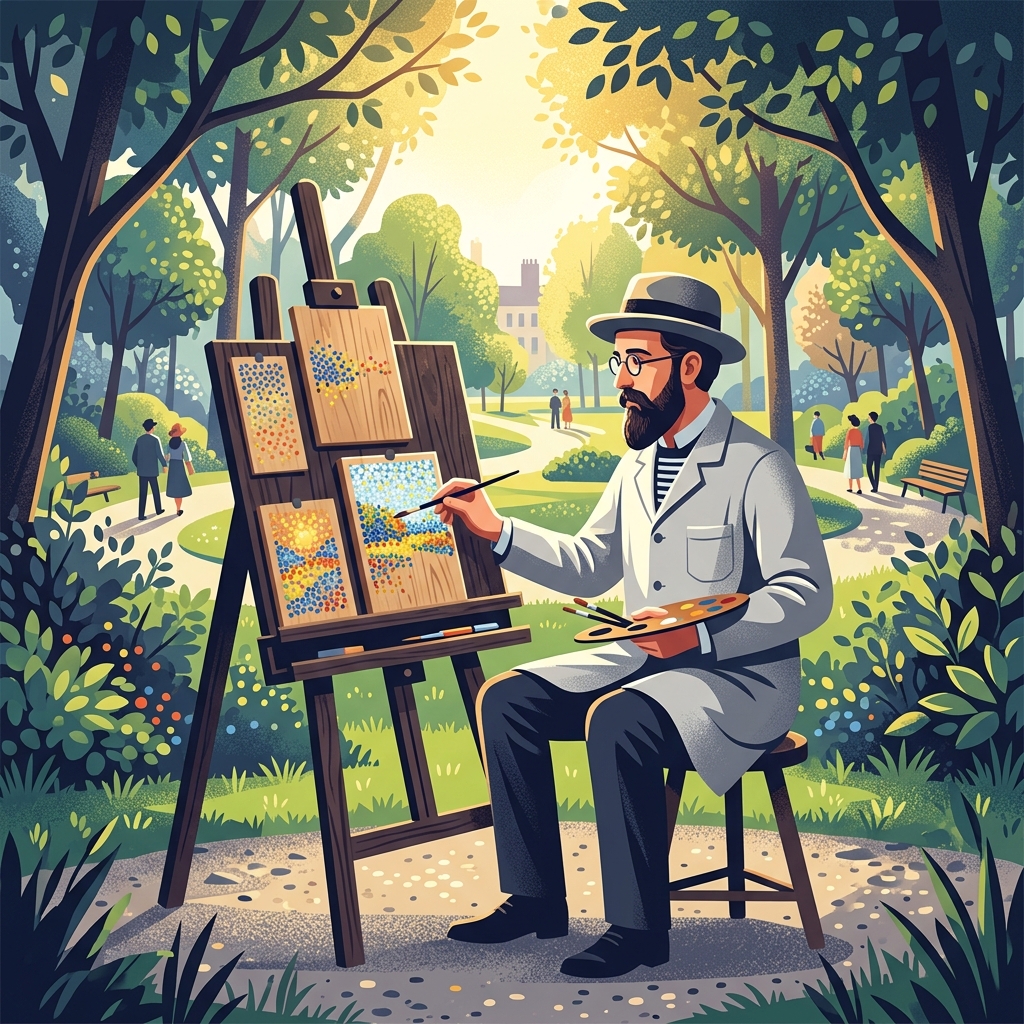
“Nature speaks to us in deep quiet. Focusing on the smallest mysteries of nature is the recharge station that awakens the brain’s clearest thoughts.” 🌱
Johann Wolfgang von Goethe (1749–1832) was the undisputed titan of German literature who authored world-literary masterpieces including Faust and The Sorrows of Young Werther. Beyond his literary brilliance, Goethe was a passionate polymath who conducted rigorous scientific research in botany, optics, and anatomy—publishing his groundbreaking 1790 scientific treatise, The Metamorphosis of Plants (Versuch die Metamorphose der Pflanzen).
What was the daily routine that nourished his creative capacity across both science and art? It was his strict morning habit of botanical observation. Every morning before beginning his administrative duties in Weimar, Goethe walked slowly through his garden and the nearby Park an der Ilm. Carrying a magnifying glass and paper collection envelopes in his coat pockets, he examined wild flora with microscopic precision—studying leaf venation patterns, petal symmetry, and seed spirals in search of the Urpflanze (the archetypal primal plant). To Goethe, this daily ritual was an essential cognitive sanctuary that cleared mental fatigue and primed his brain for deep creative insight.
In today’s post, we analyze the environmental psychology and cognitive neuroscience behind Goethe’s ‘botanical observation walk’ routine and present a modern 15-minute protocol to restore your prefrontal focus.
Historical & Academic Evidence
This content is based on Historical Verification from Johann Wolfgang von Goethe's *Dichtung und Wahrheit* & *The Metamorphosis of Plants*, Weimar Museum Archives & Cognitive Neuroscience Research.
 BuildSelf
Inspired by historical greats? Make it your daily habit!
BuildSelf
Inspired by historical greats? Make it your daily habit!

















1. Nature Exposure and the Brain Science of Attention Restoration Theory (ART)
Analyzing data on screens, reading dense text, and executing complex work strategies trap the prefrontal cortex in a state of continuous energy depletion known as Directed Attention. Prolonged exposure causes Directed Attention Fatigue, sharply degrading problem-solving capacity and focus. According to Stephen and Rachel Kaplan’s Attention Restoration Theory (ART), observing natural elements—such as botanical fractal geometry, rustling leaves, or seed spirals—engages ‘Soft Fascination’ (Involuntary Attention), requiring zero cognitive effort. A 15-minute slow morning walk spent examining nature resets prefrontal fatigue and downregulates cortisol, sustaining intuitive clarity and deep insight throughout the day.
2. 3-Step Practical Routine for Modern Professionals
Step 1: Locating a Nearby Green Space & Selecting an Observation Subject
Find a garden, quiet park, or tree-lined walking path where vegetation thrives. Stow digital devices securely in your pocket to block notifications and create an environment that invites total immersion in nature.
Step 2: Micro-Observation of Plant Patterns and Fractal Geometry
Pause before a leaf, petal, or seed pod. Examine the vein architecture, surface texture, subtle color gradients, or spiral patterns closely for at least 10 seconds, feeding natural fractal inputs directly into your visual cortex.
Step 3: 5 to 10 Minutes of Slow Strolling & Completing Prefrontal Attention Restoration
Stroll casually for an additional 5 to 10 minutes, letting your gaze absorb tree branches and sky contrast softly. This disengages Directed Attention completely, allowing the attention restoration process to refresh prefrontal networks.
3. Caution: Protocol for Engaging Natural Fractals to Restore Prefrontal Cognitive Fatigue
Digital text and screen infographics enforce intense Directed Attention, rapidly draining prefrontal energy. Observing natural fractal geometry—such as leaf veins, bark textures, or seed spirals—for 15 minutes activates the brain’s attention restoration mechanism without cognitive effort. To achieve a complete cognitive reset, refrain from checking smartphone screens during the walk, allowing your focus to rest gently on natural objects.
📌 Frequently Asked Questions (FAQ)
Is observing indoor house plants or potted flowers effective for attention restoration? ▼
Yes. Examining micro-patterns and leaf venation on indoor house plants engages Soft Fascination, reducing prefrontal fatigue. However, outdoor observation paired with natural sunlight exposure and gentle walking delivers maximum systemic cognitive and neurological restoration.
Do I genuinely need to carry an actual magnifying glass or collection envelopes like Goethe? ▼
Using a physical magnifying glass heightens visual resolution and stimulates the visual cortex intensely, but it is not strictly mandatory. Simply engaging in a naked-eye, careful examination of leaf veins, flower petals, or seed patterns is fully sufficient to capture Attention Restoration Theory (ART) benefits.