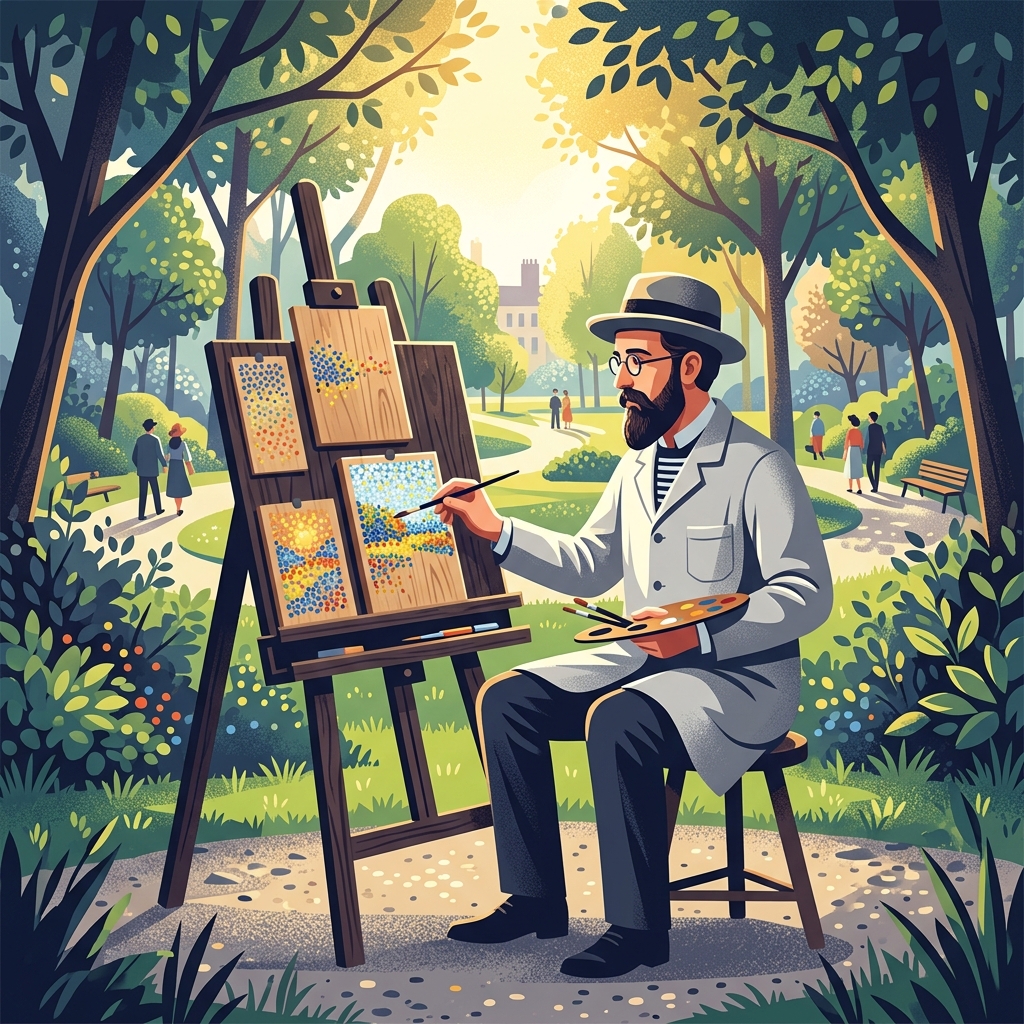
“When you lay down evaluation and censorship, the brain finally produces its greatest melodies.” 🎼
George Frideric Handel, the master composer who left an indelible mark on music history with masterpieces like ‘Messiah’ and ‘Water Music’, possessed an extraordinary creative drive. Despite facing severe stress, a stroke, and financial ruin, he composed countless monumental works at an explosive speed. His secret lay in a unique improvisational sketch routine he never skipped each morning.
Before embarking on a major composition, Handel walked leisurely through a quiet garden every morning to clear his head and calm his mind. After the walk, he sat down at the harpsichord or organ and played freely for 30 minutes without self-criticism or evaluation, letting his fingers lead the way. The fleeting melodies and ideas that surfaced during this time became the grand motifs of masterpieces that moved humanity.
This routine was an advanced cognitive strategy that liberated the brain from ‘self-censorship’ and unlocked latent creativity. In today’s post, we introduce the cognitive neuroscience principles of Default Mode Network (DMN) activation and dorsolateral prefrontal cortex (dlPFC) deactivation embedded in Handel’s garden walks and improvisational sketches.
Historical & Academic Evidence
This content is based on Charles Burney, *An Account of the Musical Performances in Westminster-Abbey in Commemoration of Handel* (1785), Daniel Snowman's biography of Handel & Cognitive Neuroscience Research on Musical Improvisation.
 BuildSelf
Inspired by historical greats? Make it your daily habit!
BuildSelf
Inspired by historical greats? Make it your daily habit!

















1. Creative Synergy of Default Mode Network (DMN) Activation and Internal Critic (dlPFC) Deactivation
A morning walk in the garden activates the brain’s ‘Default Mode Network (DMN)’, promoting the ‘Incubation Effect’ where unconscious ideas freely connect.
Performing a 30-minute uninhibited improvisation after the walk temporarily dampens activity in the ‘Dorsolateral Prefrontal Cortex (dlPFC)’, which is responsible for self-criticism and censorship, thereby inducing a ‘Flow State’ that opens inner creative pathways. This scientific routine maximizes Divergent Thinking from the spontaneous unconscious rather than controlled logic, bringing grand inspiration into reality.
2. 3-Step Practical Routine for Modern Professionals
Step 1: 15-Minute Morning Garden/Nature Walk (DMN Activation)
Take a light 15-minute walk before starting work, setting aside intentional thoughts and focusing on sensory perceptions and nature sounds to rest your brain.
Step 2: 30-Minute Uncensored Free Sketching (dlPFC Deactivation)
Sit in front of an instrument, pen, or keyboard, completely halt all self-evaluation, and spontaneously pour out ideas surfacing in your mind for 30 minutes.
Step 3: Strict Separation of Creation and Evaluation
Prohibit editing during the improvisational sketching period, and allocate a separate time afterward to select and refine ideas.
3. Modern Focus Guide to Turning Off Self-Criticism and Harnessing Unconscious Inspiration
Rather than demanding perfection from the start when generating ideas, strictly separate the creation stage from the evaluation stage. The key is to first secure time for uninhibited sketching without judgment.
📌 Frequently Asked Questions (FAQ)
Can people who cannot play a musical instrument apply Handel's improvisational sketch routine? ▼
Yes, absolutely. Instead of playing an instrument, you can achieve the exact same neuroscientific benefits by engaging in a 30-minute 'Brain Dump' or 'Mind Map Sketch', rapidly writing down thoughts as they come without erasing or editing.
Why shouldn't self-criticism (evaluation) happen simultaneously with creation? ▼
Because the dorsolateral prefrontal cortex (dlPFC), activated during self-criticism, suppresses creative spontaneity. Running the creation phase and evaluation phase at the same time causes cognitive overload, blocking creative ideas.