“Be your own severest critic. Only when you view yourself objectively on tape can you achieve true perfection.” 🕺
Michael Jackson (1958–2009), the ‘King of Pop’ and supreme cultural icon of the 20th century. His breathtaking stage performances—featuring signature moves like the Moonwalk and the Anti-Gravity Lean—captivated the globe. Were these legendary feats born purely of innate talent?
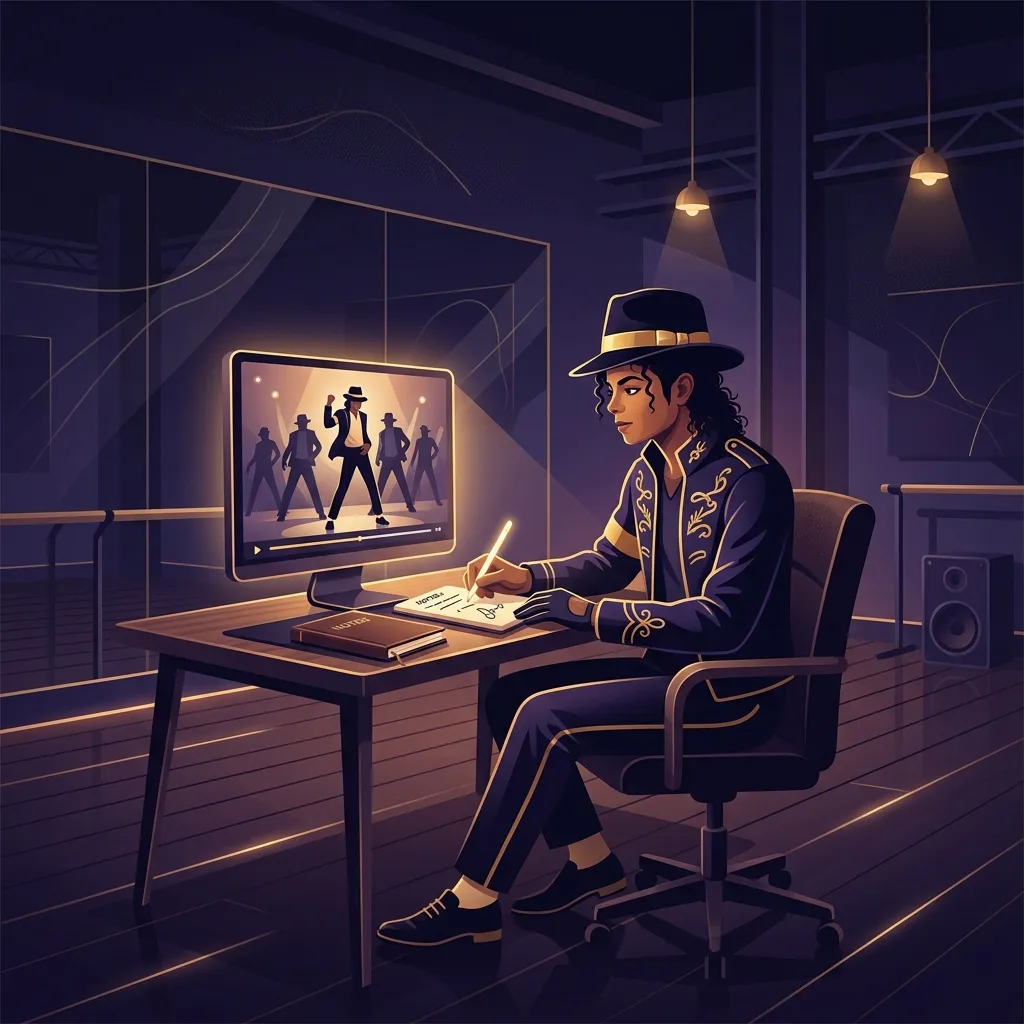
Behind his seamless brilliance was a rigorous ‘Video Practice Feedback Analysis’ habit. Every night after rehearsal, Jackson took home recorded Beta/VHS tapes (later DVDs and digital files) of his performance and studied them frame-by-frame until dawn. He examined every micro-detail: the precise angle of his fingertips, eye-contact duration, sub-second rhythm alignment, and interaction with stage lighting. By bypassing subjective feeling and relying entirely on objective visual data, he maintained flawless execution, remaining the greatest live performer in history.
In today’s post, we examine the cognitive neuroscience behind Michael Jackson’s video practice feedback routine and explore a practical 3-step guide to correcting your work, presentations, sports, or habits with surgical precision.
Historical & Academic Evidence
This content is based on Michael Jackson Rehearsal Archives & *K. Anders Ericsson (Deliberate Practice Research)* & *Motor Control & Metacognition Science*.
 BuildSelf
Inspired by historical greats? Make it your daily habit!
BuildSelf
Inspired by historical greats? Make it your daily habit!

















1. Overcoming Cognitive Illusions: ‘Metacognition’ and Deliberate Practice
Humans experience a distinct asymmetry between internal proprioceptive feelings and external objective reality. Reviewing your performance on objective video footage powerfully stimulates the brain’s Metacognition centers in the Prefrontal Cortex. According to K. Anders Ericsson’s ‘Deliberate Practice’ theory, peak mastery requires immediate, accurate error feedback. Video feedback activates error-correction circuits in the Cerebellum, dismantling subjective illusions to calibrate physical execution to perfection.
2. 3-Step Practical Routine for Modern Professionals
Establish a Video Capture Setup for Performance Recording
Record your targeted practice (presentation delivery, athletic form, dance, or workflow execution) objectively using a smartphone or tripod.
Conduct Daily Frame-by-Frame Video Monitoring and Error Logging
Play back the footage and systematically log visual error metrics (posture, pacing, eye contact, tone) rather than relying on internal feelings.
Target a Single Core Error for Focused Correction
Select 1 or 2 critical errors from your review log and deliberately focus on correcting them during your next practice or execution session.
3. Rule: Eliminate Emotional Self-Criticism to Focus Solely on Objective Error Data
The critical pitfall in video feedback is emotional self-judgment or narcissism. Like Jackson, isolate factual observations—such as ‘gaze off-center by 5 degrees’ or ‘vocal phrasing delayed by 0.2 seconds’. Logging concrete, objective metrics engages the brain’s analytical learning pathways.
📌 Frequently Asked Questions (FAQ)
Is video practice analysis effective for corporate work or academic pursuits beyond sports and dance? ▼
Yes, exceptionally so. Recording and reviewing presentation rehearsals, mock interviews, or pitch speeches reveals unconscious filler words, nervous posture, and pacing flaws, allowing rapid refinement.
I feel awkward and uncomfortable watching myself on video. How can I overcome this? ▼
Cringe is a universal initial response. Practice viewing the footage in the third person, treating your image as 'external performance data'. After 3 sessions, discomfort fades and actionable improvements become crystal clear.