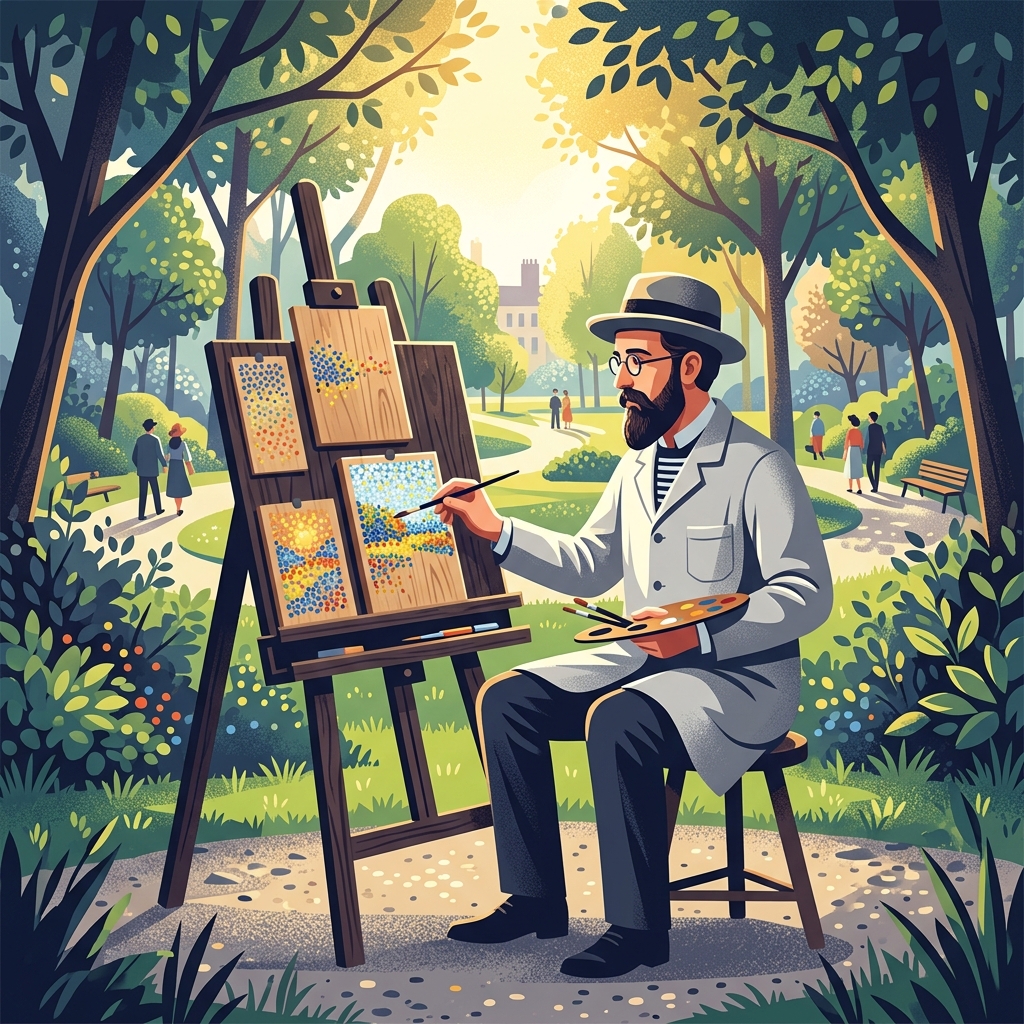
“Light changes constantly, revealing its pure beauty only to those who gaze upon it.” 🎨
Claude Monet (1840–1926), the patriarch of French Impressionism, opened a radiant new chapter in Western art history. Giving rise to the term Impressionism through his iconic ‘Impression, Sunrise’ and creating legendary series like ‘Water Lilies’ (Nymphéas) and ‘Rouen Cathedral’ in his Giverny garden, he was a global master who refined visual perception to its absolute zenith.
Regardless of the season, Monet rose from bed every morning at 3:30 AM. Donning his morning coat and walking into his Giverny garden, he stood quietly watching the delicate dynamics of pre-dawn light transition from the cool blue hour into a golden sunrise. Monet confessed in letters to friends that receiving these subtle gradations of natural brightness and color wavelengths directly into his visual cortex before dawn—rather than sitting under candle or lamp light—prepared his brain to discern true color contrasts at the canvas during the day.
In today’s post, we examine the optic nerve activation mechanisms within Monet’s ‘dawn light observation’ routine and present a 3-step guide for modern individuals to maximize morning creative focus.
Historical & Academic Evidence
This content is based on Historical critical biographies and autobiographical records of Claude Monet & Cognitive Neuroscience research.
 BuildSelf
Inspired by historical greats? Make it your daily habit!
BuildSelf
Inspired by historical greats? Make it your daily habit!

















1. Awakening of Intrinsically Photosensitive Retinal Ganglion Cells (ipRGCs) and Visual Contrast Sensitivity
Natural blue-wavelength light appearing in the sky right before sunrise strongly stimulates intrinsically photosensitive retinal ganglion cells (ipRGCs) in the retina. This awakens the suprachiasmatic nucleus (SCN) in the brain, suppressing melatonin secretion and signaling healthy cortisol release to awaken the mind. Simultaneously, observing subtle tonal shifts in dim light maximizes visual contrast sensitivity in the visual cortex. Brains warmed up through this ritual achieve peak cognitive discrimination and structural creativity.
2. 3-Step Practical Routine for Modern Professionals
Pre-Dawn Waking and Limiting Artificial Light
Wake up about 20 minutes before scheduled sunrise (or around 5:00 AM–6:00 AM). Avoid turning on your smartphone or bright indoor artificial lights immediately, helping your retina prepare to absorb subtle changes in natural light.
Opening Windows or Observing Dawn Outdoors
Open window frames completely or step onto a balcony or yard to look at the dim dawn sky. Gently gaze at the sky during the blue hour for 10 minutes, observing the color transitions with relaxed eyes.
Creative Visualization After Visual Relaxation
After finishing the visual warm-up, return inside without looking at digital screens. Sit at a desk bathed in morning sunlight and spend 5 minutes mentally imagining the structural layout of today's projects. Your warmed-up visual acuity will help shape creative structures.
3. Window Glass Filter Effects and Outdoor Exposure Tips
Modern multi-coated window glass reflects and blocks up to 80% of key natural light wavelengths needed to awaken the brain. Therefore, rather than staying indoors behind closed windows, fully open the balcony windows to receive direct light, or step out into a yard or garden to expose your body to crisp morning air and natural dawn sunlight.
📌 Frequently Asked Questions (FAQ)
Does gazing at dawn through a closed window glass produce the same effect? ▼
When windows are closed, coatings on modern glass filter out and reflect up to 80% of natural blue and UV light wavelengths essential for brain arousal. To fully stimulate ipRGCs in the retina and suppress melatonin, opening windows completely to receive direct natural sunlight provides far superior physiological benefits.
Does dawn observation still work on cloudy or rainy mornings? ▼
Yes. Even on overcast or rainy mornings, natural light penetrating through clouds reaches ground lux levels about 10 times higher than typical indoor artificial lighting. Natural light wavelengths scattered through the atmosphere sufficiently stimulate retinal ganglion cells. Gazing at the sky for 10 minutes on cloudy days yields the same cognitive warm-up benefits.