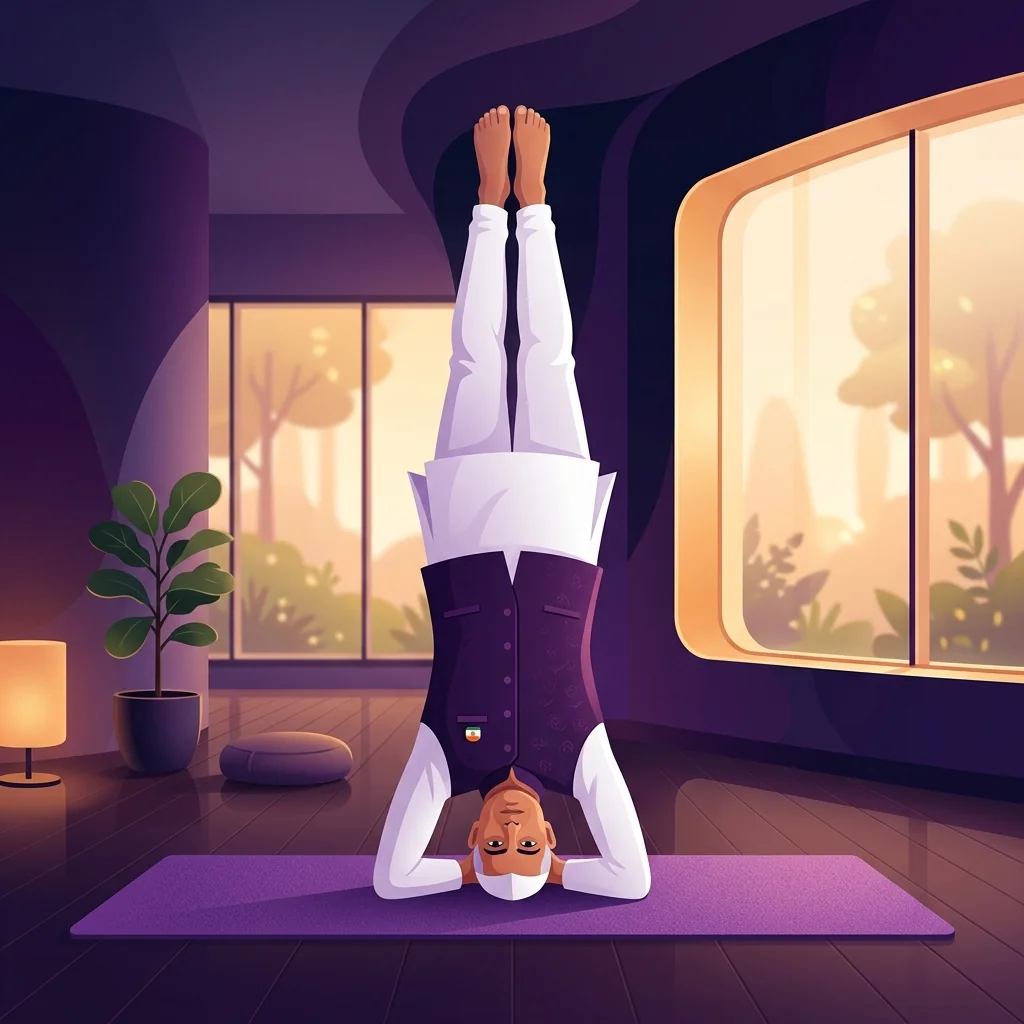
Jawaharlal Nehru (1889–1964), who led India’s non-violent independence struggle alongside Mahatma Gandhi and served as its founding Prime Minister to build the firm foundation of modern India. An icon of elegant white attire and dignified intellect, he nevertheless endured long, cold periods of solitary confinement throughout his life. 🧘
Serving as India’s leader for 17 years from 1947 until his passing in 1964, Nehru established the bedrock of secular democracy and the Non-Aligned Movement. During the independence movement against British colonial rule, he was arrested 9 times and spent a cumulative 9 long years in cramped prison cells. On cold cell floors where sunlight barely penetrated, his physical health and mental endurance were pushed to the brink of collapse.
Yet instead of breaking, he greeted every morning by placing his head on the cold floor and raising his body vertically in the yoga headstand posture known as ‘Sirsasana’. Amid intense suffering and isolation, Nehru restored his daily equilibrium through headstands, creating a powerful brain-activation routine that helped him navigate immense diplomatic geopolitical challenges with calm rationality until the end of his leadership.
In today’s post, we reveal the science of increased cerebral blood flow hidden within Nehru’s headstand habit—which transformed his prison cell into a sanctuary of physical and mental rehabilitation—and outline a practical inverse-gravity calming routine for modern individuals.
Historical & Academic Evidence
This content is based on Jawaharlal Nehru historical critical biography & autobiographical records verification & Cognitive Neuroscience research.
 BuildSelf
Inspired by historical greats? Make it your daily habit!
BuildSelf
Inspired by historical greats? Make it your daily habit!
















1. Inverse Gravity Effects: Promoting Cerebral Blood Flow and Deactivating the HPA Stress Axis
When we stand or sit in a chair all day, gravity pulls blood flow toward the lower body and subjects spinal intervertebral discs to continuous static compression. This heightens autonomic nervous system tension and induces mental fatigue.
Inverted postures reverse the gravitational vector, temporarily surging oxygen and blood flow to the brain. Increased cerebral perfusion flushes cellular waste and supplies vital nutrients to brain tissue. Neurologically, this inhibits hyperactivation of the HPA axis (Hypothalamic-Pituitary-Adrenal Axis), lowering cortisol secretion and engaging the parasympathetic nervous system. Additionally, it decompresses cervical and lumbar vertebrae, completely resetting static muscular tension in the erector spinae.
2. 3-Step Practical Routine for Modern Professionals
Securing a Safe Space and Yoga Mat
Select a wide, flat floor free of obstacles and lay down a yoga mat. If attempting for the first time or if upper-body strength is weak, position yourself near a wall to establish a supportive safety barrier.
Level-Appropriate Inverted Posture Alignment
Experienced practitioners place interlocked hands and the crown of the head on the mat, slowly raising the legs into a full headstand. Beginners or those with neck discomfort should perform a lower-intensity inversion like Downward-Facing Dog, drawing the head gently toward the knees.
Focusing on Cerebral Blood Flow and Deep Breathing
Gently close your eyes, focusing your awareness on the sensation of inverted gravity and warm blood pool in your head. Relax your shoulders and neck without squeezing, maintain slow abdominal breathing for 1 to 3 minutes, and smoothly return to resting position.
3. Safe Spinal Alignment is the Beginning of Brain Reset
While headstands are an effective brain relaxation technique, unpracticed or forced movements can trigger neck disc injuries and strain the autonomic nervous system. Performed cautiously and adapted to your physical condition like Nehru, it effectively relieves spinal disc compression and stably supplies fresh energy to the brain.
📌 Frequently Asked Questions (FAQ)
Is it safe for individuals with neck pain or spinal disc issues to practice headstands? ▼
No, individuals suffering from cervical or thoracic disc disorders should avoid traditional headstands where the head directly supports body weight. Instead, you can achieve safe inverse blood flow without disc strain by lying on your back with hips against a wall and extending legs vertically, or placing a cushion under your hips while elevating your legs.
When is the most suitable time of day to perform headstands? ▼
Morning on an empty stomach or right before starting work is most ideal. An inverted posture in the morning instantly supplies oxygen to dormant brain cells, clearing mental fog and dispelling sleepiness. However, avoid practicing within at least 2 hours after a meal, as inversion immediately following food intake can cause indigestion.