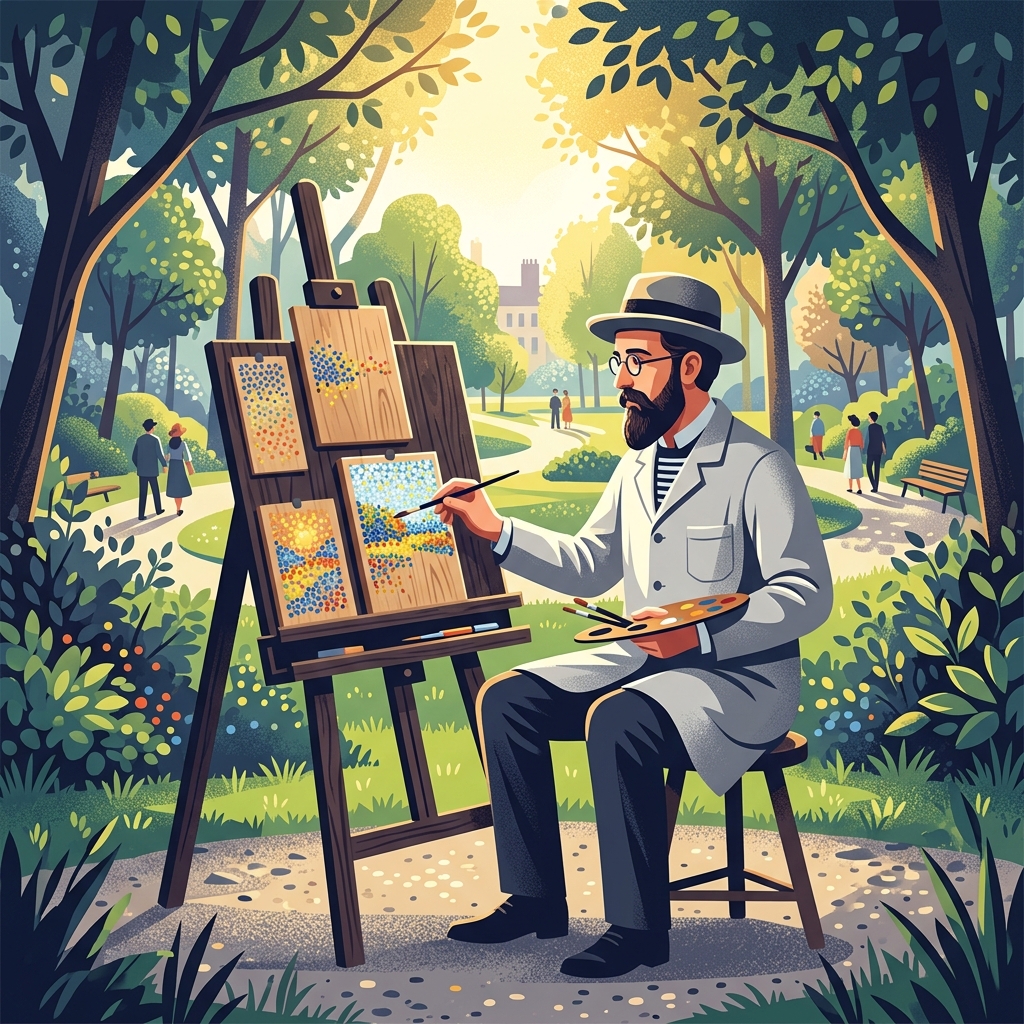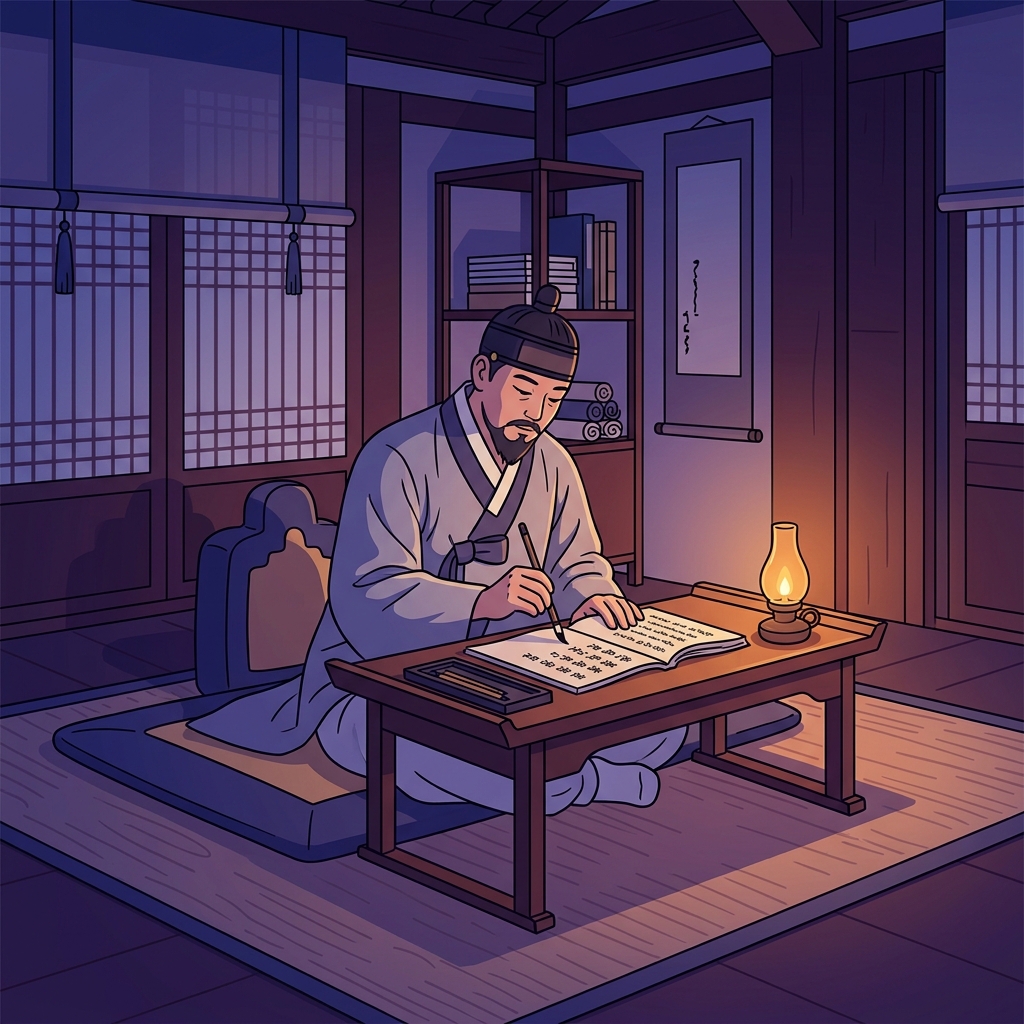
“Fragments captured by the eyes and hands during the day are completed with critical reflection in the stillness of the night.” ✍️
Yeonam Park Ji-won, a prominent Realist (Silhak) scholar of the late Joseon Dynasty, was a monumental man of letters who spearheaded social reform with an unconventional prose style and sharp critical consciousness. Traveling to Qing Dynasty China in 1780 with the diplomatic mission for Emperor Qianlong’s birthday, he was a reformist intellectual seeking to rectify the rigid dogmatism of Joseon society and actively adopt advanced technologies to enrich people’s lives.
While riding horseback during the day, Park Ji-won scribbled quick fragments of landscapes, foreign technologies, and conversations onto small note sheets (horseback notes). At night, sitting beneath a lamp in his quarters, he meticulously reconstructed these brief notes into deeply analytical journal entries that questioned the institutions and customs of his era. This became Yeolha Ilgi (Jehol Diary), a crown jewel of Korean literature. As preserved in the Jangseogak archives at the Academy of Korean Studies and recorded in Yeonamjib, nighttime review journaling was Park Ji-won’s reflection routine to elevate daily experiences into profound cognitive wisdom and maximize metacognition.
In today’s post, we introduce the neuroscientific principles of Memory Reconsolidation and Metacognitive Retrospective embedded in Park Ji-won’s nighttime review routine.
Historical & Academic Evidence
This content is based on Park Ji-won's *Yeolha Ilgi* (Jehol Diary) Self-Preface & *Yeonamjib* Archive & Academy of Korean Studies Jangseogak Verification & Cognitive Neuroscience Research on Memory Reconsolidation and Metacognition.
 BuildSelf
Inspired by historical greats? Make it your daily habit!
BuildSelf
Inspired by historical greats? Make it your daily habit!

















1. Nighttime Retrospective Effects Brought by Memory Reconsolidation and Metacognitive Activation
Retrieving, analyzing, and describing short-term memories gathered during the day within a quiet nighttime environment strongly stimulates the neuroscientific mechanisms of ‘Memory Reconsolidation’ and ‘Metacognition’.
Combining critical thinking and questioning (‘Why is this so?’) with factual journal writing strengthens connectivity between the hippocampus (Hippocampus) and prefrontal cortex (Prefrontal Cortex), deeply encoding experiences into long-term memory. This builds reflective wisdom that evaluates the day objectively and solves complex problems at a higher level.
2. 3-Step Practical Routine for Modern Professionals
Capture Core Daytime Observations and Experiences in Brief Words or Phrases
Jot down striking insights, conversations, challenges, or realizations as short keywords in a notepad or memo app during the day.
Meticulously Reconstruct Daytime Notes Under Evening Lamp Light
At the end of the day, open your notes and thoughtfully reconstruct the scenario, context, and emotional nuance into detailed sentences.
Complete Reflection Notes by Combining 'Why' Questions with Improvement Ideas
Go beyond factual records by asking questions such as 'What caused this?' and 'How can I develop this further?' to complete metacognitive processing.
3. Move Beyond Mechanical Recording and Add ‘Questions and Reflection’
The core of Park Ji-won’s routine is not listing events that occurred, but uncovering the deeper meaning and questions behind them. Merely listing daily tasks fails to stimulate cognitive circuits; reflect deeply on ‘why it happened’ and ‘what was learned’ regarding one major experience of the day.
📌 Frequently Asked Questions (FAQ)
How can busy modern individuals apply this if writing a detailed review every night feels burdensome? ▼
You do not need to write a masterpiece like Park Ji-won. Simply picking 1 key experience and spending 5 minutes applying the formula '1 line of daytime note + 3 lines of nighttime reflection (experience, reason, takeaway)' delivers full memory reconsolidation benefits.
Is it neuroscientifically more effective to write a journal at night or in the morning? ▼
Writing at 'night' right before short-term memories gathered during the day undergo cognitive consolidation into long-term memory during sleep is significantly more effective for memory organization and emotional resetting.