“Study facts, observe facts, accumulate facts.” 🔔
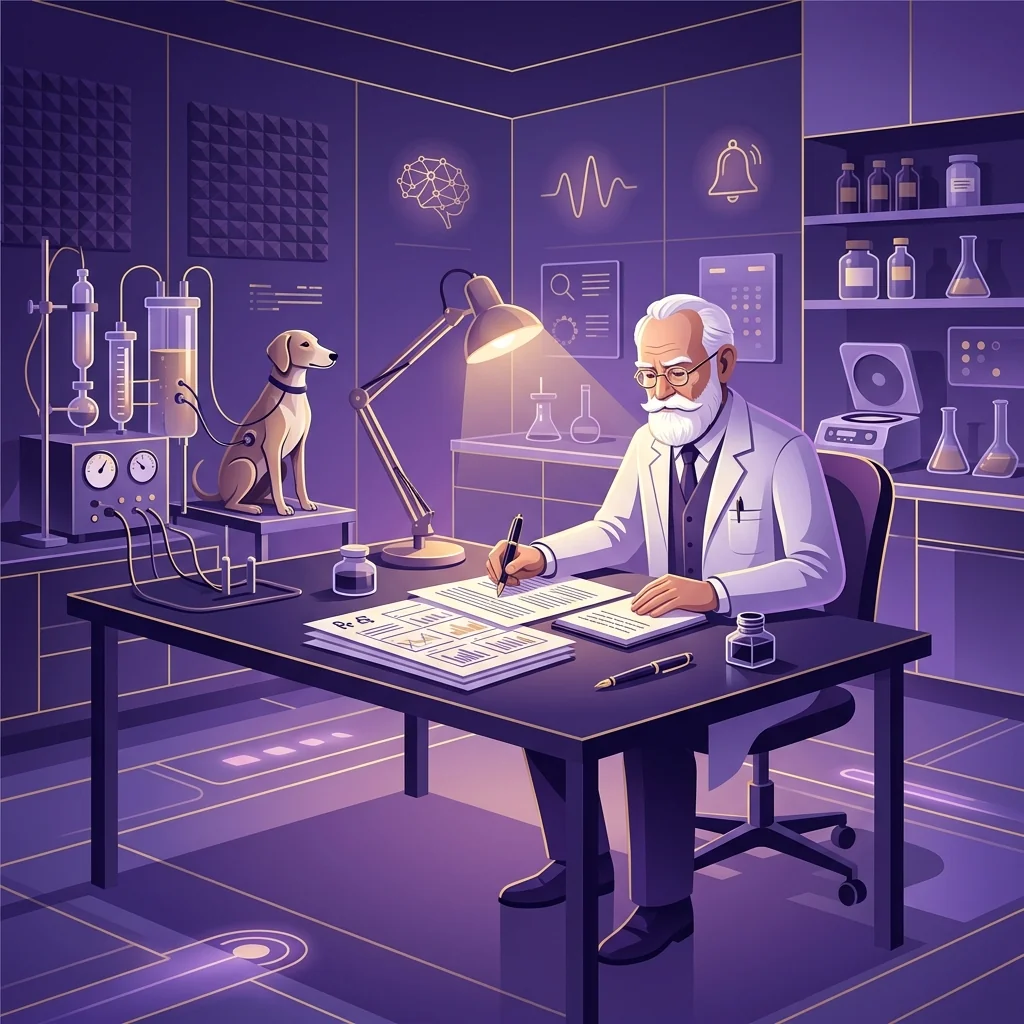
Ivan Pavlov (1849–1936) was a great physiologist who fully illuminated human learning and behavioral patterns through observations of canine salivation, becoming Russia’s first Nobel Laureate in Physiology or Medicine. How were his precise observation results, which clearly captured the unconscious learning mechanisms of animals, born?
Pavlov realized that his experimental dogs were easily distracted by minor external stimuli—footsteps outside the lab, angles of light, odors in the air—creating behavioral variables. Consequently, he constructed a dedicated research facility within his institute equipped with complete soundproofing, light control, and vibration isolation: the ‘Tower of Silence’. In this strictly controlled space, Pavlov eliminated even the smallest distractions to immerse himself in observation. For him, environmental control was the ultimate tool for revealing the hidden essence behind behavior.
In today’s post, we examine the scientific operating principles of Pavlov’s laboratory isolation routine and how modern individuals can apply it to prevent attention scatter and achieve efficient intellectual output.
Historical & Academic Evidence
This content is based on Pavlov Stimulus Control Historical Biography & Autobiographical Records Research & Cognitive Neuroscience Studies.
 BuildSelf
Inspired by historical greats? Make it your daily habit!
BuildSelf
Inspired by historical greats? Make it your daily habit!

















1. The ‘Stimulus Control Theory’ That Revitalizes Executive Function
Neuroscientifically, our frontal lobe manages Executive Function—planning and executing new information. However, when visual and auditory stimuli scatter across the environment, the brain wastes willpower and cognitive resources filtering them. Behavioral psychology’s ‘Stimulus Control’ theory minimizes neural friction by locking or blocking environmental triggers. Eliminating external variables like Pavlov frees the brain from inhibition stress, driving the prefrontal network into deep cognitive flow.
2. 3-Step Practical Routine for Modern Professionals
Complete Elimination of Distractions
Clear away all documents, cables, and clutter from your desk, leaving only the primary material you are currently working on in your field of vision to eliminate cognitive distractions.
Designating Silence and Visual Shielding Zones
During work time, turn off unnecessary smart devices or put them away in a bag, creating a visual barrier that shields your gaze from unwanted inputs.
Cognitive Imprinting of a Consistent Desk Setup
Begin your focus routine every day in the same space and systematically organized desk layout, priming your brain to trigger focus circuits the moment you enter that environment.
3. Ensuring Flexibility in the Stimulus Control Routine
A potential drawback of insisting strictly on a stimulus-blocked environment is developing hyper-sensitivity, where you cannot focus in noisy or cluttered places. Apply stimulus control training only during your 1–2 hour prime focus block, while building flexibility by working in open or slightly noisy settings during simple routine tasks.
📌 Frequently Asked Questions (FAQ)
How can I create a stimulus-blocking zone if I don't have a separate study or room at home? ▼
Even without a physical room, placing a desk partition or using noise-canceling headphones to set up a virtual isolation barrier is sufficient to block visual and auditory distractions.