“Should life deceive you, grieve not, nor be angry. The days of trial will pass, and joyous days will come.” ✒️
Alexander Pushkin, revered as the founder of modern Russian literature for masterpieces like the poem ‘If Life Deceives You’ and the verse novel ‘Eugene Onegin’, lived a passionate, incandescent life. Behind his extraordinary productivity lay a unique morning routine that blocked external stimuli immediately upon waking and placed his brain in an instant state of high arousal.
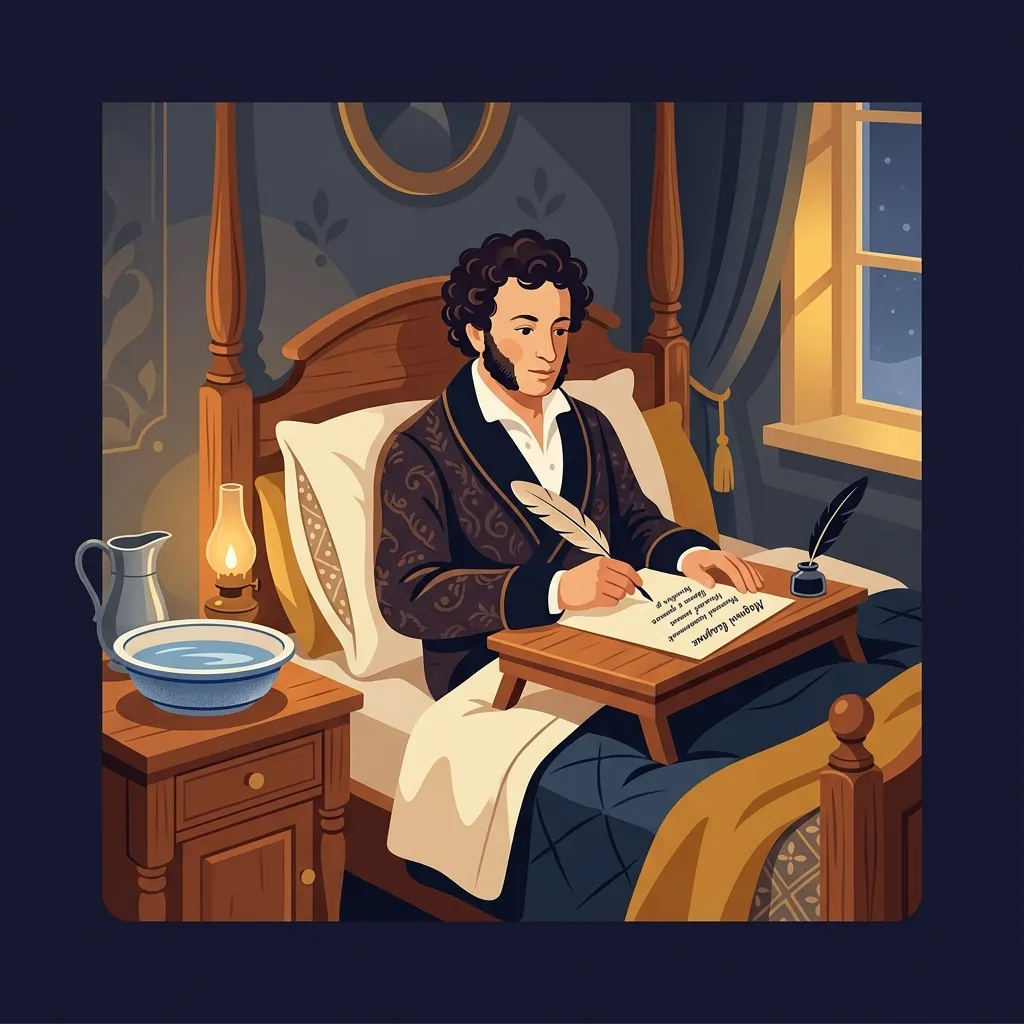
Every morning as soon as he opened his eyes, Pushkin washed his face with cold water or massaged it to awaken his nervous system through thermal sensory stimulation. Instead of dressing or preparing to go out, he stayed in a comfortable posture in bed and vigorously wrote drafts with a pencil for 3 hours without any external interruption. During this period, Pushkin allowed no conversations with anyone nor any routine household obligations.
This routine was a strict environmental control strategy that stimulated sympathetic arousal while completely preventing the cognitive loss caused by social interactions. In today’s post, we explore the cognitive neuroscience principles of autonomic arousal and blocking Attention Residue embedded in Pushkin’s cold water refreshment and bed drafting habit.
Historical & Academic Evidence
This content is based on Henri Troyat's Master Biography *Pushkin: A Biography*, Pushkin's Letters & Russian State Archives.
 BuildSelf
Inspired by historical greats? Make it your daily habit!
BuildSelf
Inspired by historical greats? Make it your daily habit!

















1. Hyper-Focus Created by Cold Water Neural Arousal and Blocking Attention Residue
Applying cold water to the skin immediately after waking stimulates the sympathetic nervous system, boosting norepinephrine secretion and transitioning the brain into a state of high arousal.
Furthermore, focusing on drafting in bed for 3 hours before engaging in conversations, checking news, or opening messages completely blocks ‘Attention Residue’ generated by social interactions. This mechanism overcomes sleep inertia while directing the brain’s cognitive resources entirely toward creative production.
2. 3-Step Practical Routine for Modern Professionals
Step 1: Cold Water Refreshment Upon Waking (Immediate Nervous System Arousal)
Wash or massage your face with cold water right after waking to stimulate skin receptors, awaken the sympathetic nervous system, and transition your brain to high arousal.
Step 2: 3-Hour Bed Drafting Without Distractions (Blocking Attention Residue)
Before checking smartphones or getting dressed, hold a pencil or notepad in your comfortable bed space and write drafts rapidly for 3 hours without self-correction.
Step 3: Commencing Daily Routine After Drafting Is Complete
Begin external communication, news checking, and routine tasks only after core drafting is fully completed, maintaining total cognitive insulation.
3. Building a Modern Cognitive Firewall to Protect Waking Focus
Avoid picking up your smartphone or checking emails immediately upon waking, which fractures your attention. The key is to awaken neural focus first and complete your priority task before letting the external world enter.
📌 Frequently Asked Questions (FAQ)
Doesn't working in bed make one sleepy or lower concentration? ▼
Pushkin did not fall asleep because he had already elevated his nervous system to high arousal through cold water stimulation. The essence lies not in the bed itself, but in the total environmental control before making contact with the external world.
Is 3 hours of morning bed drafting too long for modern individuals? ▼
You do not need to adhere strictly to 3 hours. Dedicating 30 minutes to 1 hour to your highest priority task immediately after waking—before looking at smartphone notifications—delivers the exact same cognitive firewall benefit.