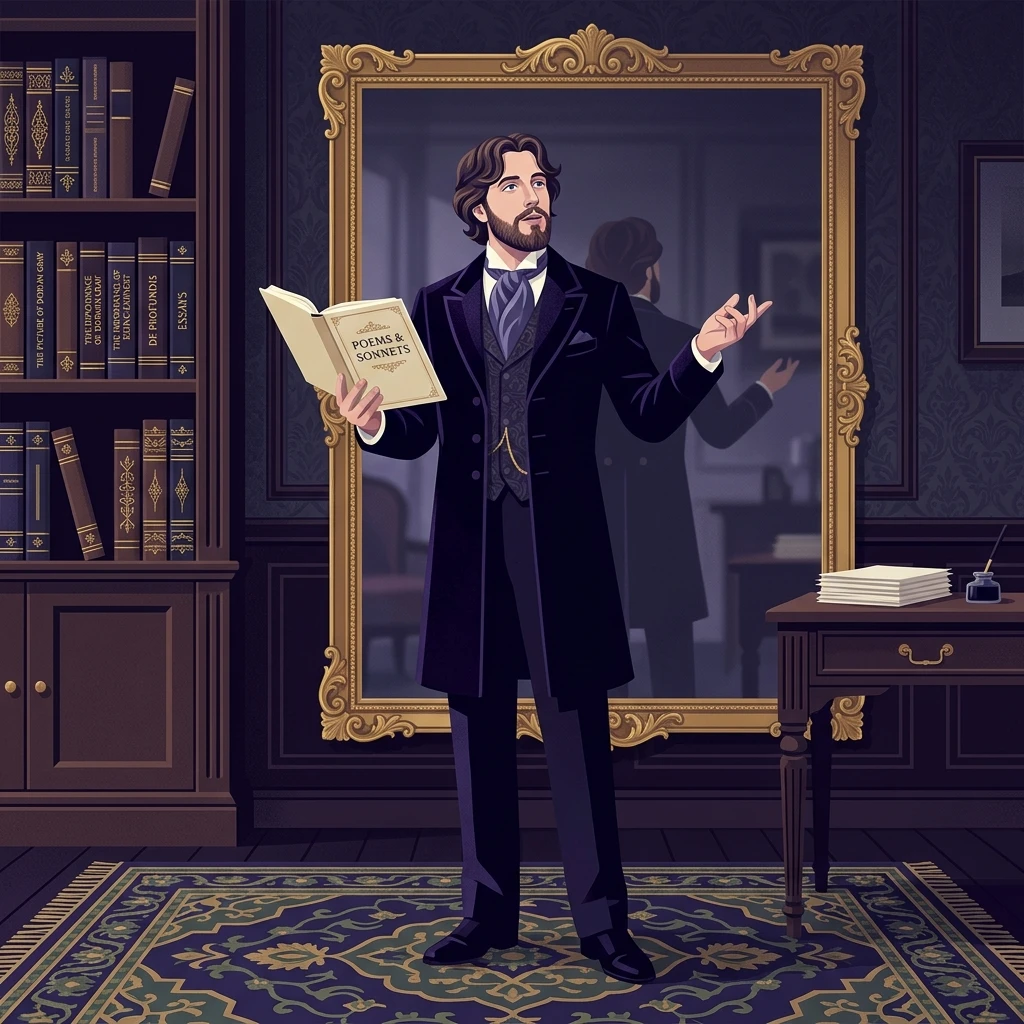
“Let go of subjective expectations and allow the phenomena to speak for themselves.” 🔬
In 1895, Wilhelm Röntgen opened a new chapter in medicine and physics by discovering X-rays—invisible high-energy electromagnetic waves—and was awarded the first Nobel Prize in Physics. How did he arrive at precise scientific truth without falling prey to subjective bias or sensory illusions? 💡
Röntgen was acutely cautious about subtle sensory noise or expectation bias contaminating data interpretation. While experimenting inside his darkroom, he recorded no subjective impressions or speculation, observing visible phenomena in absolute stillness. Only after exiting the darkroom into his well-lit study did he calmly reconstruct the experiment in his log using purely measured figures and objective data. Physically separating the moment of observation from the moment of interpretation was his secret to blocking confirmation bias.
In today’s post, we explore the cognitive psychological principles of confirmation bias prevention and prefrontal objective data processing embedded in Nobel Laureate Wilhelm Röntgen’s blind review routine.
Historical & Academic Evidence
This content is based on Official Biography Nobel Prize Official Biography: Wilhelm Conrad Röntgen & Würzburg University Röntgen Memorial Site Archives with Cognitive Psychology Research.
 BuildSelf
Inspired by historical greats? Make it your daily habit!
BuildSelf
Inspired by historical greats? Make it your daily habit!

















1. Science of Blocking Confirmation Bias and Objective Prefrontal Processing
The human brain is highly vulnerable to confirmation bias, selectively gathering information that aligns with pre-existing beliefs. Attempting to interpret observations in real time easily distorts reality through subjective assumptions.
Separating the phase of sensory observation from data interpretation—as Röntgen did—inhibits real-time emotional bias and activates logical reasoning networks. This serves as a cognitive buffer that prevents subjective errors and grounds decisions strictly in verified facts.
2. 3-Step Practical Routine for Modern Professionals
Step 1: Blocking Subjective Interpretation During Observation
During data collection, meetings, or experiments, exclude personal expectations and emotions, observing only the manifest phenomena.
Step 2: Securing Emotional Cooling Through Spatial and Temporal Separation
Step away from the observation environment to allow transient excitement or pre-conceived notions to settle.
Step 3: Writing a Blind Review Log Based on Metrics and Facts
Summarize progress in your journal relying strictly on objective numbers, timestamps, and measured data.
3. Guide to Objective Data Review in Modern Work and Study
Avoid attaching emotional interpretations or assumptions to events as they unfold. The key is separating the time of observation from review, evaluating situations using measurable metrics and verified facts.
📌 Frequently Asked Questions (FAQ)
Can non-researchers, such as corporate workers or students, apply blind review techniques? ▼
Yes, absolutely. After completing a business project or mock exam, set aside emotional self-criticism or premature optimism. Reviewing factual data points—such as time spent, budget variations, or error counts—dramatically accelerates improvement.
Won't I forget details if I don't write down interpretations during observation? ▼
Record minimal factual keywords (time, reading, status) during observation, while strictly withholding value judgments and qualitative interpretations until you step out of the darkroom environment.