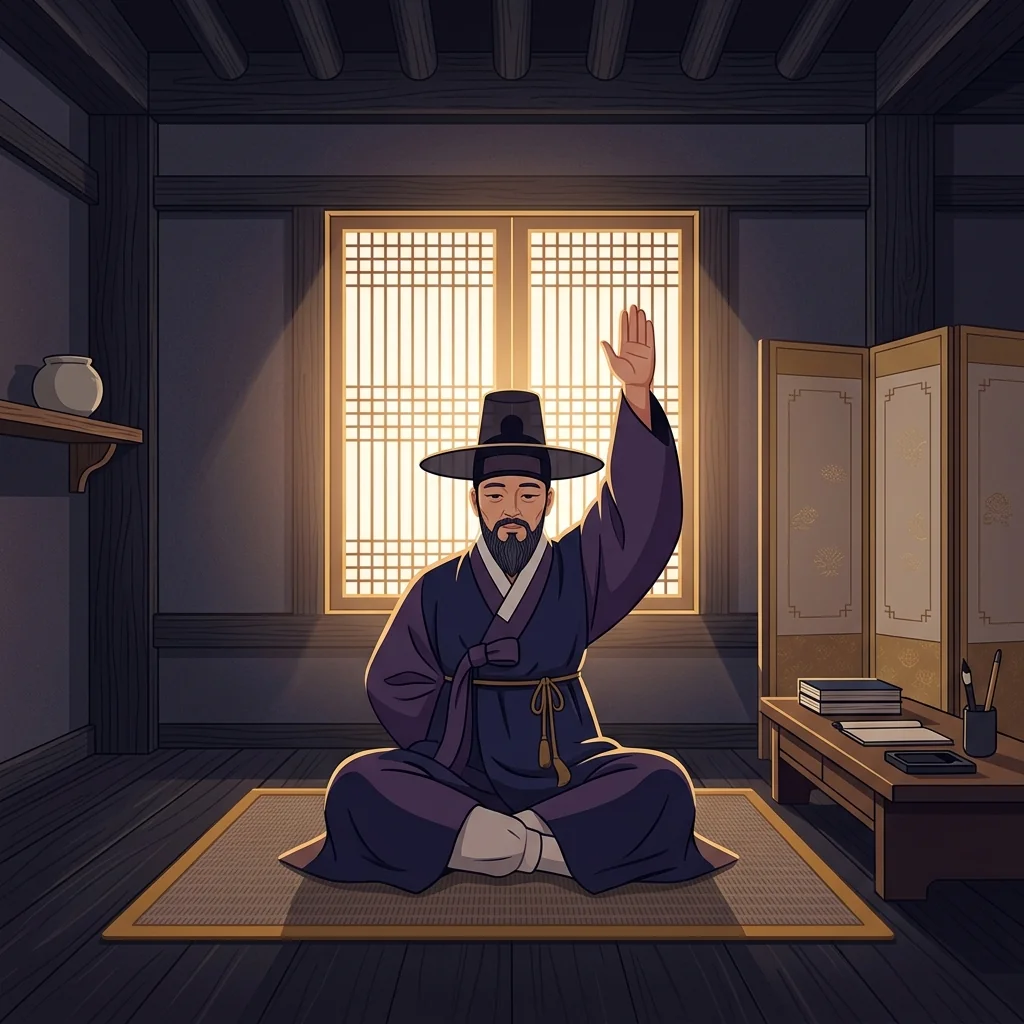
“One who governs the mind must align the body, inhaling the clear morning air to wash away all internal impurities.” 🧘♀️
Toegye Yi Hwang (1501–1570), the paramount master of Joseon Neo-Confucianism and founder of Dosan Seowon, is depicted on South Korea’s 1,000-won bill. Renowned for his deep scholarly achievements, he was actually born with a fragile physique and suffered from chronic illnesses like tuberculosis and gastrointestinal distress throughout his life. The secret behind preserving his health and razor-sharp intellect until age 70 was his morning practice of 《Hwalinsimbang》 (Exercises for Cultivating Mind and Body). Every dawn, he sat upright on his bedding to perform gentle Daoyin stretches and controlled breathing. Cognitive neuroscience explains how this ancient morning practice regulates morning cortisol spikes and grants serene, heightened focus.
Many modern professionals force themselves awake to loud alarms and rely on heavy caffeine hits to shock the brain alive. However, this forced awakening spikes stress hormones, inducing fatigue throughout the day. Master Yi Hwang smoothly adjusted his physical gears through gentle stretches and slow breathing, guiding the brain into a natural state of healthy circulation.
In this post, we validate the physiological benefits of Master Yi Hwang’s Hwalinsimbang cultivation and provide a 3-step practical guide to help modern individuals quietly elevate body temperature and enter peak immersion.
Historical & Academic Evidence
This content is based on Historical and Biographical Records of Toegye Yi Hwang's Hwalinsimbang & Cognitive Neuroscience Research.
 BuildSelf
Inspired by historical greats? Make it your daily habit!
BuildSelf
Inspired by historical greats? Make it your daily habit!
















1. How Low-Intensity Exercises and Breathing Control Induce Autonomic Nervous System Balance
Immediately upon waking, the human body experiences a spike in cortisol (Cortisol Awakening Response) to transition into an active state, which can cause temporary pulse elevation and mild anxiety. Engaging in violent activity or stimulating digital media at this point overactivates the brain’s fear circuits. Conversely, combining gentle stretches with long abdominal exhalations, as in Master Yi Hwang’s Hwalinsimbang, stimulates the vagus nerve and activates the parasympathetic nervous system. This stabilizes Heart Rate Variability (HRV) and establishes a calm, highly rational state prepared for deep immersion.
2. 3-Step Practical Routine for Modern Professionals
Sitting Upright on Bed and Aligning Posture
After waking in the morning, tidy your bedding, sit in a cross-legged or comfortable upright posture on a mat, straighten your spine, and quietly regulate your breath.
Performing Gentle Daoyin Stretching Movements
Gently twist your neck and waist side to side, stretch your arms overhead, and lightly tap teeth together without recoil. These smooth, low-intensity actions stimulate joints throughout the body and foster circulation.
Cardiopulmonary Regulation via Six-Syllable Breathing Method
Inhale fresh oxygen deeply through your nose, then draw in your lower abdomen as you exhale slowly and quietly through your mouth. Perform 10 deep abdominal breaths to awaken the parasympathetic nervous system.
3. Precautions and Tips
Upon waking in the morning, spinal bones and muscle fibers are extremely stiff. Forcing intense, high-impact movements or extreme flexibility postures in this state can lead to spinal disc damage and serious injury. Keep morning Daoyin movements gentle and smooth without bouncing, performing them strictly within a pain-free range of motion while quietly focusing on breath to ensure safe physiological benefits.
📌 Frequently Asked Questions (FAQ)
It is difficult to learn all 24 Hwalinsimbang movements. What are the essential core actions? ▼
If performing all movements is challenging, remember just two things. First, upon waking, rub your palms together to generate heat and gently massage your face. Second, sit comfortably on your bed with a straight spine, inhale deeply through your nose, and exhale slowly and quietly through your mouth for about 10 seconds. These two actions alone optimally activate parasympathetic pathways.