“Perform the hardest task of the day first. That is the single law of my business productivity.” 🏗️
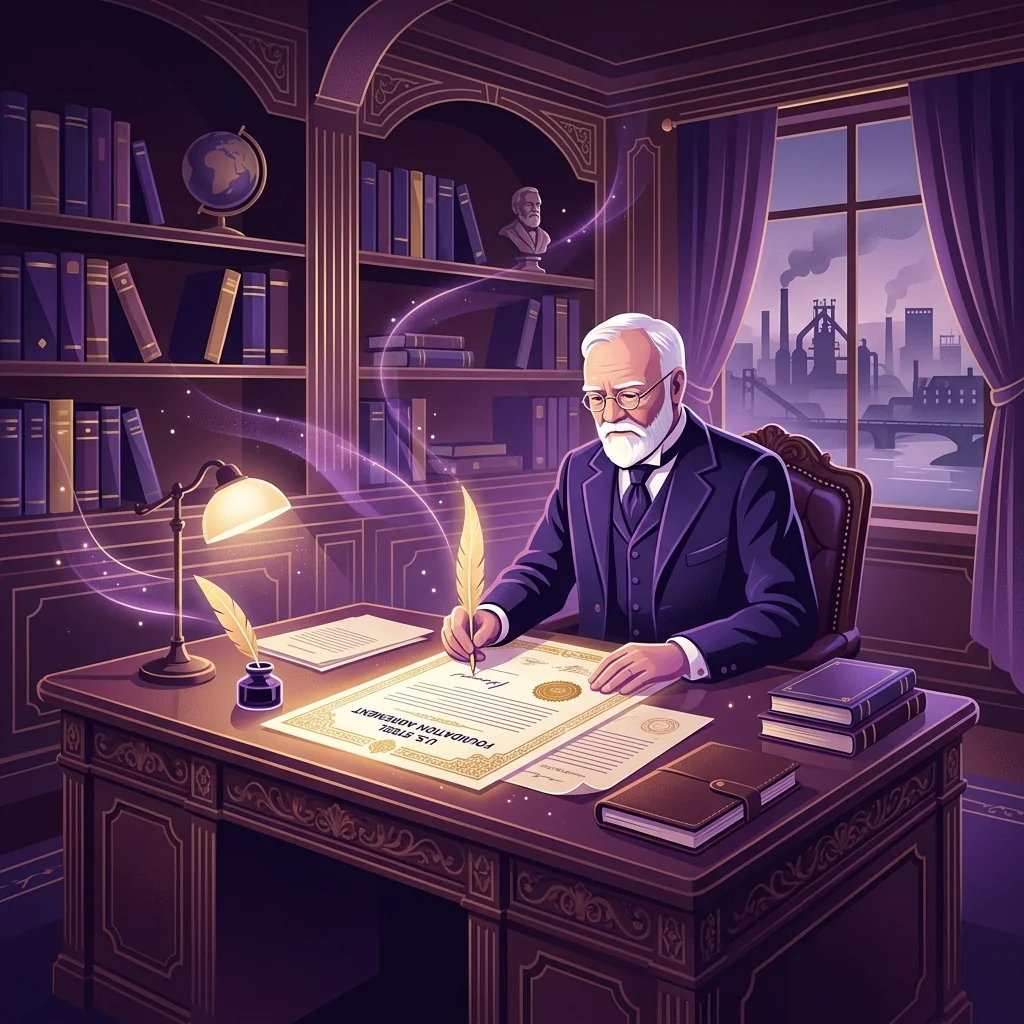
Andrew Carnegie (1835–1919) was the ‘Steel King’ who consolidated America’s steel industry to build the world’s largest industrial empire. Born into poverty as a Scottish immigrant’s son, he rose from bobbin boy and telegraph messenger to become one of the wealthiest figures and greatest philanthropists in human history. What was the morning routine behind his razor-sharp decision-making and productivity?
Upon arriving at his desk each morning, Carnegie immediately established his daily priority list. Crucially, he identified the single most vital, daunting, and complex task—the one he felt most inclined to procrastinate on—and placed it at the absolute top. During the morning golden hour (the first 1 to 2 hours), when prefrontal energy and executive control were fully recharged from sleep, he blocked out all mail, calls, and meeting requests. He poured 100% of his cognitive resources exclusively into executing that single ‘heaviest task’ until completion.
In today’s post, we analyze the brain science underlying Andrew Carnegie’s ‘heavy task first’ routine—exploring how it preserves limited willpower and prevents Ego Depletion—and present a 3-step practical guide for modern knowledge workers to maximize decision-making efficiency.
Historical & Academic Evidence
This content is based on Historical Verification from Andrew Carnegie's Autobiography *Autobiography of Andrew Carnegie* & Cognitive Neuroscience Research.
 BuildSelf
Inspired by historical greats? Make it your daily habit!
BuildSelf
Inspired by historical greats? Make it your daily habit!

















1. Preserving Prefrontal Resources and Preventing ‘Ego Depletion’
Neuroscientific and psychological research demonstrates that the cognitive resources of the prefrontal cortex—governing rational decision-making, impulse control, and executive function—are finite, depleting like a battery. This is known as ‘Ego Depletion’. Nibbling away at prefrontal glucose budgets upon waking with mindless smartphone scrolling, messenger replies, or minor chores leaves the brain’s executive battery drained when complex planning or high-stakes decisions arise later in the day, causing ‘Decision Fatigue’. Carnegie’s routine of executing the heaviest task during the first morning hour—when energy is 100% recharged from sleep—leverages peak logical acuity and judgment to prevent costly errors.
2. 3-Step Practical Routine for Modern Professionals
Step 1: Listing Daily Tasks & Selecting the Most Daunting Core Task
Spend 5 minutes immediately upon starting work listing daily tasks, then select the single most vital, high-value, and complex task—the one you feel most inclined to delay.
Step 2: Environmental Isolation & Blocking External Distractions for 1-2 Hours
Close email clients, messaging apps, and social media, disabling all notifications. For the first 1 to 2 morning hours, reject external minor requests that drain prefrontal capacity.
Step 3: Single-Task Execution & Levering Dopaminergic Accomplishment
Focus exclusively on executing the single chosen task while prefrontal energy is at 100%. Harness the dopaminergic surge from completing the hardest task to swiftly power through remaining routine items.
3. Caution & Tips: Guarding Morning Cognitive Energy Against Trivial Chores
For high-performing knowledge workers, willpower and prefrontal capacity are high-value cognitive assets that depreciate throughout the day. Carnegie refused to donate his morning golden hours to minor chores like replying to emails or arranging desks, investing them instead in the highest-leverage business decisions. Designate that daunting task you most wish to delay as your very first item of the day to prevent early brain energy drain.
📌 Frequently Asked Questions (FAQ)
How should I handle urgent communications or immediate response requests during the first morning block? ▼
Unless facing a catastrophic organizational crisis, most 'seemingly urgent' messages can wait 1 to 2 hours without issue. To protect your prefrontal resources, defend at least a 1-hour 'Prefrontal Preservation Fortress Block' every morning.
How can I apply this routine if the hardest task is too massive to complete in a single day? ▼
When a project is too massive, the brain experiences threatand seeks evasion before starting. In such cases, slice the giant project into 'sub-actionable units executable within 1 morning hour', and tackle that single sub-unit as your morning target task.