“A painter must not simply look at objects; he must sense them with his entire body, reconstruct them inside his brain, and express them on canvas.” 🎨
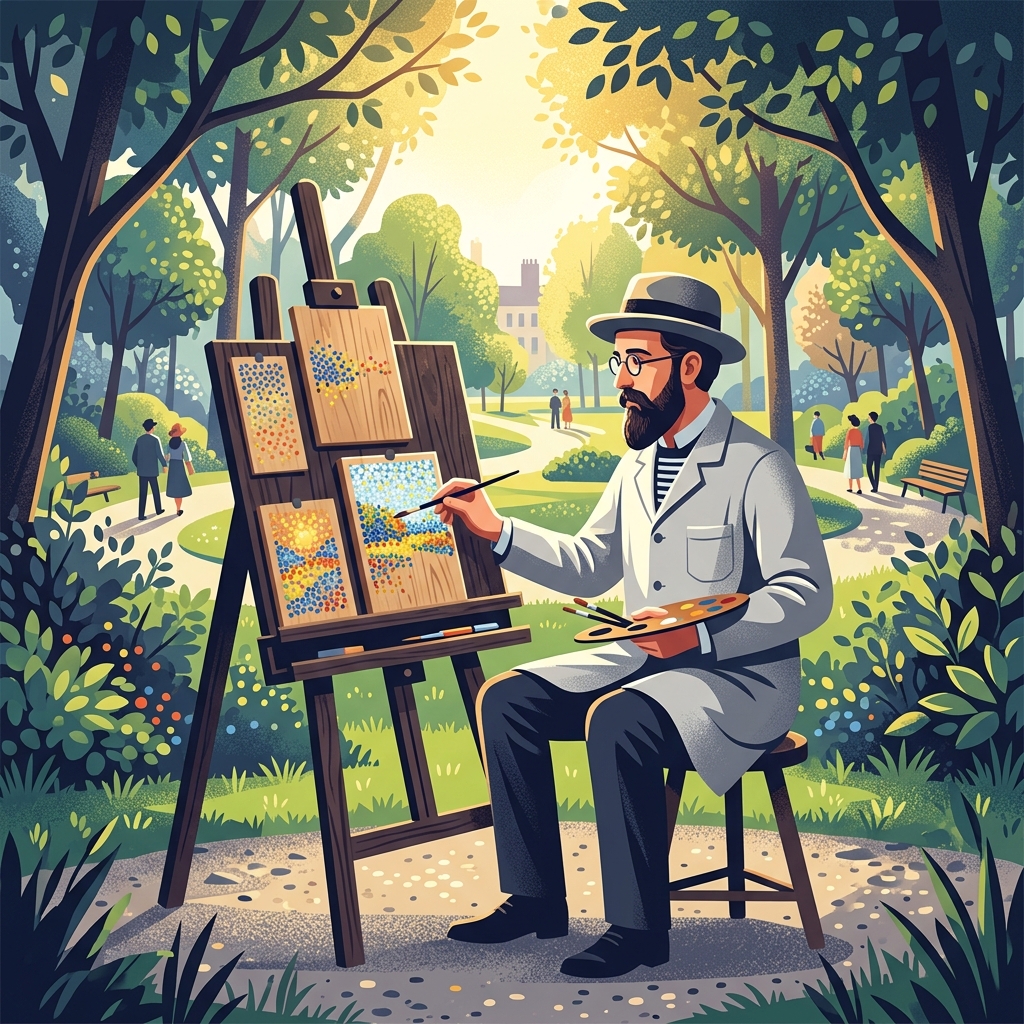
Paul Cézanne (1839–1906) was a French Post-Impressionist master whose revolutionary exploration of geometric order laid the foundations for 20th-century Cubism. Hailed by Pablo Picasso and Henri Matisse as “the father of us all,” his iconic works—such as the ‘Mont Sainte-Victoire’ series, ‘The Bathers’, and ‘The Card Players’—translated nature into fundamental geometric planes (cylinders, spheres, and cones). The secret behind his structural clarity stemmed directly from his 6 AM natural light observation routine.
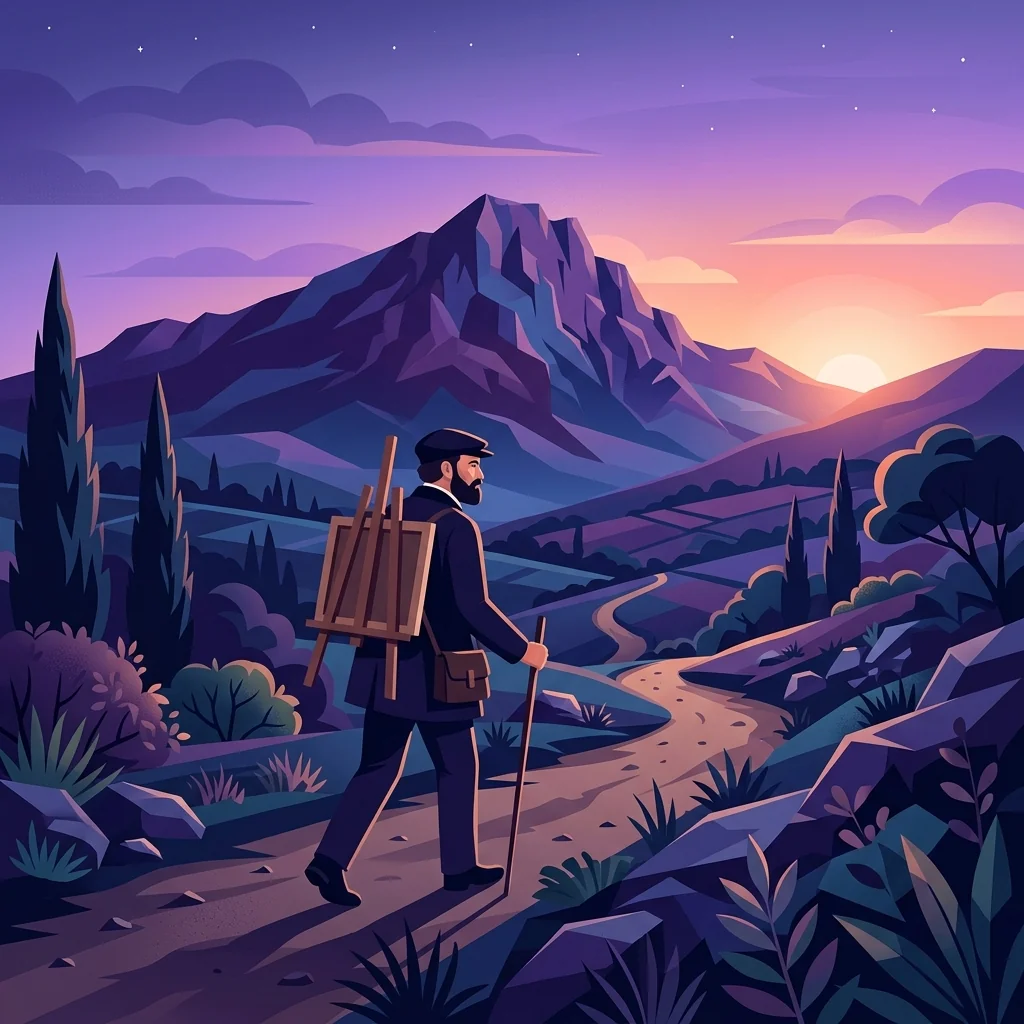
Every morning at 6 AM, Cézanne set out into the crisp air of Aix-en-Provence, carrying his easel and painting gear toward the slopes overlooking Mont Sainte-Victoire. Standing before the mountain, he spent hours silently analyzing how shifting morning sunlight transformed planes, shadow boundaries, and color warmth. This intense practice of immersing his eyes in pure morning sunlight and geometric contrast recalibrated his circadian clock and activated his visual cortex, keeping his mind at peak perceptual sensitivity.
In today’s post, we analyze the brain science underlying Paul Cézanne’s ‘morning natural light observation and structural gaze’ routine and present a 3-step action plan for modern individuals to eliminate cognitive fatigue and sharpen perceptual clarity.
Historical & Academic Evidence
This content is based on Historical Verification from Alex Danchev's Biography *Cézanne: A Life* & Cognitive Neuroscience Research.
 BuildSelf
Inspired by historical greats? Make it your daily habit!
BuildSelf
Inspired by historical greats? Make it your daily habit!

















1. Morning Natural Light Exposure, SCN Arousal, and Visual Cortex Cognitive Neurology
Natural light emitted between 6 AM and 8 AM is rich in the blue-light spectrum (460–480 nm), which strongly stimulates intrinsically photosensitive retinal ganglion cells (ipRGCs). Signals travel directly to the master circadian pacemaker—the Suprachiasmatic Nucleus (SCN) in the hypothalamus—suppressing melatonin secretion while promoting healthy cortisol production to wake the brain fully. Furthermore, obsessively tracking geometric patterns, shadow boundaries, and luminance contrasts—as Cézanne did—selectively fires neurons in the V1 and V4 regions of the visual cortex. This state of visual arousal clears cognitive fatigue, elevates perceptual sensitivity, and fosters creative associative synthesis.
2. 3-Step Practical Routine for Modern Professionals
Step 1: 15-20 Minutes of Outdoor Natural Light Walking Right After Waking
Head outdoors early in light clothing toward a park, trail, or open street. Walk comfortably for 15–20 minutes without sunglasses, absorbing natural sunlight directly into your eyes to jumpstart SCN activation and blood circulation.
Step 2: Stationary Gaze & Observing Luminance and Color Temperature Contrasts
Pause briefly to gaze at the geometric planes of trees, mountains, buildings, or sky. Consciously track contrast boundaries where sunlight meets shadow, analyzing color temperature shifts with your visual cortex.
Step 3: Mental Internalization of Visual Data & Immediate Work Execution
Imprint the observed composition and light angles in your mind for 3 seconds like a mental snapshot. Maintaining this calibrated perceptual filter, return immediately to your workspace to begin writing, planning, or core tasks.
3. Caution & Tips: Preserving Unshielded Natural Light Input & Blocking Artificial Screens
When performing this morning observation routine, avoid wearing sunglasses or staring at smartphone screens while walking. Sunglasses block the specific blue-wavelength light required by ipRGCs to trigger SCN circadian resets. Furthermore, looking at artificial light and distracting text on smartphones induces ‘Cognitive Tunneling’, trapping your visual cortex in a narrow focus and destroying the restorative arousal effect. Keep your eyes unshielded and gaze broadly across natural vistas to absorb pure sunlight directly.
📌 Frequently Asked Questions (FAQ)
Should I go outdoors to observe even on overcast, rainy, or polluted days? ▼
Even on overcast days, outdoor light levels range between 1,000 and 2,000 lux—far brighter than typical indoor lighting (300–500 lux). Thus, walking outside on cloudy days still effectively suppresses melatonin and triggers SCN arousal. However, during extreme air pollution, substitute with window observation, standing right by an open window or balcony looking outside.
Can non-artists or office knowledge workers benefit from Cézanne's visual observation routine? ▼
Yes, absolutely. Circadian clock alignment via morning natural light flushes prefrontal fatigue and enhances executive function for any profession. Furthermore, practicing intentional observation of geometric forms and luminance contrasts expands visuospatial working memory capacity, providing powerful cognitive leverage for strategic planning, data analysis, and multidimensional business problem-solving.