
“The grand book of the universe is written in the language of mathematics, and its characters are triangles, circles, and other geometric figures.” 📐
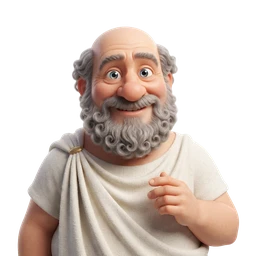
Galileo Galilei (1564–1642), reverently called the ‘Father of Modern Science’, revolutionized astronomy by fashioning his own telescopes to discover Jupiter’s four largest moons and formulating the principles of dynamics. In 1581, as a 17-year-old student at the University of Pisa, Galileo observed a bronze lamp swinging from the ceiling of the Pisa Cathedral. Using his own pulse as a timer, he made the groundbreaking discovery of the ‘Isochronism of the Pendulum’—noting that the time taken for a pendulum to complete a swing remains constant regardless of amplitude.
Throughout his life, Galileo relied on a foundational cognitive routine: whenever he observed mechanical motion, wave dynamics, or falling bodies, he immediately rendered them on paper as geometric shapes, vectors, and arcs. Sketching was not an artistic pastime for Galileo; it was a spatial externalization process that converted abstract equations into tangible visual geometry. By projecting complex dynamic relations onto paper, he disengaged his prefrontal cortex from cognitive overload and discovered fundamental physical truths.
In today’s post, we unpack the cognitive neuroscience behind Galileo Galilei’s ‘vibration sketch’ routine and present a practical visual framework to simplify complex operational structures.
Historical & Academic Evidence
This content is based on Historical Verification from Galileo Galilei's *Two New Sciences* & *Il Saggiatore*, University of Pisa Archives & Cognitive Neuroscience Research.
 BuildSelf
Inspired by historical greats? Make it your daily habit!
BuildSelf
Inspired by historical greats? Make it your daily habit!
















1. Stimulating the Visuospatial Sketchpad and the Neuroscience of Dual-Coding Theory
Sketching abstract concepts as geometric structures intensely stimulates the Visuospatial Sketchpad—the working memory hub housed across the parietal and occipital lobes. Harnessing Allan Paivio’s Dual-Coding Theory by combining verbal text with non-verbal visual imagery builds robust mental models while substantially reducing prefrontal cognitive load. By visually mapping relationships, directional vectors, and spatial proximity on paper, the brain immediately detects hidden logical flaws and structural bottlenecks that remain invisible in plain text.
2. 3-Step Practical Routine for Modern Professionals
Step 1: Mapping Core Elements into Circles and Rectangles
Write down key target concepts inside simple geometric shapes—such as circles or rectangles—and position them spatially on your page. This step anchors abstract thoughts into a physical visual dimension.
Step 2: Connecting Causality and Flow via Arrows and Wave Lines
Draw arrows between shapes to define directional causality and process relationships. Thicken lines or use wavy wave-like lines to represent high impact or signal intensity, visually representing relational strength.
Step 3: Diagrammatic Optimization & Pruning Unnecessary Noise
Step back and view your complete sketch from a distance. Where relationships cross chaotically or create bottlenecks, consolidate nodes or prune unnecessary links, optimizing your diagram into its simplest, most harmonious final form.
3. Caution: Prioritize Structural Simplicity Over Artistic Embellishment
Do not waste cognitive energy trying to produce elaborate, artistic drawings. Like Galileo’s raw diagrams, focus strictly on capturing the essential ‘underlying structure’. Limit your visual vocabulary to simple circles, rectangles, lines, and directional arrows to quickly map workflows. Obsessing over aesthetics consumes precious prefrontal bandwidth meant for logical processing.
📌 Frequently Asked Questions (FAQ)
Can I practice the geometric sketching routine if I have no drawing skills whatsoever? ▼
Yes, absolutely! This technique is not art; it is a cognitive structured exercise utilizing just four basic geometric elements: circles, rectangles, lines, and arrows. Even rough, hastily drawn shapes are completely sufficient to intensely stimulate the brain's Visuospatial Sketchpad.
Does sketching on digital drawing apps using tablets deliver identical cognitive benefits? ▼
Using a digital stylus is a functional alternative, but real paper and pen remain superior. The micro-friction of a physical paper surface generates tactile somatosensory feedback through your fingertips, achieving a deeper level of cognitive offloading and neural engagement.