“In the spinning of the wheel, I see the eternal peace of the mind and the order of the universe.” 🌀
Mahatma Gandhi (1869–1948) was the revered father of modern India who led his nation to independence through non-violent resistance (Satyagraha) and left an indelible legacy of peace to humanity. What was the origin of his superhuman patience, moral clarity, and unshakeable inner tranquility amidst immense political turmoil?
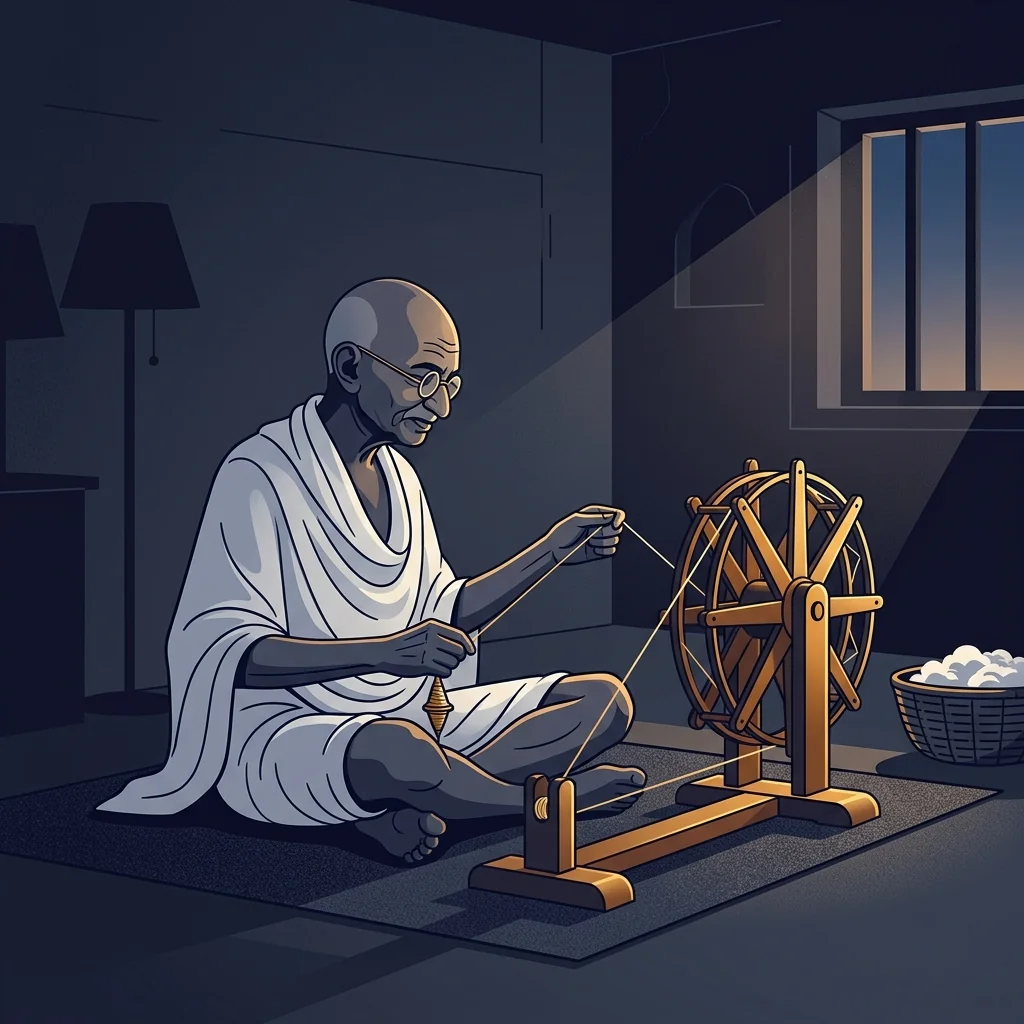
The answer lay in a strictly guarded early morning ritual. Waking every morning at 4:00 AM at his Sabarmati Ashram, Gandhi spent 90 minutes in silent meditation and communal prayer (Prarthana), purifying his mind before dawn broke. Following this, he spent dedicated time every day spinning cotton thread on the traditional Indian spinning wheel, the Charkha. While this was a political symbol of self-reliance (Swadeshi) against British cotton monopolies, to Gandhi personally, it was a supreme spiritual discipline. The rhythmic, tactile motion of spinning grounded his mind and neutralized external stress.
In today’s post, we analyze the cognitive neuroscience behind Mahatma Gandhi’s ‘dawn spinning wheel’ routine and provide a practical framework to harness active meditation for emotional resilience.
Historical & Academic Evidence
This content is based on Historical Verification from Mahatma Gandhi's *An Autobiography: The Story of My Experiments with Truth*, Ashram Archives & Cognitive Neuroscience Research.
 BuildSelf
Inspired by historical greats? Make it your daily habit!
BuildSelf
Inspired by historical greats? Make it your daily habit!

















1. Active Meditation: How Repetitive Motion Triggers Serotonin and Neurological Calm
While sitting meditation is traditionally passive, spinning a wheel exemplifies Active Meditation—using physical motion to induce deep focus. Neuroscientifically, engaging fine tactile motor control in fingertips while maintaining a rhythmic, circular motion stimulates the brainstem’s raphe nuclei to release serotonin. Serotonin clears morning cognitive grogginess and downregulates anxiety and irritability, instilling deep composure. Furthermore, maintaining the delicate tension needed to prevent thread from snapping demands ‘Fine Focus’, suppressing the brain’s Default Mode Network (DMN) responsible for mind-wandering. Gandhi’s resilience stemmed from this daily physiological reset, aligning his Heart Rate Variability (HRV) and purging emotional stress.
2. 3-Step Practical Routine for Modern Professionals
Step 1: Post-Waking Quiet Breath Meditation
Upon waking, resist checking your smartphone and sit in a comfortable cross-legged posture. Close your eyes for 10 minutes, focusing your attention gently on the rhythm of your breath to awaken your brain smoothly.
Step 2: Preparing Tactile Fine-Motor Tools
Place an analog tool that engages fingertip fine-motor sensations—such as knitting needles, a journal and fountain pen, or a tea set with loose tea leaves—directly in front of you.
Step 3: 10-Minute Tactile Immersion in Simple Rhythms
Engage in your chosen activity at a steady, rhythmic pace for 10 minutes. Concentrate your entire sensory awareness on the physical texture of the tool and the cadence of your movements, clearing away all mental chatter.
3. Caution: Prioritize Tactile Fine Repetitive Rhythm Over Specific Tools
Acquiring an authentic Indian Charkha wheel is impractical for most modern professionals. The mechanism depends not on the specific historical artifact, but on ‘tactile fine repetitive rhythm’. You can unlock identical neurological benefits by engaging in a 10-minute ritual using fine fingertip sensations—such as fountain pen transcription, knitting, slow tea brewing, or assembling Lego bricks.
📌 Frequently Asked Questions (FAQ)
What modern tactile activities can substitute for wheel spinning? ▼
Any rhythmic activity requiring fine-motor precision works brilliantly. Examples include fountain pen calligraphic copying, knitting or crocheting, tea ceremonies, assembling Lego blocks or puzzles, and finger drumming—all triggering identical serotonin pathways.
What should I do if my mind keeps wandering during tactile rhythmic activities? ▼
Do not criticize yourself for mind-wandering. Simply notice the distraction dispassionately and gently guide your attention back to 'the tactile texture at your fingertips and the rhythm of movement'. Non-judgmentally redirecting focus strengthens prefrontal executive regulation.