“Artistic creation reaches completion only when supported by order and perseverance. Sloppy attire breeds nothing but sloppy musical ideas.” 🚶♂️
Franz Joseph Haydn (1732–1809) was the master who established the structural foundations of Classical music, reverently remembered as the ‘Father of the Symphony’ and ‘Father of the String Quartet’. Serving as Kapellmeister for the aristocratic Esterházy family for nearly three decades, Haydn composed an astounding 104 symphonies and 68 string quartets. How did he sustain such flawless, orderly creative output across a lifetime?
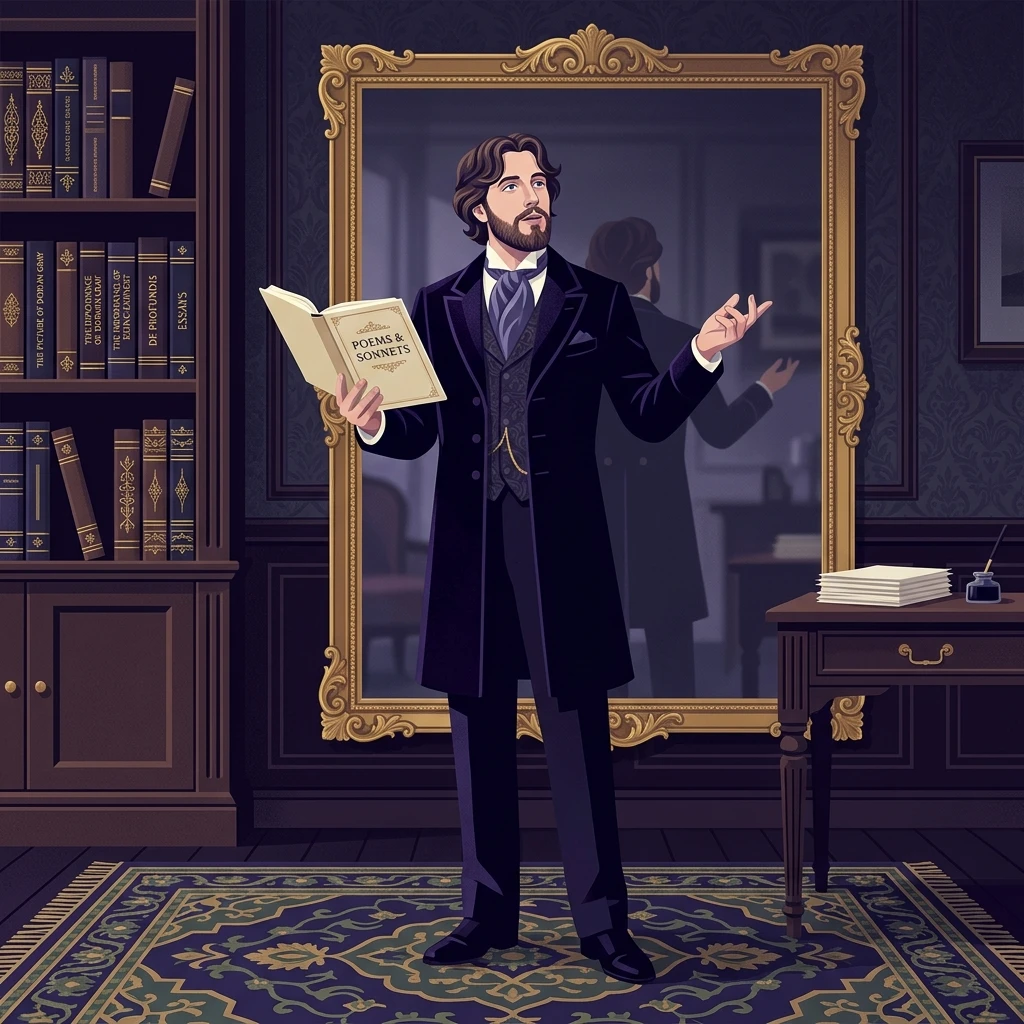
As recorded by his early biographer Albert Christoph Dies, Haydn adhered to an unwavering pre-composition ritual. Before touching a single sheet of manuscript paper or his keyboard, he shaved impeccably, dressed in full formal court attire, put on a freshly powdered wig, and placed a prized royal ring on his finger. Even when working completely alone in his private study, Haydn refused to compose in casual loungewear. He firmly believed that chaotic personal attire invited chaotic musical structure. Dressing formally was his non-negotiable mental switch that primed his brain for intense, orderly creation.
In today’s post, we examine the brain science of ‘Enclothed Cognition’ underlying Joseph Haydn’s formal dressing routine and explore how clothing shapes prefrontal focus.
Historical & Academic Evidence
This content is based on Historical Verification from Joseph Haydn Biographies (Dies & Griesinger), Esterházy Palace Archives & Cognitive Neuroscience Research.
 BuildSelf
Inspired by historical greats? Make it your daily habit!
BuildSelf
Inspired by historical greats? Make it your daily habit!

















1. Embodied Cognition and the Brain Science of ‘Enclothed Cognition’
According to the Embodied Cognition framework in cognitive psychology, high-level abstract thought and prefrontal executive functions are deeply tied to the physical state of the body, including the garments worn. Research by Hajo Adam and Adam Galinsky introduced the concept of ‘Enclothed Cognition’—the phenomenon where wearing clothes carrying specific symbolic meaning and formal structure triggers systemic improvements in selective attention and error-monitoring accuracy. By dressing in formal attire, Haydn sent an explicit cognitive anchoring signal to his prefrontal cortex: ‘It is time to engage supreme creativity and executive focus’, seamlessly transitioning his brain from rest to high-performance execution mode.
2. 3-Step Practical Routine for Modern Professionals
Step 1: Shedding Loungewear & Wearing Structured Work Attire
Before beginning work or study, strip off pajamas or loose loungewear completely and change into neat street clothes or dedicated work attire. The physical act of changing clothes transmits a 'work mode transition' signal to your brain.
Step 2: Clearing Desktop Visual Noise for Prefrontal Focus
Clear away clutter, leftover coffee cups, and irrelevant documents from your workspace desk. Eliminating visual noise prevents the prefrontal cortex from wasting attentional bandwidth on environmental clutter.
Step 3: Engaging Immersion Anchoring Accessories (Watch or Ring)
Put on a specific wrist watch, ring, or work accessory exclusively worn during high-productivity hours. This conditions your neural pathways to link specific tactile/visual cues with deep executive focus.
3. Caution: Protocol for Separating Rest Mode from Focus Mode via Enclothed Cognition
To Joseph Haydn, donning court dress was an act of artistic reverence and a neurological focus switch. Working from home or studying while wearing pajamas or loose loungewear misleads the brain into assuming a ‘rest state’, sharply depressing prefrontal arousal. The core secret is physically changing into neat, structured work clothes to awaken executive function.
📌 Frequently Asked Questions (FAQ)
Did Joseph Haydn truly dress in full court attire even when composing alone at home? ▼
Yes, absolutely. Historical biographies by Dies confirm that Haydn refused to sit at his keyboard or manuscript desk without wearing full court attire, powdered wig, and his royal ring. He maintained that unkempt clothing bred unkempt musical thoughts, using attire to set his brain into a state of focus.
Does work-from-home attire need to be a rigid formal suit, or are comfortable street clothes effective? ▼
A stiff suit or tuxedo is unnecessary. The core mechanism lies in physically separating 'sleep/rest garments' from 'work attire'. Simply changing into a neat collared shirt or tailored pants fully triggers the neurological benefits of Enclothed Cognition.