“When you willingly imprison yourself, your imagination finally discovers absolute freedom.” 🪒
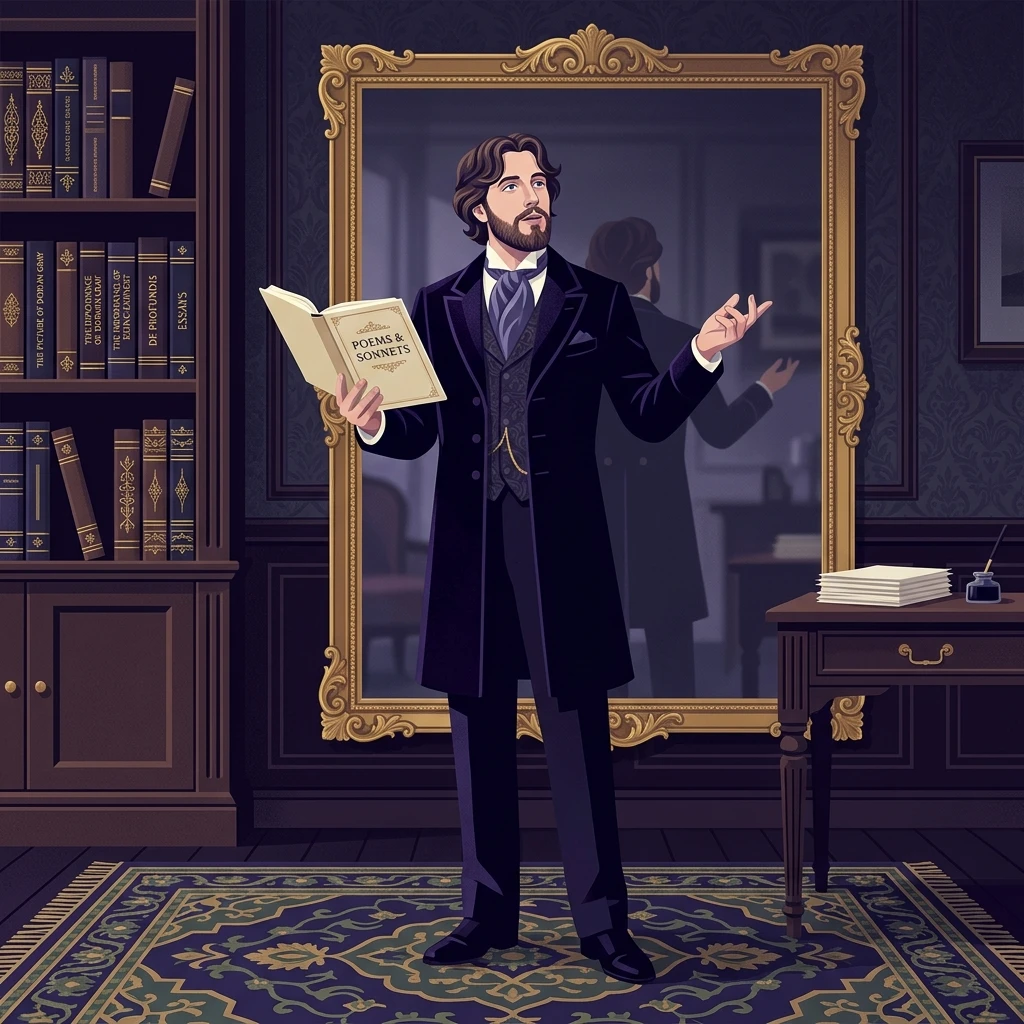
Victor Hugo (1802–1885) was the titan of French Romantic literature who authored immortal masterpieces such as Les Misérables and The Hunchback of Notre-Dame (Notre-Dame de Paris). In the autumn of 1830, Hugo faced a catastrophic deadline: his publisher, Eugène Gosselin, demanded the complete manuscript of The Hunchback of Notre-Dame by February 1831, threatening ruinous financial penalties for delay. Distracted by the lavish social life of Paris, Hugo had barely written a page.
To break his own procrastination, Hugo devised an extraordinary solution. As documented in Graham Robb’s biography, Hugo took scissors and razor and shaved off half of his hair and half of his long beard. Horrified by his own absurd appearance, he knew he would be far too embarrassed to step foot outdoors or attend dinner parties. He then locked away his formal street clothes, top hats, and cloaks, handing the key to his servant. Left with nothing to wear except a large, oversized grey woolen shawl robe, Hugo retreated to his study with a giant bottle of ink. Deprived of the option to leave, Hugo completed the entire masterpiece weeks ahead of schedule in January 1831.
In today’s post, we unpack the cognitive neuroscience behind Victor Hugo’s ‘hair-shaving self-isolation’ routine and present a modern guide to leverage precommitment strategies for maximum deep work output.
Historical & Academic Evidence
This content is based on Historical Verification from Graham Robb's *Victor Hugo: A Biography*, Behavior Therapy & Cognitive Neuroscience Research.
 BuildSelf
Inspired by historical greats? Make it your daily habit!
BuildSelf
Inspired by historical greats? Make it your daily habit!

















1. Precommitment Strategy and Preventing Prefrontal Willpower Fatigue
Human capacity to resist temptation relies on finite executive resources housed in the Prefrontal Cortex. Constantly exerting self-control while exposed to environmental distractions causes rapid Willpower Fatigue (ego depletion). Victor Hugo’s method of physically eliminating the possibility of giving in to temptation is recognized in behavioral economics as a Precommitment Strategy. By locking away formal clothes and altering his hair, Hugo destroyed the temptation trigger at its root. Consequently, his brain wasted zero cognitive energy debating ‘Should I go out or stay?’, channeling 100% of prefrontal bandwidth into deep creative writing.
2. 3-Step Practical Routine for Modern Professionals
Step 1: Physical Elimination of Distractions & Precommitment Setup
Prior to entering deep work, physically isolate core distractions—stowing your smartphone in a timed lockbox or stashing away street clothing to eliminate temptation triggers.
Step 2: Constructing a Dedicated Sanctuary with No Escape Routes
Relocate into your workspace, keeping strictly the minimal essential tools required for the task. Establish an unyielding physical and psychological boundary where exiting before deadline is impossible.
Step 3: 100% Prefrontal Focus Execution Under Total Isolation
With external contact and escape possibilities eliminated at the root, direct 100% of your prefrontal cognitive resources exclusively onto the goal task, beating your target deadline.
3. Caution: Precommitting Physical Environments Rather Than Relying on Willpower
Do not attempt to overcome digital notifications or temptations using sheer willpower alone. Mirroring Hugo’s radical isolation, the key to success lies in configuring unpassable physical environment constraints in advance—such as using timed phone lockboxes or strict website blockers—so that focus requires zero willpower exertion.
📌 Frequently Asked Questions (FAQ)
Did Victor Hugo genuinely shave half his hair and beard to write his novel? ▼
Yes, absolutely. In late 1830, facing an uncompromising publisher deadline for *The Hunchback of Notre-Dame*, Hugo shaved half his head and beard and locked away his street clothes to enforce total home isolation until the novel was finished.
What modern precommitment isolation methods can I use without shaving my hair? ▼
Placing your smartphone inside a timed physical lockbox during deep work sessions or using strict website blocking apps (or dedicated work browser profiles) that completely shut down social media/YouTube access are highly effective modern precommitment strategies.