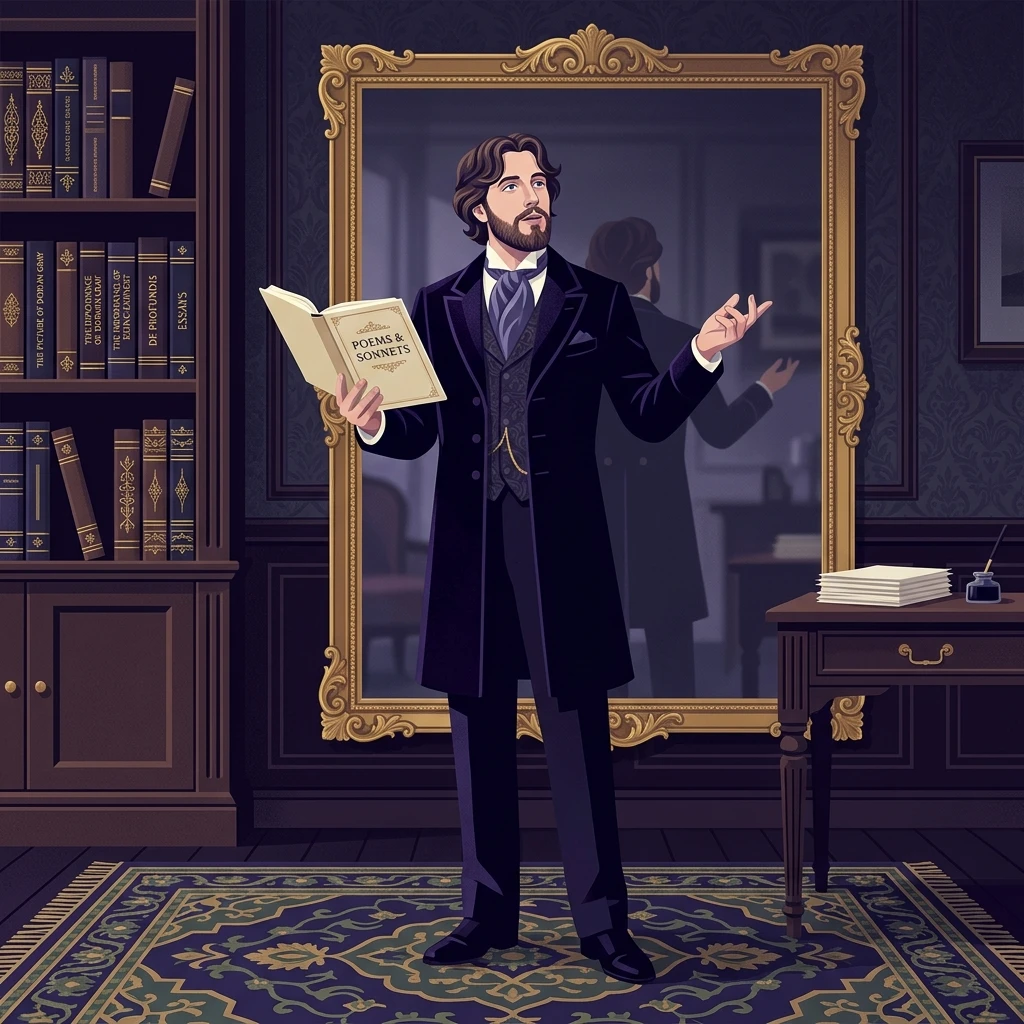
Joseph Conrad (1857–1924), the Polish-born merchant mariner who transformed into one of the greatest stylists in 20th-century English literature. Setting aside his native Polish and fluent French, he adopted English in his late twenties—a non-native language—and authored enduring masterpieces such as Heart of Darkness, Lord Jim, and Nostromo, celebrated for their majestic cadence and poetic depth. 🕯️📜
Behind his ability to achieve peak prose rhythm and narrative intensity in an adopted tongue lay his daily nighttime ritual: the ‘Oral Cadence Verification’ habit. Every evening by candlelight, Conrad spread out the pages he had drafted during the day and read them aloud slowly. Going beyond surface proofreading, he audited sentence breath lengths, phonetic friction between words, and the acoustic resonance of his prose against the emotional gravity of the narrative. Any sentence that felt clumsy or disrupted respiratory rhythm when spoken was immediately rewritten. This rigorous multi-sensory auditing breathed immortal musicality into his prose.
In today’s post, we dissect the cognitive neuroscience behind Conrad’s oral cadence verification habit, examining how reading aloud stimulates the working memory’s phonological loop and leverages auditory feedback to maximize linguistic precision.
Historical & Academic Evidence
This content is based on Historical Verification from Zdzisław Najder's *Joseph Conrad: A Life* & Frederick R. Karl's *Joseph Conrad: The Three Lives* and Cognitive Neuroscience Research.
 BuildSelf
Inspired by historical greats? Make it your daily habit!
BuildSelf
Inspired by historical greats? Make it your daily habit!

















1. Phonological Loop Stimulation and Auditory Feedback Mechanisms
Skimming text purely visually leaves the brain vulnerable to cognitive illusions caused by subvocalization, causing subtle context errors and awkward rhythms to go unnoticed. Reading text aloud and listening to one’s own voice strongly engages the Phonological Loop within Working Memory and activates the Auditory Feedback Loop in the temporal lobe. Co-stimulating Broca’s Area and Wernicke’s Area enables the brain to intuitively detect cadence, rhythm, and linguistic balance.
2. 3-Step Practical Routine for Modern Professionals
Step 1: Blocking Visual Skimming & Creating a Quiet Reading Environment
Upon finishing a draft, manuscript, or proposal, transition out of visual reading mode and prepare a quiet, focused environment dedicated to reading aloud.
Step 2: Executing Multi-Sensory Oral Cadence Verification
Read the draft sentence by sentence slowly, infusing natural breathing pauses and emotional intonation to auditorily verify flow and phonetic harmony.
Step 3: Refining Acoustic Friction Points & Finalizing Prose Cadence
Instantly rewrite sentences that cause verbal stumble or acoustic dissonance, re-auditing until breath and rhythm achieve seamless harmony.
3. Caution: Avoiding Rapid Mechanical Reading and Monotone Voice Output
A common pitfall during oral verification is reading too quickly or mechanically. Without infusing breath, deliberate pauses, and emotional intonation, the phonological loop’s sensory monitoring mechanism remains unengaged. Read slowly and consciously as if delivering a speech to ensure maximum cognitive benefit.
📌 Frequently Asked Questions (FAQ)
Is oral verification effective for everyday business documents and native language writing? ▼
Extremely effective. Native writers frequently fall victim to familiarity bias when reading visually. Reading aloud instantly exposes clumsy syntax, repetitive conjunctions, and awkward phrasing, dramatically polishing your writing.
What if I work in a quiet office where speaking aloud is impossible? ▼
You can utilize subtle subvocal articulation (muttering quietly with lips moving) or use AI Text-to-Speech (TTS) tools to listen to your text. Feeding the auditory signal back into the brain activates similar phonological loop mechanisms.