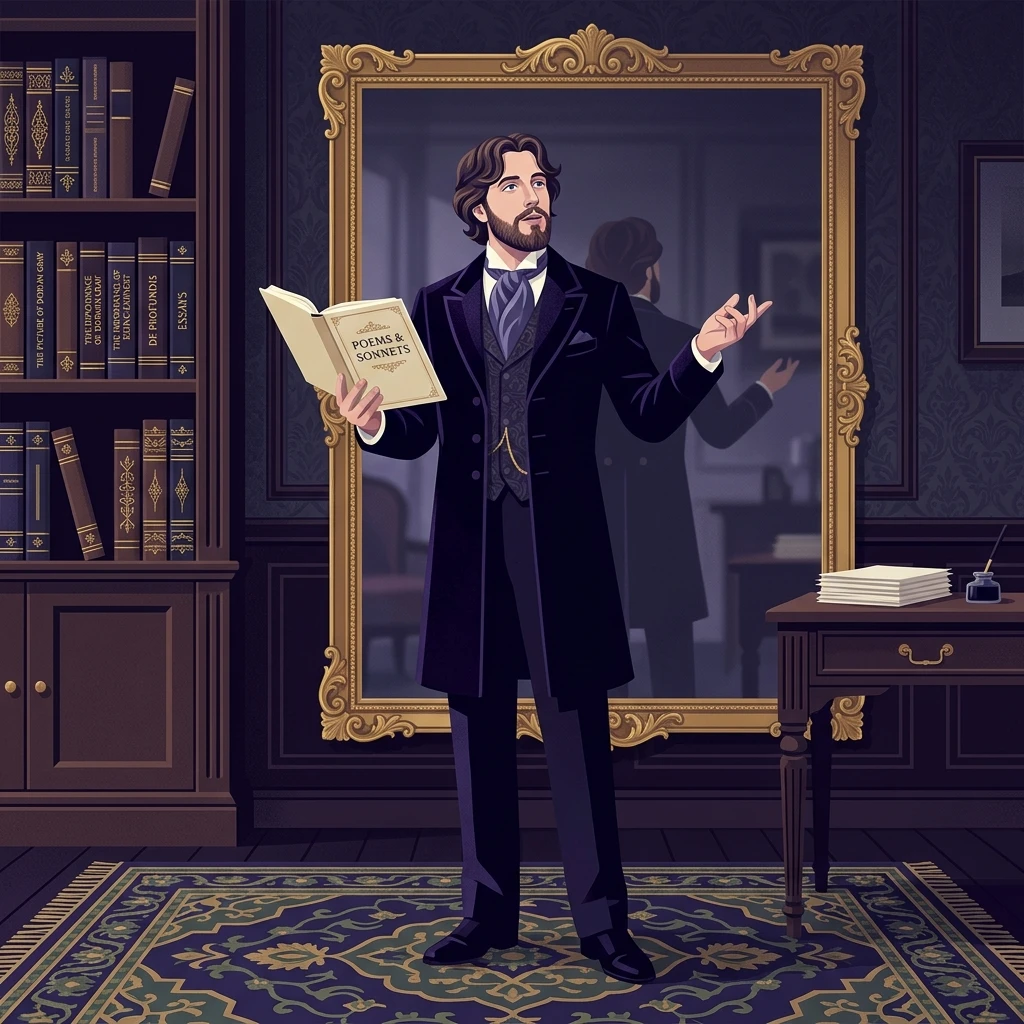
“I have walked myself into my best thoughts, and I know of no thought so burdensome that one cannot walk away from it.” 🎩
Søren Kierkegaard (1813–1855) was the 19th-century Danish theologian and philosopher widely regarded as the father of Christian existentialism. Exploring subjective truth, individual despair, and personal faith in masterworks like Either/Or and Fear and Trembling, Kierkegaard produced an astonishing volume of razor-sharp philosophical prose.
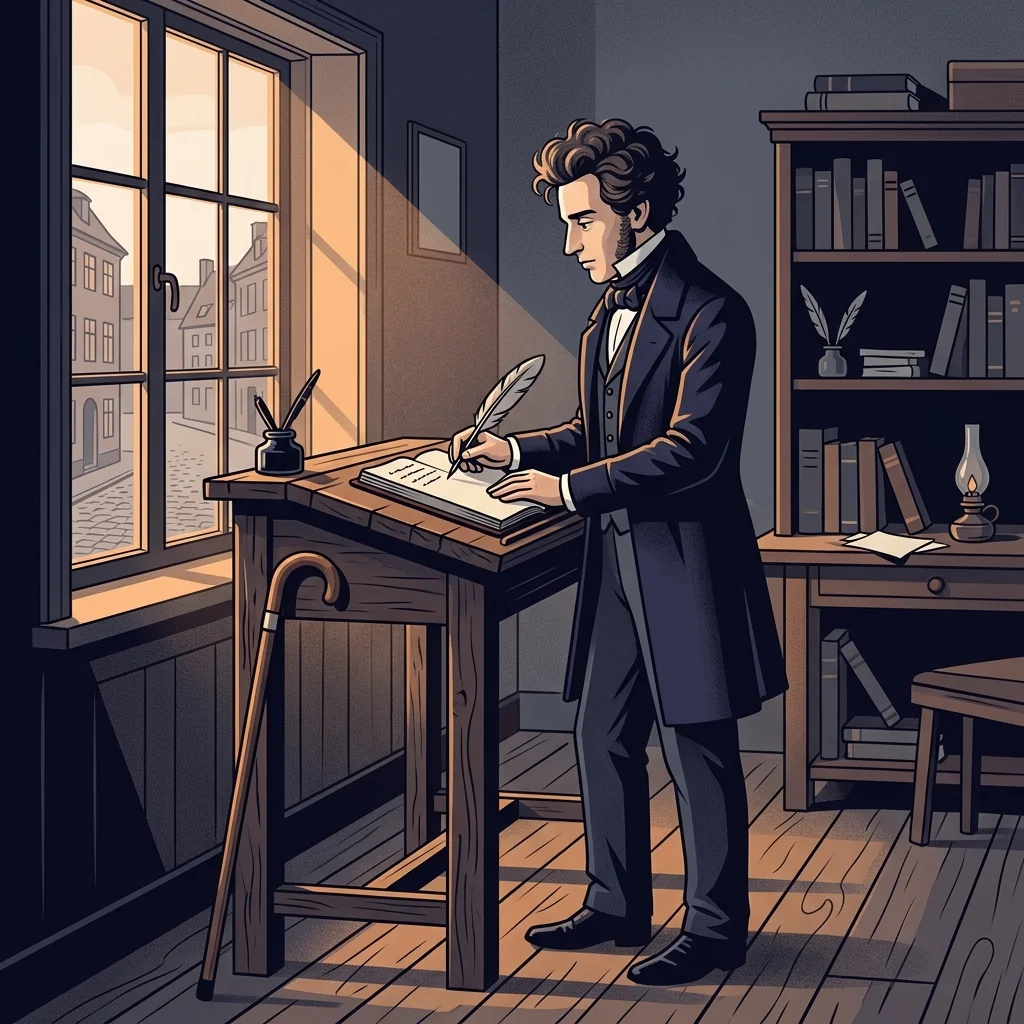
His secret to capturing brilliant ideas lay in a distinct physical habit. Kierkegaard walked through the streets of Copenhagen every day, engaging in lively mental wanderings. However, he harbored a near-obsessive fear that the brilliant epiphanies harvested on the street would evaporate during the mundane transition of entering his home—taking off his coat, hanging up his hat, or sitting down. To prevent this cognitive loss, Kierkegaard strategically placed high standing desks throughout his apartment. The moment he unlocked his door, without even removing his top hat, coat, or walking stick, he walked straight to a standing desk and immediately transcribed his thoughts. Standing up while writing locked in the momentum of his walk before attentional decay set in.
In today’s post, we examine the cognitive neuroscience behind Søren Kierkegaard’s ‘standing instant capture’ routine and present a modern 3-step action guide to capture ideas seamlessly during cognitive warm-up.
Historical & Academic Evidence
This content is based on Historical Verification from *The Journals of Søren Kierkegaard*, Joakim Garff's *Søren Kierkegaard: A Biography* & Cognitive Neuroscience Research.
 BuildSelf
Inspired by historical greats? Make it your daily habit!
BuildSelf
Inspired by historical greats? Make it your daily habit!

















1. Cognitive Warm-up and Working Memory Preservation
Immediately following physical activity such as walking, the brain enters a heightened state of Cognitive Warm-up driven by surges of dopamine and norepinephrine. Converting thoughts into writing during this neurohormonal window ports fluid insights into logical prefrontal networks without information loss. Furthermore, standing work maintains postural muscle engagement in the legs and core, preserving cerebral blood flow and accelerating Working Memory processing speed. This prevents cognitive fragmentation and eliminates Attention Residue before the train of thought dissolves.
2. 3-Step Practical Routine for Modern Professionals
Step 1: Immediate Post-Walk Standing Position Setup & Deferring Domestic Rituals
Immediately upon entering your room after a walk or commute, defer routine domestic habits like unpacking or sitting down, and walk straight to a standing desk or high counter.
Step 2: 5–10 Minutes of Immediate Idea Extraction While Still in Outerwear
Hold your pen without removing your coat. Rapidly pour out core concepts, outlines, and sentences onto paper for 5 to 10 minutes before environmental noise breaks your train of thought.
Step 3: Outerwear Removal & Detailed Editing After Framework Is Anchored
Once the structural framework of your idea is safely anchored on paper, remove your coat and unpack. Then sit comfortably to refine and polish the rough draft.
3. Caution: Immediate Post-Walk Capture Protocol to Eliminate Attention Residue
When transitioning from movement to a stationary home environment, the brain naturally ramps down executive arousal. Spending even 5 minutes unpacking bags, taking off shoes, or sitting on a sofa causes the intricate context of a creative insight to vanish. To prevent cognitive decay, fix your operational sequence: spend 5 to 10 minutes writing standing up before engaging in any domestic chores.
📌 Frequently Asked Questions (FAQ)
Is it mandatory to write standing up? Can I sit down instead? ▼
Sitting down immediately upon returning home triggers a rapid drop in physical motor tone and autonomic arousal, lulling the brain into deep relaxation. Standing preserves motor engagement and physical alertness, protecting working memory capacity for those critical 10 minutes.
How can I practice this routine if I don't own a standing desk or high counter? ▼
Placing a thick book or laptop stand on a standard table, kitchen island, or tall dresser is completely sufficient. The core objective is not purchasing new furniture, but setting up a frictionless standing posture to extract ideas for 5 to 10 minutes right upon entering.