“The sea has no maps or roads, but the stars and logs never lie.” 🧭
In 1519, Ferdinand Magellan embarked on humanity’s first circumnavigation of the globe with five ships and over 270 crew members. Amid storms, starvation, scurvy, and the extreme uncertainty of the vast Pacific Ocean, what was his secret to steering the fleet safely through uncharted waters? 📜
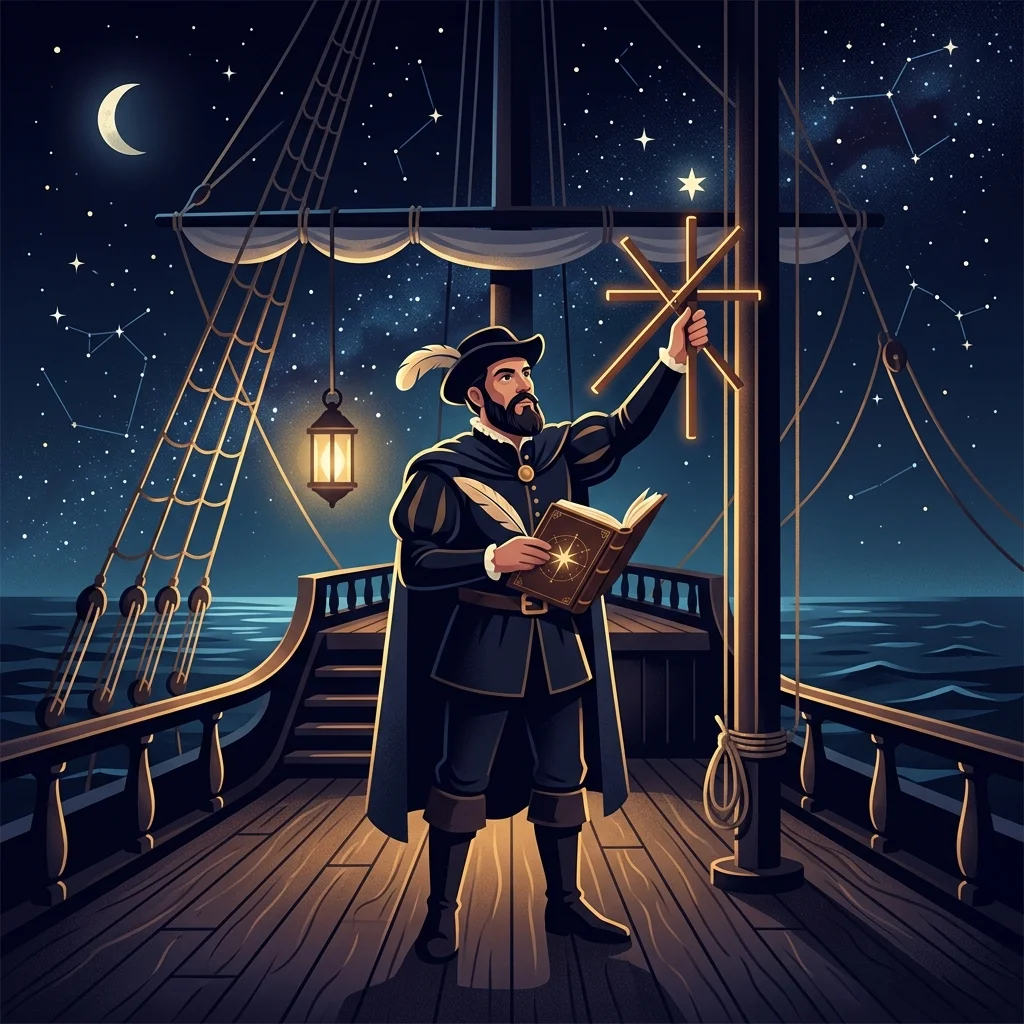
No matter how exhausted he was, Magellan stepped onto the deck every night to measure celestial positions using a cross-staff and compass. He then sat in his cabin to cross-check daytime observations—wind direction, weather conditions, and distance traveled—painstakingly completing his navigation log. This nightly routine of rigorous data verification served as an intellectual compass that suppressed emotional panic and minimized decision-making errors.
In today’s post, we examine the cognitive neuroscience behind Ferdinand Magellan’s ‘nightly celestial observation and cross-checking routine,’ focusing on metacognition enhancement and error-monitoring networks.
Historical & Academic Evidence
This content is based on Historical Records from Antonio Pigafetta's Autobiography and Diary The First Voyage Around the World (1524) & British Library Magellan Archives, with Cognitive Neuroscience Research.
 BuildSelf
Inspired by historical greats? Make it your daily habit!
BuildSelf
Inspired by historical greats? Make it your daily habit!

















1. Activation of the Prefrontal Error-Monitoring Network (ACC) and Metacognition
In environments governed by extreme uncertainty and peril, human error can be fatal. Nightly cross-checking of observation data against sailing records activates the brain’s Anterior Cingulate Cortex (ACC) and prefrontal network, sharpening error-monitoring capabilities.
This rigorous process of objectification prevents cognitive biases and speculation, maximizing metacognition—the ability to assess one’s own state and knowledge objectively—so that optimal decisions can be made under pressure.
2. 3-Step Practical Routine for Modern Professionals
Step 1: Nightly Quantitative Data Collection
At the end of the day, precisely gather objective metrics (expenses, project progress, health stats) rather than relying on vague impressions.
Step 2: Cross-Checking Multi-Source Data
Compare recorded logs against actual results, budgets against spending, and plans against execution to identify blind spots and discrepancies.
Step 3: Journal Logging and Course Correction
Document verified findings in a daily log and recalibrate tomorrow's itinerary based on real error margins.
3. Guide to Applying Cross-Verification to Modern Work and Life
Rather than relying on subjective memory or gut feelings, establish objective data metrics and periodic verification routines to prevent minor errors from cascading into major failures.
📌 Frequently Asked Questions (FAQ)
Why did Magellan perform celestial observation and verification specifically at night? ▼
Night offers clear stellar visibility free from daytime sailing distractions. It also provided a quiet window at day's end to review accumulated voyage data, closing the cognitive feedback loop before sleep to consolidate memory and learning.
How can modern professionals apply this in a complex digital environment? ▼
Spend 10–15 minutes before ending the workday reviewing completed tasks, expenditures, or project metrics against actual data. Grounding daily reviews in verified facts rather than intuition dramatically increases operational accuracy.