“Passion and intellect become a great canvas only in sensory harmony.” 🎨
Peter Paul Rubens (1577–1640) was a legendary master of 17th-century Baroque art, a polyglot scholar, and a diplomat of European acclaim. Running a bustling atelier in Antwerp, he was commissioned by royal courts and cathedrals across Europe to paint vast monumental masterpieces.
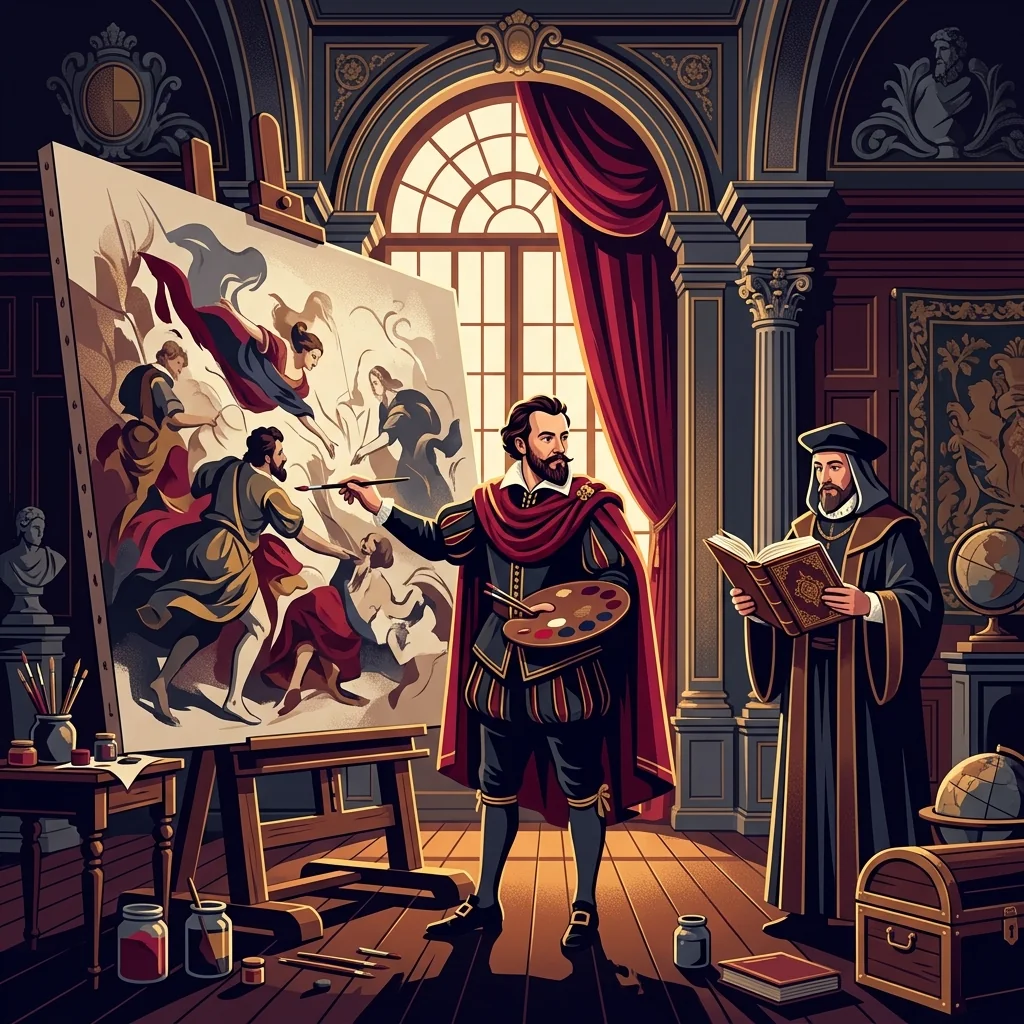
While painting on massive canvases in his atelier, Rubens hired professional reciters to read aloud ancient Roman history and classic literature by authors such as Tacitus, Livy, and Plutarch. As his eyes and hands rendered vibrant colors and figures, his ears were attuned to noble classical recitations. By complementary activation of both visual and auditory cortices, he maximized cognitive flow and intellectual inspiration—the sensory harmony routine that gave birth to timeless masterpieces.
In today’s post, we introduce the principles of sensory interaction and high-dimensional cognitive immersion embedded in Rubens’ routine of listening to classical recitations while painting.
Historical & Academic Evidence
This content is based on Historical biography and autobiographical research on Peter Paul Rubens & Cognitive Neuroscience studies.
 BuildSelf
Inspired by historical greats? Make it your daily habit!
BuildSelf
Inspired by historical greats? Make it your daily habit!

















1. ‘Cognitive Channelization’ Blocking Mind-Wandering
When performing manual or routine motor tasks, parts of the brain control the physical action while the linguistic processing regions remain underutilized. If left unoccupied, uncontrolled thoughts activate the Default Mode Network (DMN), causing mind-wandering and lowering focus. Rubens intellectually occupied the auditory linguistic channel by combining classical recitations with painting. This is known as ‘Cognitive Channelization’. While his hands controlled the brush, audio information filled the language cortex, preventing idle daydreaming and maintaining peak alertness for simultaneous flow and learning.
2. 3-Step Practical Routine for Modern Professionals
Prepare a Practiced Physical Task
Define and begin a physical motor task that requires accurate hand-eye movement without heavy linguistic thinking—such as sketching, organizing, cleaning, or formatting documents.
Start Classic Recitations or Educational Podcasts
Concurrently start a classic audiobook, history lecture, or academic podcast via speakers or headphones. Set the intention for conscious listening rather than background music.
Maintain Multi-Channel Flow
Keep hand precision steady while allowing your language cortex to follow the narrated narrative, maintaining mental alert tension. This cognitive block prevents mind-wandering and sustains high productivity.
3. Watch for Cognitive Interference During Language/Logic Tasks
For main tasks requiring high linguistic or logical computation, such as writing proposals or coding, listening to spoken words creates Cognitive Interference between language channels, reducing speed and accuracy. This routine delivers optimal results only during physical, visual, or highly practiced tasks like sketching, drawing, organizing, or formatting.
📌 Frequently Asked Questions (FAQ)
Does listening to popular music or radio provide the same effect as Rubens' routine? ▼
No. Pop music or random radio broadcasts excite emotions or cause auditory distraction without densely occupying the linguistic channel, and radio ads interrupt focus. Academic recitations or lectures that engage logic and knowledge processing are ideal.
What volume is appropriate when following this recitation listening routine? ▼
It should be neither too loud nor too quiet. A moderate volume (around 50–60 dB)—similar to someone reading softly next to you in a room—is best. Using a Bluetooth speaker or open-ear headphones is recommended to reduce ear pressure.