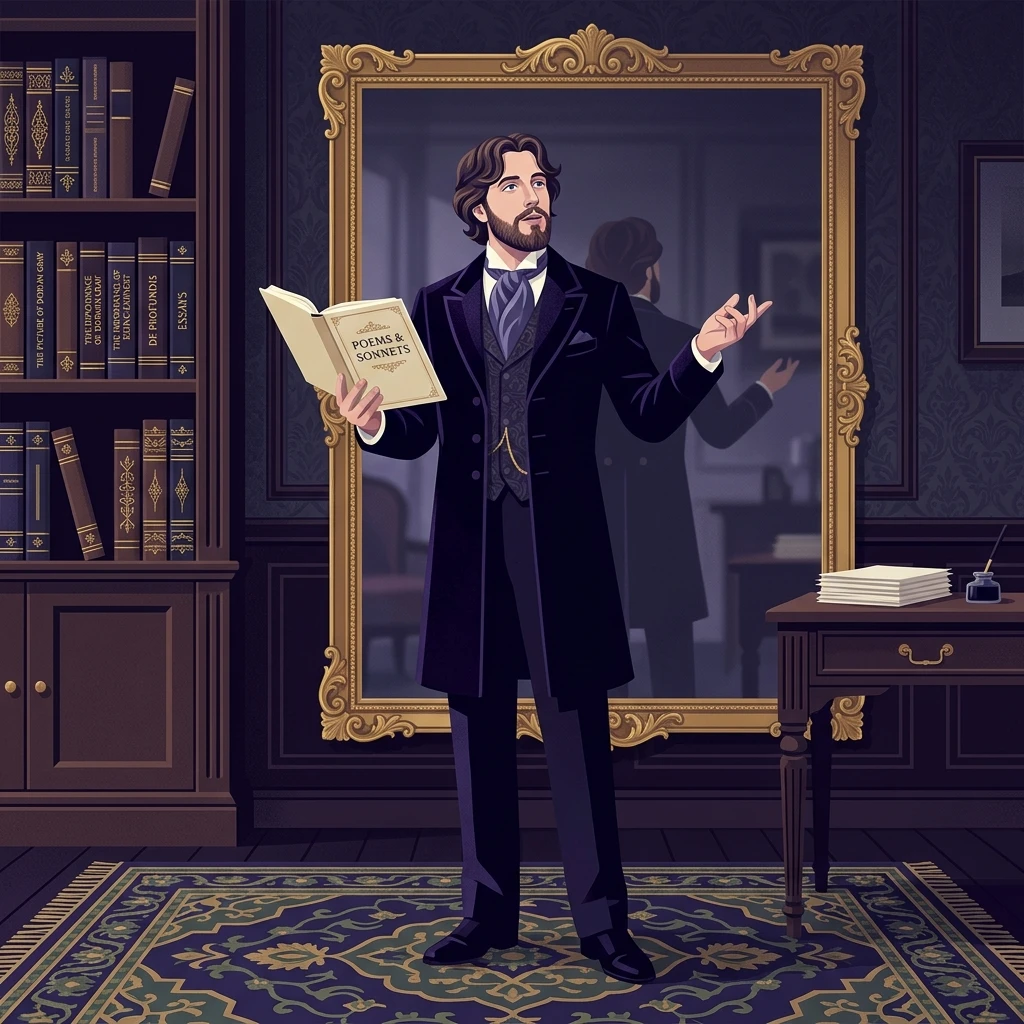
“I show up at the same table at the same time every morning so my muse knows exactly where to find me. Don’t wait for inspiration; it only shows up when it knows you’re sitting down to work.” ✍️
Stephen King (1947–) is the literary giant behind immortal bestsellers like Carrie, The Shining, Misery, and The Shawshank Redemption, boasting global sales exceeding 350 million copies. Maintaining an astonishing pace of publishing heavy, captivating novels year after year, King’s legendary productivity rests on a brilliantly engineered morning ritual.
As chronicled in his masterwork On Writing: A Memoir of the Craft, King sits at his desk at precisely 8:00 AM every single morning. Before writing a single word, he executes an unvarying sensory sequence: he takes a vitamin pill, pours a cup of tea or water, and blasts hard rock or heavy metal music (such as AC/DC or Anthrax). Once seated, King refuses to leave his desk until he completes a strict minimum threshold of 2,000 words (roughly six manuscript pages). He views this not as a superstition, but as a deliberate neurobiological conditioning process. Pairing sensory cues with executive focus conditions the brain to disengage decision friction and enter deep flow automatically, conserving prefrontal willpower and guaranteeing sustained daily output.
In today’s post, we unpack the cognitive neuroscience behind Stephen King’s ‘8:00 AM writing ritual’ and present a practical 3-step action guide to condition your brain for immediate, frictionless focus.
Historical & Academic Evidence
This content is based on Historical Verification from Stephen King's Memoir *On Writing: A Memoir of the Craft* (2000), King Archives & Cognitive Neuroscience and Cognitive Psychology Research.
 BuildSelf
Inspired by historical greats? Make it your daily habit!
BuildSelf
Inspired by historical greats? Make it your daily habit!

















1. Sensorimotor Learning and Classical Conditioning for Automated Deep Flow
Repeatedly pairing specific sensory cues (auditory, gustatory, spatial) with targeted behavioral output establishes Sensorimotor Learning and classical conditioning circuits within the brain. When Stephen King triggers sensory cues—taking vitamins, pouring tea, and playing loud hard rock—at the exact same desk at 8:00 AM, his nervous system perceives these inputs as a conditioned stimulus to initiate deep focus. This automated pathway minimizes prefrontal Prefrontal Cortex willpower expenditure (preventing ego depletion), allowing him to generate consistent daily output unaffected by shifting moods.
2. 3-Step Practical Routine for Modern Professionals
Step 1: Designating a Fixed Workspace and Non-Negotiable Working Hours
Secure a fixed desk space completely free from external interruptions during the timeframe when your willpower is most abundant. Working in inconsistent locations increases cognitive context-switching costs.
Step 2: Mechanical Execution of Fixed Sensorimotor Triggers
The moment you sit down, execute a precise sensory sequence—such as drinking a specific beverage or playing a dedicated playlist—transmitting an unambiguous 'focus start' signal to your nervous system.
Step 3: Uncompromising Adherence to a Daily Minimum Output Threshold
Establish a quantitative minimum output metric (e.g., 2,000 words or 1 proposal page). Remain seated until you physically complete the objective, regardless of mood or perceived inspiration.
3. Caution: Deliberately Triggering Focus via Environmental Conditioning Instead of Waiting for Inspiration
Inspiration is not something to passively await; it is a neurological state invoked intentionally through fixed sensory triggers at a dedicated time and place. Rather than relying on unreliable subjective willpower, design a pre-set sensory cue so your brain transitions into focus automatically the moment you sit down.
📌 Frequently Asked Questions (FAQ)
Why did Stephen King establish a specific daily minimum quota of 2,000 words? ▼
Relying on mood or subjective inspiration creates volatile, unpredictable output. Fixing a strict quantitative minimum forces the brain's executive control networks to operate consistently, shielding the creator from emotional slumps and creative blockades.
Must I replicate Stephen King's exact triggers, such as hard rock music or vitamins? ▼
No. The power lies in 'consistency' rather than the specific type of sensory trigger chosen. Selecting sensory inputs comfortable for you—such as drinking green tea, playing white noise, or turning on a warm desk lamp—and pairing them consistently prior to deep work delivers identical neurobiological conditioning benefits.