“Mental stamina governs physical strength, but what sustains that mental stamina is obsessive daily physical training. When you quiet your breath immediately after sweating, governance noise vanishes and supreme clarity emerges.” 🇸🇬
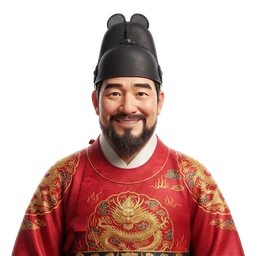
Lee Kuan Yew (1923–2015) was the legendary founding father and first Prime Minister of Singapore who served from 1959 to 1990, transforming a vulnerable, resource-poor island port into one of the world’s most prosperous financial and logistical powerhouses. Navigating complex geopolitical tensions and high-stakes national crises, Lee faced severe executive pressure and potential decision paralysis daily. How did he maintain sharp cognitive performance and emotional composure into his nineties?
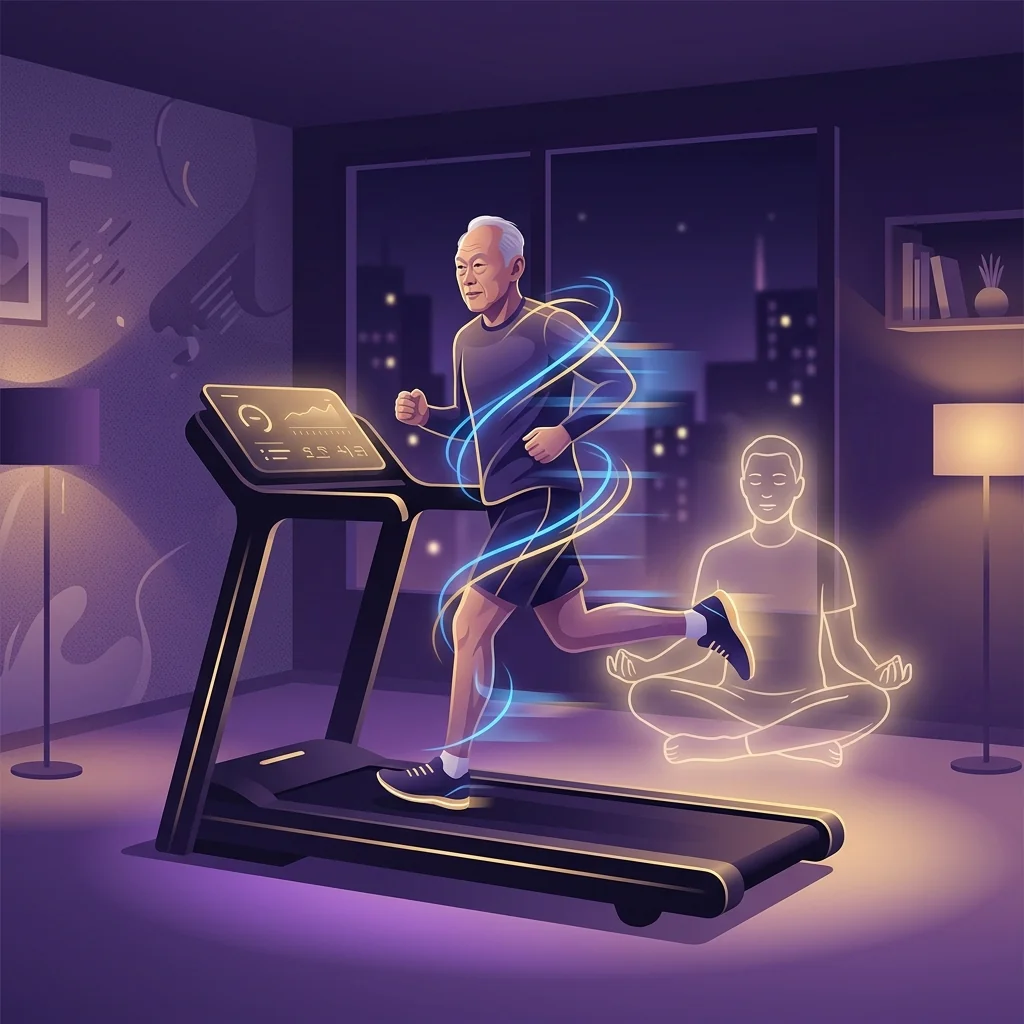
As chronicled in his autobiography The Singapore Story, Lee adhered to an unyielding evening physical and mental reset. Immediately upon returning home from the Istana, he spent 30 minutes executing a high-intensity cardio workout on a treadmill or stationary exercise bicycle, sweating profusely. Crucially, before heading to the shower, while his heart rate was still elevated, he sat cross-legged on the floor and practiced 20 minutes of silent diaphragmatic breathing meditation. Coupling intense cardiovascular arousal directly with deep meditative relaxation created a powerful neurobiological switch from sympathetic fight-or-flight dominance to parasympathetic restoration, clearing cortisol and resetting prefrontal executive function.
In today’s post, we examine the cognitive neuroscience and exercise physiology behind Lee Kuan Yew’s ‘post-workout meditation’ routine and present a practical 3-step action guide to eliminate burnout and restore autonomic homeostasis.
Historical & Academic Evidence
This content is based on Historical Verification from Lee Kuan Yew's Autobiography *The Singapore Story*, Singapore National Archives & Cognitive Neuroscience and Exercise Physiology Research.
 BuildSelf
Inspired by historical greats? Make it your daily habit!
BuildSelf
Inspired by historical greats? Make it your daily habit!
















1. Cortisol Clearance via Aerobic Stimulation and Parasympathetic Nervous System Transition
High-intensity aerobic exercise flushes metabolic waste and clears fatigue substances from the brain. Following exercise immediately with breathing meditation abruptly transitions the body from a hyper-aroused Sympathetic Nervous System state into a Parasympathetic Nervous System dominant state. This rapid autonomic nervous system switching lowers circulating cortisol concentrations in record time, elevating biological Homeostasis to its peak, restoring executive capacity in the Prefrontal Cortex, and re-establishing deep emotional equilibrium.
2. 3-Step Practical Routine for Modern Professionals
Step 1: 30 Minutes of High-Intensity Aerobic Cardio Exercise
Execute a 30-minute high-intensity cardio session—such as running on a treadmill or riding a stationary bicycle—until sweating profusely and significantly elevating respiration.
Step 2: Immediate Seated Meditation Posture Right After Workout
The moment you finish exercise, bypass other activities. Sit cross-legged on the floor or upright in a comfortable chair, close your eyes, and prepare your awareness.
Step 3: 20 Minutes of Diaphragmatic Breath Sensing & Autonomic Homeostasis Restoration
For 20 minutes, anchor your conscious awareness strictly onto physical breath sensations—the subtle temperature shift through your nostrils and diaphragm movements—stabilizing brainwaves into an alpha pattern.
3. Caution: Immediate Post-Workout Meditation Protocol to Harness the Physiological Golden Hour
The essence of Lee Kuan Yew’s routine is entering silent meditation immediately after exercise, prior to showering or engaging in other tasks. Regulating respiration while your heart rate is still elevated triggers the vagal nerve to switch autonomic states, driving a rapid drop in cortisol. Avoid inserting long breaks between cardio and meditation.
📌 Frequently Asked Questions (FAQ)
Can I take a clean shower before sitting down for meditation? ▼
No. The neurophysiological golden window for autonomic nervous system switching occurs 'immediately when heart rate reaches its peak'. If heart rate normalizes while taking a shower, the drastic shift from sympathetic to parasympathetic dominance diminishes, reducing rapid cortisol clearance. You must sit down right after sweating.
Is the meditation session a failure if random stray thoughts keep popping up? ▼
No, not at all. Distractions arising in consciousness is a completely natural neurological process. Mindfulness is not about forcefully erasing thoughts, but practicing attentional control—noticing when mind-wandering occurs and gently steering focus back to your breath. Every moment you notice distraction and return to the breath, you strengthen prefrontal executive attentional networks.