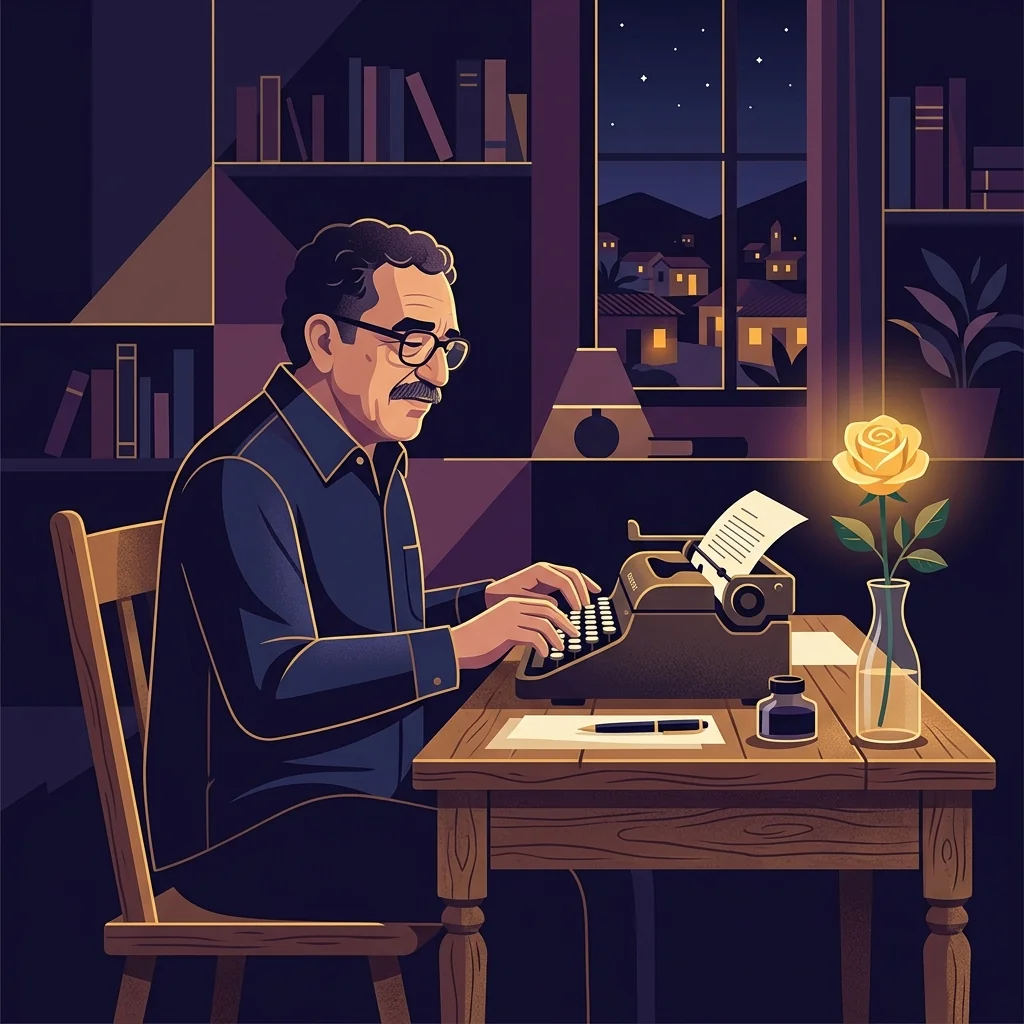
“As long as there are yellow roses on my desk, nothing bad can happen to me and work will progress.” 🌹
Gabriel García Márquez (1927–2014) was a Colombian novelist, journalist, and master of ‘Magical Realism’ who was awarded the Nobel Prize in Literature in 1982 for masterpieces such as ‘One Hundred Years of Solitude’ (Cien años de soledad) and ‘Love in the Time of Cholera’ (El amor en los tiempos del cólera). A cornerstone of his literary imagination was a single fresh yellow rose placed on his desk every morning. If the yellow rose was missing, he regarded it as bad luck and would not type a single character. Was this mere superstition, or was there cognitive science behind it?
His wife, Mercedes Barcha, picked a fresh yellow rose for him every morning and set it in a small glass vase on his desk. Beyond decoration, this single yellow rose served as a gateway into deep solitude and creative focus—a powerful cognitive trigger signaling to his brain that it was time to write.
In today’s post, we examine the scientific mechanisms behind Márquez’s ‘yellow rose ritual’ and present a 3-step routine to help knowledge workers relax the brain and unlock powerful creativity in busy workspaces.
Historical & Academic Evidence
This content is based on Historical Verification of Gabriel García Márquez's Biographies & Cognitive Neuroscience Research.
 BuildSelf
Inspired by historical greats? Make it your daily habit!
BuildSelf
Inspired by historical greats? Make it your daily habit!

















1. Why Visual Rituals Foster Creativity and Emotional Stability
Visually fixing and observing a specific color or natural object (like a yellow rose) sends a ‘safe and emotionally comfortable signal’ to the brain. Once relaxed, the brain emits Alpha Waves that enhance cognitive activity and focus, accelerating spontaneous associations and elevating creative, multi-dimensional thinking.
2. 3-Step Practical Routine for Modern Professionals
Set Up Your Personal Visual Trigger
Select a single visual medium that brings you emotional stability and focus (e.g. a fresh flower, houseplant, or minimalist artwork).
Position the Object in Place Before Work
Right before starting intense mental or creative work each day, place the selected medium in a fixed, visible spot on your desk.
Gaze at the Object to Transition into Relaxed Focus
Gaze lightly at the object for 10–20 seconds while regulating your breath, gently guiding your brain into a relaxed yet immersive state.
3. Precautions and Tips
Avoid cluttering your desk with overly flashy or distracting decorations. Excessive coloration causes visual fatigue in the brain and hinders focus; choose a minimalist approach with a single, simple, and clear object.
📌 Frequently Asked Questions (FAQ)
Does it have to be a yellow rose? ▼
No. The yellow rose was simply Márquez's personal medium for psychological comfort. You may freely choose any object that gives you peace, such as a green potted plant or a daffodil.