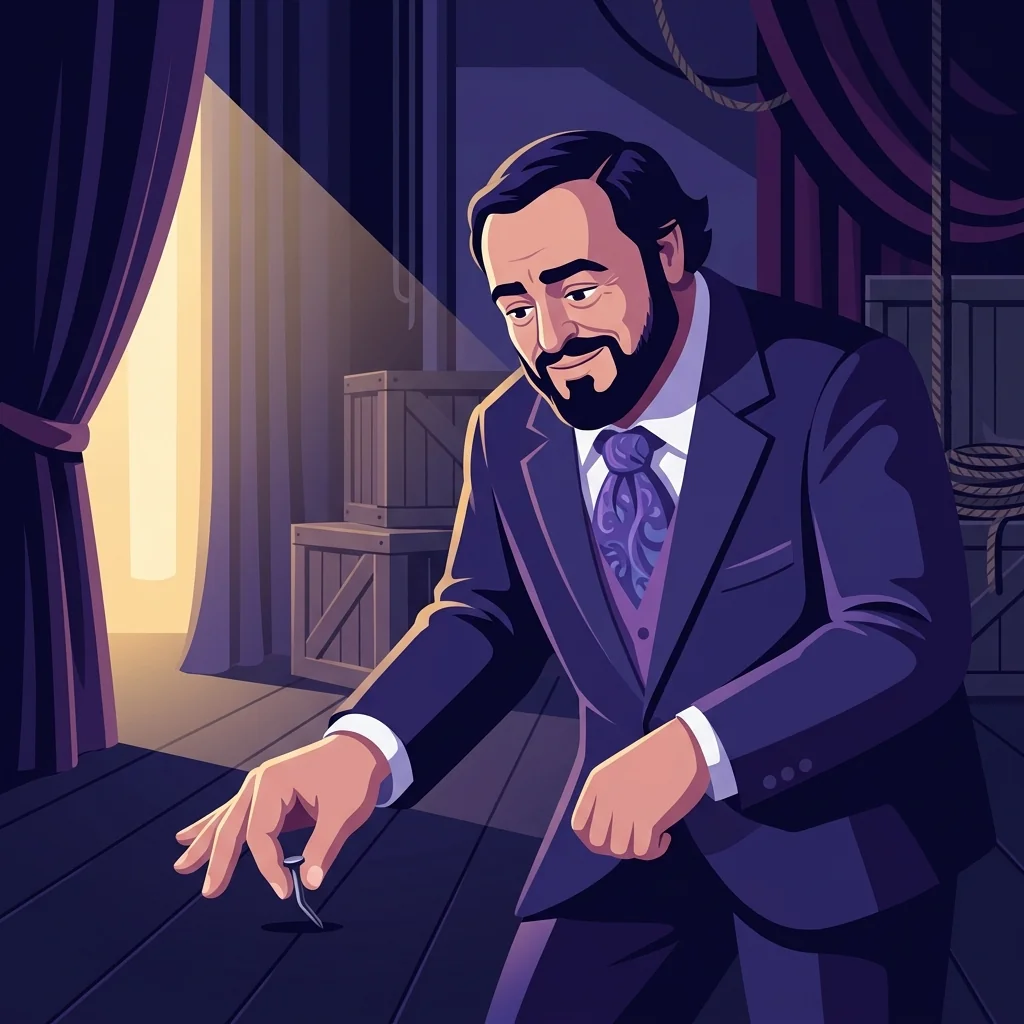
“I always perform my little ritual before going on stage. It is the only way to conquer my fear.” 🚶♂️
Luciano Pavarotti (1935–2007), widely considered one of the greatest tenors of all time, dubbed the ‘King of High Cs’ and a member of ‘The Three Tenors’ who mesmerized global audiences with his heavenly voice. Although he captivated listeners on stage with commanding volume and rich timbre, he was secretly an artist so sensitive that he suffered from crippling stage fright and performance anxiety, sometimes vomiting right before curtain call.
To manage this agonizing anxiety, Pavarotti devised a unique ritual: searching backstage floorboards right before showtime to find a ‘bent nail’ to slip into his pocket. While finding a bent nail is an Italian theater tradition symbolizing good luck, for Pavarotti it functioned as a powerful ‘sensory anchor’ that grounded his fear-overheated brain through physical tactile touch.
In this post, we explore the brain science behind Pavarotti’s bent-nail ritual and introduce sensory anchoring techniques for modern individuals facing high-stakes presentations or interviews to overcome stage fright and calm their minds.
Historical & Academic Evidence
This content is based on Historical biography and autobiographical records verification of Luciano Pavarotti & Cognitive Neuroscience research.
 BuildSelf
Inspired by historical greats? Make it your daily habit!
BuildSelf
Inspired by historical greats? Make it your daily habit!

















1. Ritualized Routines and Amygdala Anxiety Control
Facing high-stress speeches or performances triggers the brain’s amygdala to perceive a survival threat, activating ‘fight-or-flight’ and raising heart rate. Intentionally executing a specific sequence or ritual tricks the brain into perceiving a ‘sense of control’, calming amygdala hyperactivity. Furthermore, directing focus toward a concrete task like searching for an object shifts attention away from anxiety-inducing metacognition (thinking about thinking) to processing physical visual and tactile data.
2. 3-Step Practical Routine for Modern Professionals
Carry a Specific Tactile Item (Clip, Smooth Stone, etc.) in Your Pocket
Prepare a small item with a distinct texture or three-dimensional surface (lucky keychain, worry stone, clip) and keep it in your pocket.
1 Minute Before the Event, Focus Attention on the Item's Physical Texture
Close your eyes and roll the item slowly in your pocket. Consciously direct your tactile focus to the metal temperature, surface roughness, and edge firmness.
Verify Heart Rate Stabilization and Proceed with Confidence
Acknowledge that deep breathing and pulse rate have slowed through tactile grounding. Step forward confidently as your brain frees itself from tension and restores working memory capacity.
3. Securing Your Own Sensory Anchor to Release Tension
For Luciano Pavarotti, the bent nail was a clever sensory anchor that steadied severe emotional turmoil. You don’t need to hunt for nails; 1 minute before an interview or presentation, touch a coin or clip in your pocket and focus entirely on its solid, cool metallic sensation. As tactile data fills your neural network, stage fright calms rapidly.
📌 Frequently Asked Questions (FAQ)
Why did Pavarotti specifically search for a bent nail? ▼
In Italian theater culture, finding a bent nail backstage is an old omen of good luck. He began doing it as a simple superstition, but it evolved into a mandatory cognitive anchor that saved him from crippling stage fright.