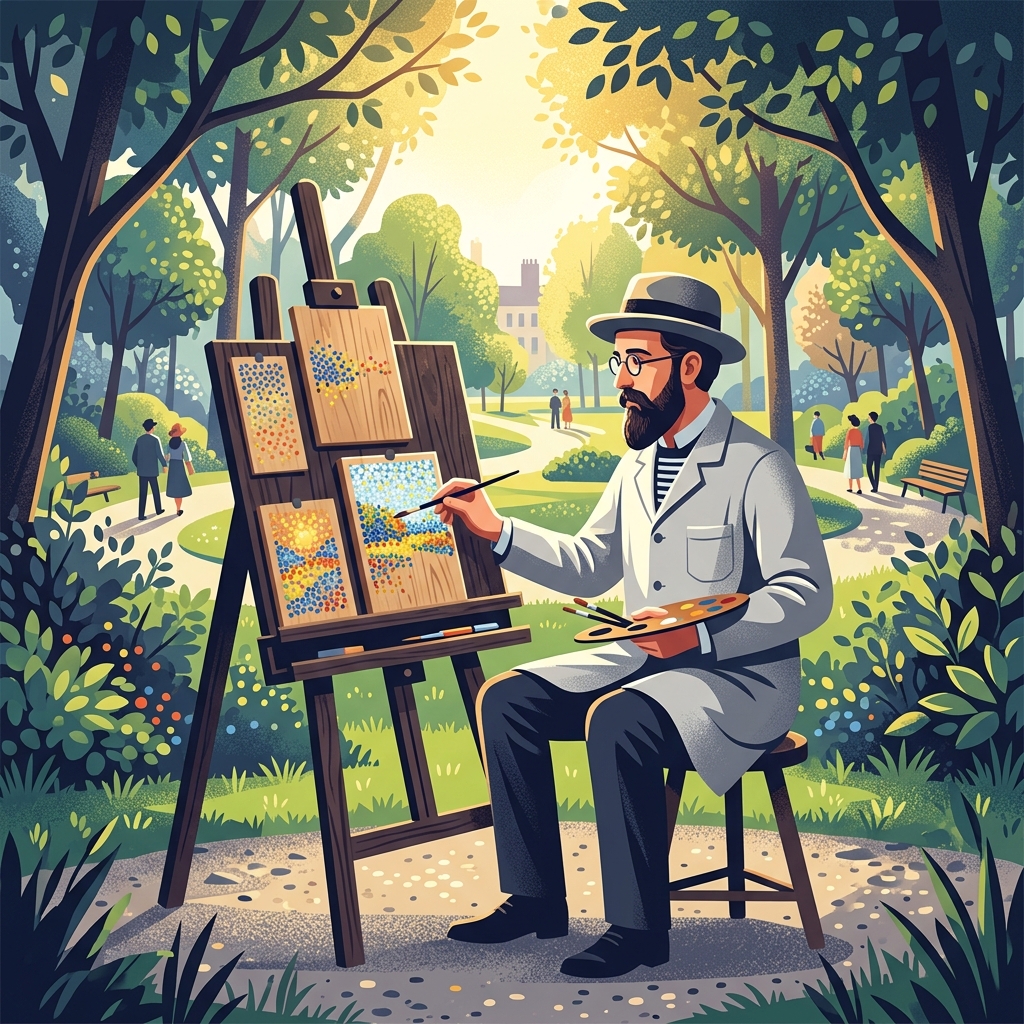
“Nature is my lifelong teacher. The straight line belongs to man, the curved line to God.” ⛪
Antoni Gaudí (1852–1926) was the master of Catalan Modernisme who revolutionized world architecture by seamlessly integrating natural geometry and organic forms into structural engineering. From the tree-like forest columns of the Sagrada Família to the undulating marine stone facades of Casa Milà and Park Güell, his works continue to awe humanity. Where did he uncover the spatial breakthroughs for these three-dimensional marvels?
Throughout his life, Gaudí maintained an uncompromising afternoon routine: walking at least 4 kilometers across Barcelona every single day, often traveling from his workshop at the Sagrada Família to the Church of Sant Felip Neri in the Gothic Quarter. As he walked, Gaudí meticulously scanned the natural world around him—observing the torsion of tree trunks, the delicate venation of leaves, catenary curves, insect wings, and animal skeletal structures. The combination of increased cerebral blood flow, tactile sensory feedback, and visual analysis of organic geometry formed the bedrock of his revolutionary architectural engineering.
In today’s post, we examine the cognitive neuroscience and environmental psychology behind Antoni Gaudí’s ‘4km organic walk’ routine and present a practical framework for creative ideation.
Historical & Academic Evidence
This content is based on Historical Verification from Gijs van Hensbergen's *Gaudí: The Biography* & Cognitive Neuroscience and Environmental Psychology Research.
 BuildSelf
Inspired by historical greats? Make it your daily habit!
BuildSelf
Inspired by historical greats? Make it your daily habit!

















1. Physical Walking and Cognitive Flexibility: Activating the Hippocampus and Visual Cortex
Prolonged sitting while fixating on a complex problem traps the prefrontal cortex in high arousal, collapsing cognitive flexibility and locking neural circuits into repetitive deadlocks. Gaudí’s 4km walking routine delivered simultaneous physical activation and rich visual stimulation, unlocking mental stagnation. Walking elevates heart rate, flooding the hippocampus and prefrontal cortex with oxygenated blood to boost neuroplasticity. A landmark Stanford University study demonstrated that walking increases creative ideation output by an average of 60% compared to sitting. Furthermore, observing natural shapes and architectural contours stimulates diverse neural populations across the Visual Cortex, allowing scattered memory fragments to recombine into novel, organic spatial structures.
2. 3-Step Practical Routine for Modern Professionals
Step 1: Digital Disconnection & Setting a 30–40 Minute Walk Route
Mute your smartphone and stow it in your pocket. Put on comfortable walking shoes and select a green space or quiet urban path that allows uninterrupted walking for 30 to 40 minutes.
Step 2: Conscious Observation of Natural & Architectural Patterns
As you walk, observe surrounding natural and built structures. Direct your gaze to structural patterns—branching angles, leaf veins, cloud textures, or architectural curves—gently stimulating your visual cortex.
Step 3: Immediate Idea Structuring in the Post-Walk High-Perfusion State
Immediately after walking—when cerebral oxygenation and prefrontal blood flow reach their peak—sit down with a notebook. Sketch or outline your target problem or proposal while your brain is primed.
3. Caution: Prioritize Organic Structural Observation Over Intense Caloric Exercise
For Gaudí, walking was not an intense calorie-burning workout or cardio session; it was a deliberate spatial design process—scanning natural forms and linking internal geometric patterns. Avoid rushing toward a destination at a competitive pace. Adjust your walking tempo to preserve mental bandwidth, allowing your visual sense to carefully absorb structural patterns in nature and urban architecture.
📌 Frequently Asked Questions (FAQ)
Is it mandatory to walk in natural parks or dirt trails for this method to work? ▼
While natural scenery is most effective for stress reduction and attention restoration, walking through irregular urban alleyways or observing unique architectural structures stimulates the visual cortex just as well, making city walks an excellent alternative.
Can I replace this walking routine with intense running or treadmill workouts? ▼
Intense running or indoor treadmill sessions are great for cardiovascular conditioning, but fail to provide the cognitive bandwidth needed for visual exploration and contemplation. To trigger creative ideation and brain reset, a steady, deliberate 'exploration walk' is optimal.