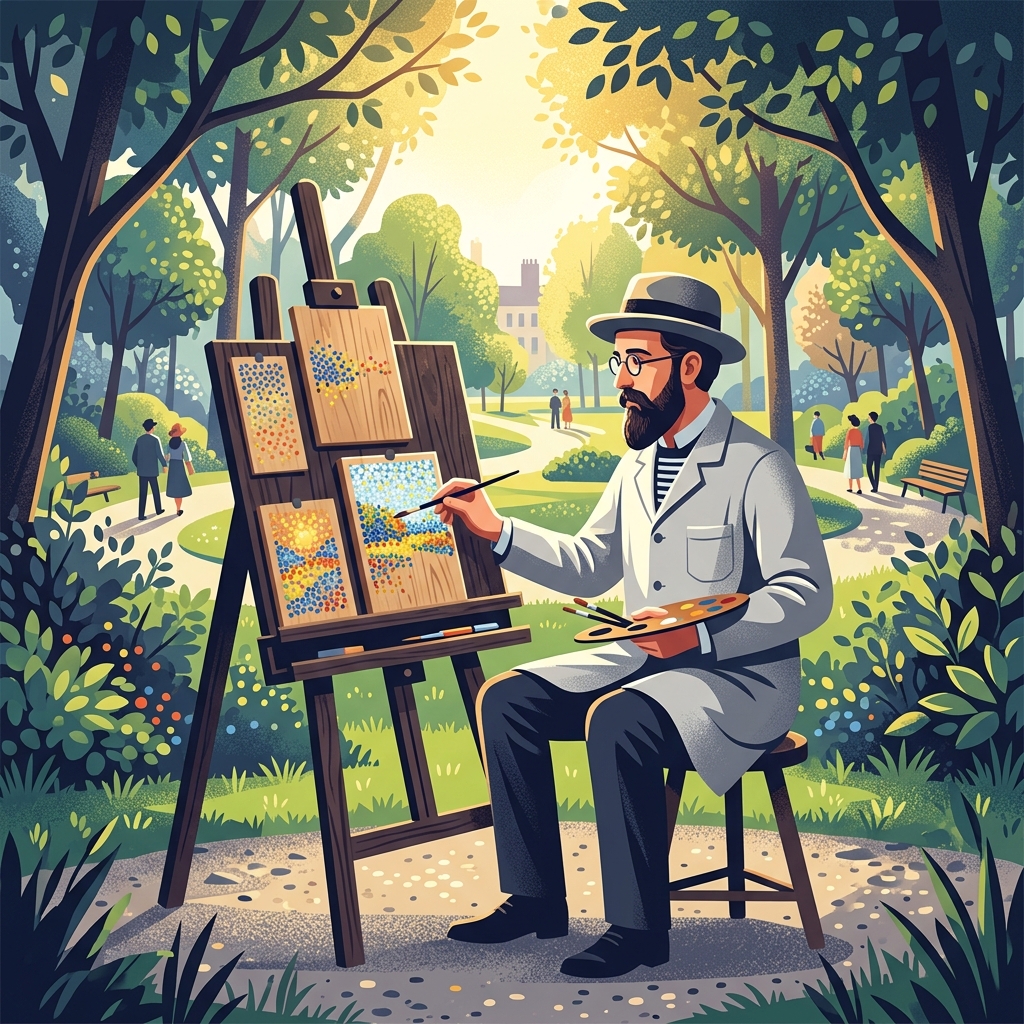
“Sudden illumination is a manifest sign of long, unconscious prior work, preceded by voluntary conscious effort.” Henri Poincaré, the polymath, solver of the three-body problem, and pioneer of chaos theory, was one of the greatest mathematicians in history. Remarkably, Poincaré enforced a strict boundary of working only 4 hours a day at his desk. He focused deeply from 10:00 AM to 12:00 PM and 5:00 PM to 7:00 PM, spending the rest of the day walking, relaxing, or conversing to let his brain recharge offline. Crucially, Poincaré recalled that the breakthroughs to his most complex mathematical challenges—such as Fuchsian functions—did not occur while staring at equations, but suddenly flashed into his mind the moment he stepped onto an omnibus during a geological excursion in Coutances. He realized that intensive conscious effort followed by complete rest (an incubation phase) allows the brain’s subconscious networks to combine ideas creatively. This post explores the neuroscientific interaction between the focused and diffuse modes of the brain in Poincaré’s 4-hour routine and offers a 3-step actionable guide.
Historical & Academic Evidence
This content is based on Historical Biographies and Writings on Henri Poincaré & Cognitive Neuroscience Research.
 BuildSelf
Inspired by historical greats? Make it your daily habit!
BuildSelf
Inspired by historical greats? Make it your daily habit!

















1. Focused Mode vs. Diffuse Mode: Subconscious Problem Solving
According to cognitive science and neurophysiology, the brain operates in two distinct modes: ‘Focused Mode’ and ‘Diffuse Mode’. In Focused Mode, as when working intently at a desk, the prefrontal cortex narrows its scope to highly specific neural pathways. However, when you step away and rest or walk, the brain transitions into Diffuse Mode, activating the Default Mode Network (DMN) which connects widespread regions across the brain.
During Diffuse Mode, the subconscious mind engages in ‘Incubation’—randomly recombining disparate pieces of information. Breakthrough solutions to unsolvable mathematical equations flash into mind during rest because Diffuse Mode lowers executive control barriers, forming novel neural connections that were blocked during intense focus.
2. 3-Step Practical Routine for Modern Professionals
Set a Daily Fixed 'Focus Time Limit'
Planning to maintain hyper-focus for 8 hours straight is physiologically impossible. Like Henri Poincaré, set strict time blocks—such as two 2-hour blocks totaling 4 hours—with a timer and execute your core work during these windows.
Step Away Immediately When Hitting a Plateau
If you make no progress on a problem for 15 minutes, step away from your desk instead of forcing it. Sever the focused network and activate Diffuse Mode by taking a 15–20 minute walk or doing light non-mental tasks.
Capture Subconscious Inspirations Instantly
Answers surfaced by the subconscious during rest evaporate quickly like a flashing light. Use a notepad or voice memos on your phone to instantly record and save creative epiphanies as soon as they strike.
3. A Neuroscientific Insight for Sustainable Focus
Creative breakthroughs do not happen by forcing yourself. Set a firm limit on your focused work time, and when stuck on a tough problem, step away and take a walk to grant your brain Diffuse Mode rest. Your subconscious mind will process the answer for you.
📌 Frequently Asked Questions (FAQ)
Why did Henri Poincaré only research for 4 hours a day? ▼
Forcing prolonged focus narrows the brain's cognitive vision and reduces creativity. Limiting conscious work to 4 hours allowed Poincaré to activate Diffuse Mode through rest and walking, unlocking subconscious creative inspiration.