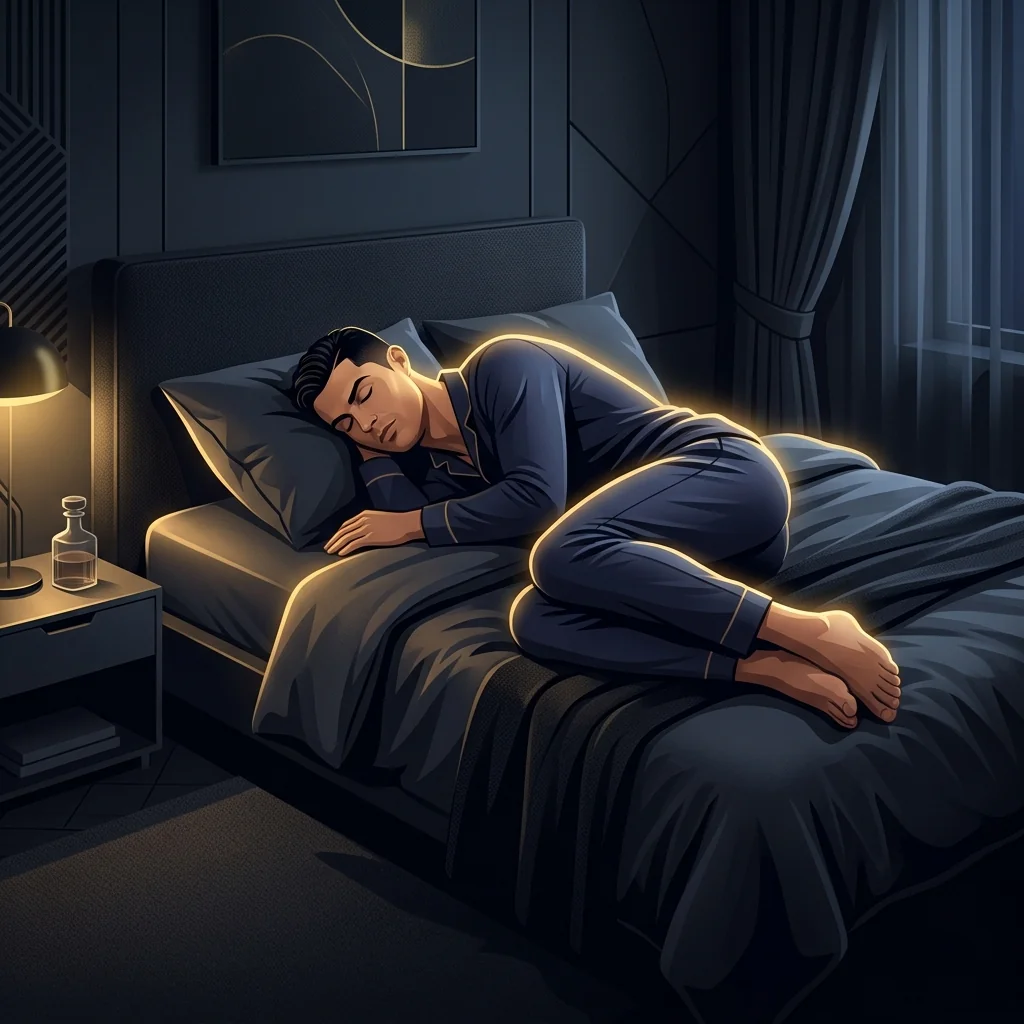
“To be a better player today than yesterday, that is my only goal.” Cristiano Ronaldo, a living legend in world football, maintains explosive speed and elasticity in top leagues even near age 40. Born in Madeira, Portugal, Ronaldo rose to global stardom at Manchester United and Real Madrid, winning five Ballons d’Or. Among his legendary self-care discipline, his sleep strategy is particularly unique and scientific. Ronaldo does not sleep 8 continuous hours at night. Instead, under the guidance of elite sports sleep coach Nick Littlehales, he adheres to the R90 Sleep Cycle—taking five 90-minute sleep sessions throughout a 24-hour day (totalling 7.5 hours). After high-intensity training sessions or matches, he lies down in a temperature-controlled, fully blackout room in a fetal position for a 90-minute recovery sleep. This polyphasic approach accelerates lactate clearance and muscle repair while keeping cognitive response times razor-sharp. This post breaks down the neuroscience and physiological benefits of Ronaldo’s sleep routine and provides practical application steps for modern individuals.
Historical & Academic Evidence
This content is based on Historical Biographies and Autobiographical Records of Cristiano Ronaldo & Cognitive Neuroscience Research.
 BuildSelf
Inspired by historical greats? Make it your daily habit!
BuildSelf
Inspired by historical greats? Make it your daily habit!

















1. 90-Minute R90 Cycles and Optimizing Growth Hormone Release
A natural human sleep cycle consists of Non-REM and REM sleep lasting approximately 90 minutes. Forcing yourself awake mid-cycle causes ‘sleep inertia,’ leaving the brain groggy.
Ronaldo’s 90-minute polyphasic sleep respects the natural unit of the brain’s sleep cycle, eliminating cognitive fog upon waking and keeping the brain sharply alert. Moreover, during the deep Non-REM stage early in each sleep cycle, the pituitary gland secretes Growth Hormone. Splitting sleep into multiple sessions triggers multiple peaks of growth hormone secretion throughout the day, accelerating muscle cell repair and lactate clearance far faster than traditional monophasic sleep.
2. 3-Step Practical Routine for Modern Professionals
Plan Sleep Timing and Secure a 90-Minute Session
Allocate a 90-minute slot during midday or post-training fatigue peaks. If a full 90 minutes is impossible, schedule a 30-minute power nap proven to reset cognitive performance.
Block Light and Noise Completely and Align in Fetal Position
Wear a sleep mask and earplugs, drawing blackout curtains to darken the room completely. Lie on your side with knees slightly bent in a comfortable fetal position to assist spinal alignment and brain relaxation.
Natural Waking and Light Hydration
When the alarm rings, wake up promptly and turn on bright lighting. Drink a glass of lukewarm water slowly immediately after waking to rehydrate and stimulate blood circulation.
3. Blackout Environment and Sleep Posture Determine Sleep Efficiency
To succeed with polyphasic sleep or power naps, environmental control must be absolute. Minor light leaks or ambient noises disrupt deep brain relaxation. To reduce cardiovascular stress and keep the spine aligned, sleep in a fetal position lying on your side with knees gently bent.
📌 Frequently Asked Questions (FAQ)
Do I need to do polyphasic sleep during the day if I sleep well at night? ▼
For typical office workers, repeating 90-minute sleep sessions during the day is unnecessary. However, if you undergo high-intensity physical training or suffer sleep loss from late-night work, temporarily applying a 90-minute cycle or a 30-minute nap is a great way to reset your body.
When sleeping in the fetal position, which side is better to lie on? ▼
According to sports medicine research, lying on your right side is generally recommended. Since the heart is situated on the left side of the chest, sleeping on your right side reduces cardiac pressure and supports comfortable cardiopulmonary circulation.