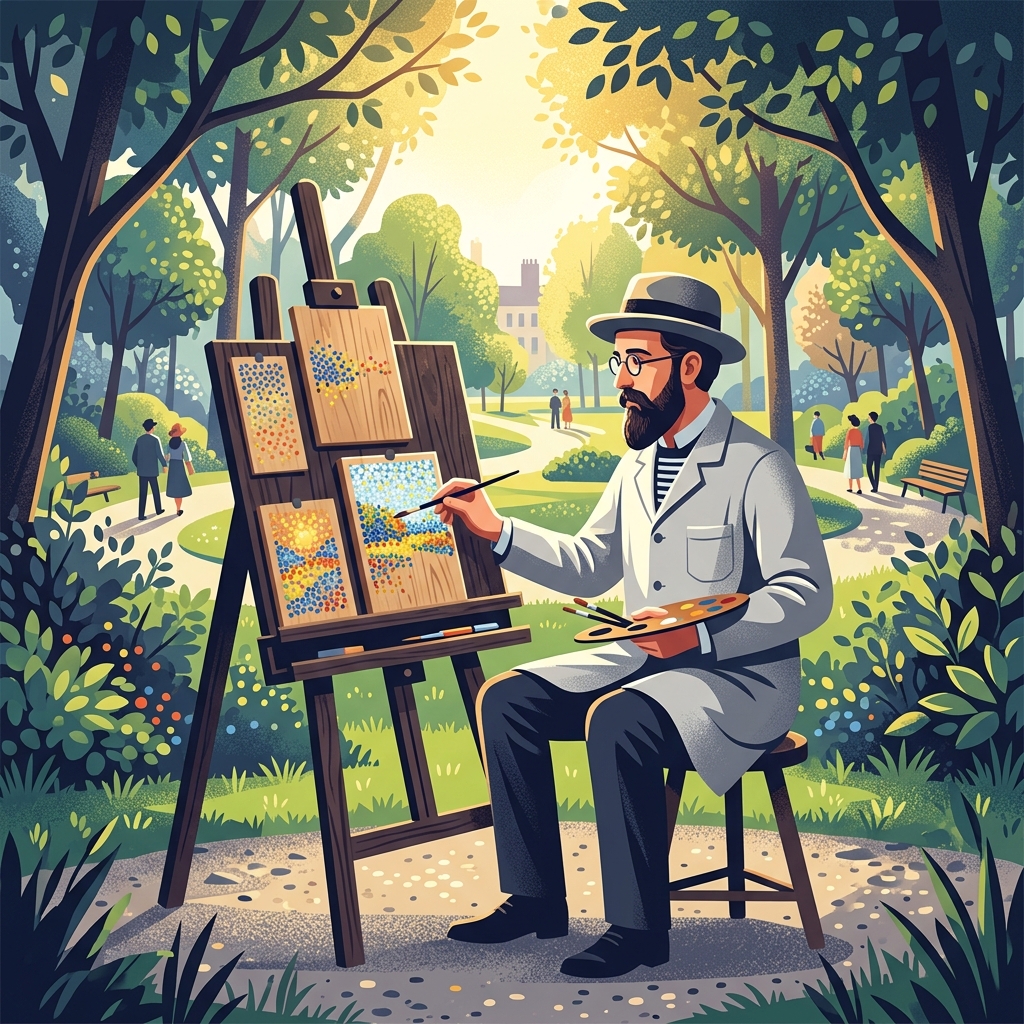
“While quietly gazing at dew-drenched blades of grass, cucumber vines, and the tiny footsteps of insects creeping underneath, complex brain fatigue is washed away, springing forth a clear well of creativity.” 🌿
Shin Saimdang (1504–1551) was a prominent female artist, poet, and calligrapher of Korea’s Joseon Dynasty, as well as the mother of the revered scholar Yi I (Yulgok). Her paintings depicting eggplants, grasshoppers, watermelons, and field mice are celebrated today as masterworks of Korean art history, known as Chochungdo (Paintings of Insects and Plants). The secret behind her timeless artistic depth and elegant creativity was none other than her daily morning habit of walking into her garden to meticulously observe plants and insects.
In modern life, we fix our eyes on digital stimuli such as computer monitors and smartphones, continuously draining the brain’s ‘Directed Attention’. When sustained, this depletes the prefrontal cortex’s cognitive battery, causing mental fatigue, stress, and diminished creativity. Shin Saimdang gifted her brain deep rest each morning by quietly contemplating the organic, geometric order of nature that demands no artificial focus.
In today’s post, we examine Attention Restoration Theory and the scientific principle of ‘Soft Fascination’ hidden within Shin Saimdang’s nature observation routine, presenting a 3-step analog observation practice to recharge tired brains and open fresh creative vision.
Historical & Academic Evidence
This content is based on Historical biography and research on Shin Saimdang's Nature Observation & Cognitive Neuroscience studies.
 BuildSelf
Inspired by historical greats? Make it your daily habit!
BuildSelf
Inspired by historical greats? Make it your daily habit!

















1. Attention Restoration Theory and Brain Healing of ‘Soft Fascination’
According to Attention Restoration Theory in environmental psychology, ‘Directed Attention’ used in urban environments or on digital screens causes severe cognitive drain in the prefrontal cortex, leading to fatigue. Conversely, comfortably observing natural elements like blades of grass, flowers, or breeze enters a state of ‘Soft Fascination’. This recharges the frontal lobe’s cognitive battery and activates the creative visualization network, drawing fresh inspirations.
2. 3-Step Practical Routine for Modern Professionals
Visit a Garden or Green Space Every Morning
Every morning before starting work, move to a small garden, park, or house plants on your balcony, filling your eyes with natural green instead of a screen.
Ultra-Precise Observation of a Specific Object
Select a single leaf, petal, or small insect and gaze quietly for 3–5 minutes, absorbing leaf vein patterns, bark texture, and subtle color gradients into your mind.
Visual and Tactile Analog Archiving of Observed Forms
Return indoors and record the observed subject at least once a day using analog media—pencil sketches, brief written descriptions, or doodles—to internalize visual thinking.
3. Saimdang’s Advice for Recharging Inspiration and Mind
Wise creativity does not spring forth by forcing your brain. Step away from your desk for a moment, quietly observe a blade of wild grass or a creeping insect, and give your brain a rest. In natural relaxation, the brain refills depleted energy and returns fresh inspiration.
📌 Frequently Asked Questions (FAQ)
What is the scientific principle behind nature observation reducing brain stress? ▼
Because instead of 'Directed Attention' triggered by city noises or screens, entering the state of 'Soft Fascination' while viewing natural objects completely resets depleted cognitive energy in the frontal lobe.