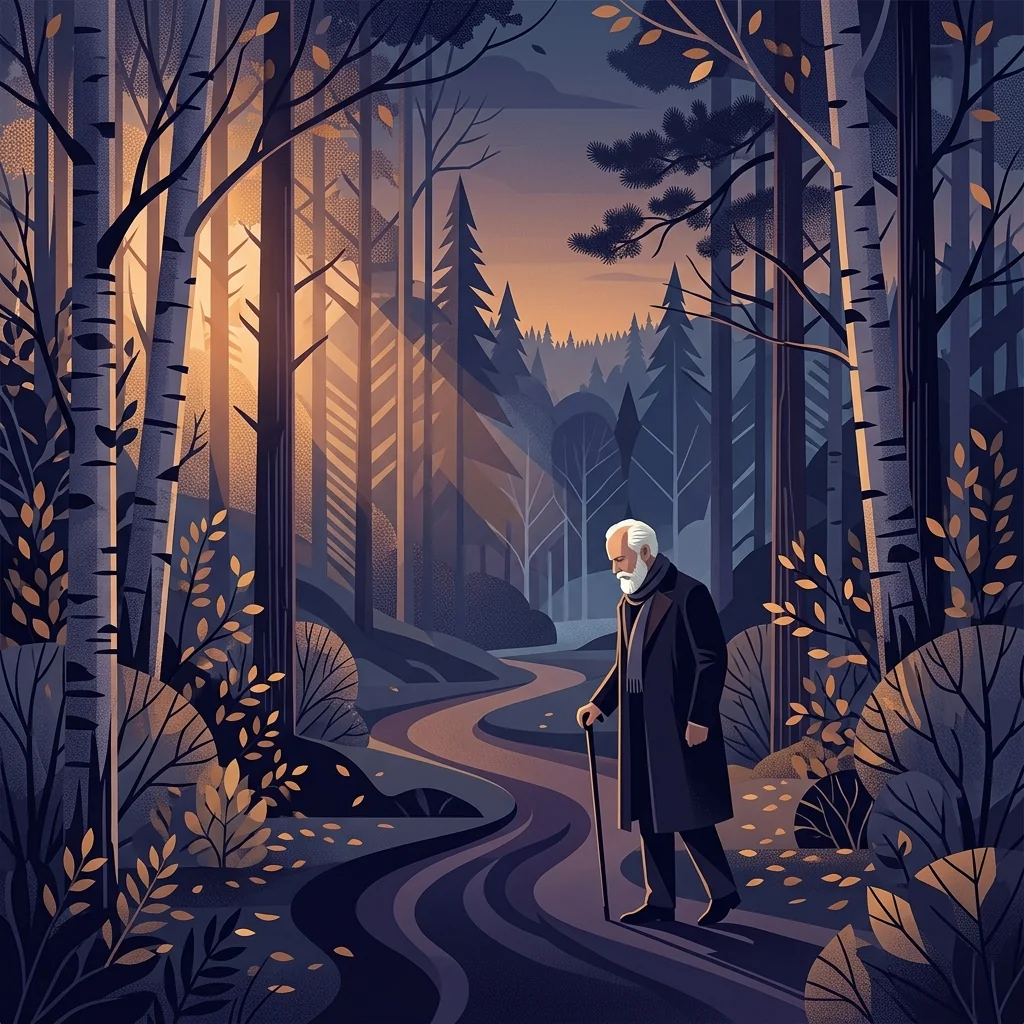
Pyotr Ilyich Tchaikovsky (1840–1893) was a master of Russian Romantic music who composed timeless melodies such as ‘Swan Lake’, ‘The Nutcracker’, and the ‘Pathétique Symphony’. Constantly struggling with neurasthenia and emotional anxiety, the core driving force that sustained his life and unlocked brilliant musical ideas was his daily habit of walking for precisely two hours. 🚶♂️
Tchaikovsky observed a strict discipline regarding his creative work. Every afternoon without fail, he stepped outside to walk for exactly two hours. He followed this two-hour walking routine with near-superstitious devotion, convinced that if he cut the walk short even by a few minutes, he would fall ill or lose his musical inspiration. As he walked, musical motifs constantly bubbled up in his mind, which he promptly jotted down in a pocket notebook.
In this article, we examine the scientific reasons behind Tchaikovsky’s two-hour contemplative walks and explore how modern individuals can clear their minds to spark creative inspiration.
Historical & Academic Evidence
This content is based on Modest Tchaikovsky, The Life and Letters of Peter Ilich Tchaikovsky (1904) & Cognitive Neuroscience research.
 BuildSelf
Inspired by historical greats? Make it your daily habit!
BuildSelf
Inspired by historical greats? Make it your daily habit!

















1. Stabilization of Brainwave Rhythms from a Disciplined Daily Two-Hour Walk
Tchaikovsky’s disciplined habit of walking outdoors for exactly two hours every day at a fixed time increased blood flow to the visuospatial cortex and hippocampus, providing the momentum to incubate beautiful symphonic melodies in his mind. Continuous walking activates the Default Mode Network (DMN), facilitating the combination of unconscious memories and emotional melodies.
2. 3-Step Practical Routine for Modern Professionals
Secure a Fixed Daily 2-Hour Walk Time and Quiet Route
Block smartphones and external notifications at a set afternoon time every day, securing a two-hour walking window and a quiet outdoor route dedicated solely to walking.
Carry a Portable Note-Taking Tool and Walk Rhythmically
Carry a pocket notebook and pen, walk at a steady tempo, and immediately jot down ideas and inspirations that bubble up from your unconscious mind without hesitation.
Complete the Full Allocated Time and Immediately Return to Creative Work
Complete the full two-hour walk routine without quitting halfway to boost cerebral blood flow and relax the nervous system, then return immediately to your desk to organize your thoughts.
3. Importance of Adhering to the Walking Discipline
Just as Tchaikovsky strictly protected his walk time, external distractions such as smartphones or work notifications must be completely blocked during walking aimed at inspiration. Complete the set walking routine fully to allow your brain to reach emotional calmness and creative immersion.
📌 Frequently Asked Questions (FAQ)
Why did Tchaikovsky strictly observe a two-hour walk? ▼
It helped him control psychological anxiety through strict discipline, increase cerebral blood flow through continuous two-hour walking, and relax his autonomic nervous system so that musical melodies could flow naturally.