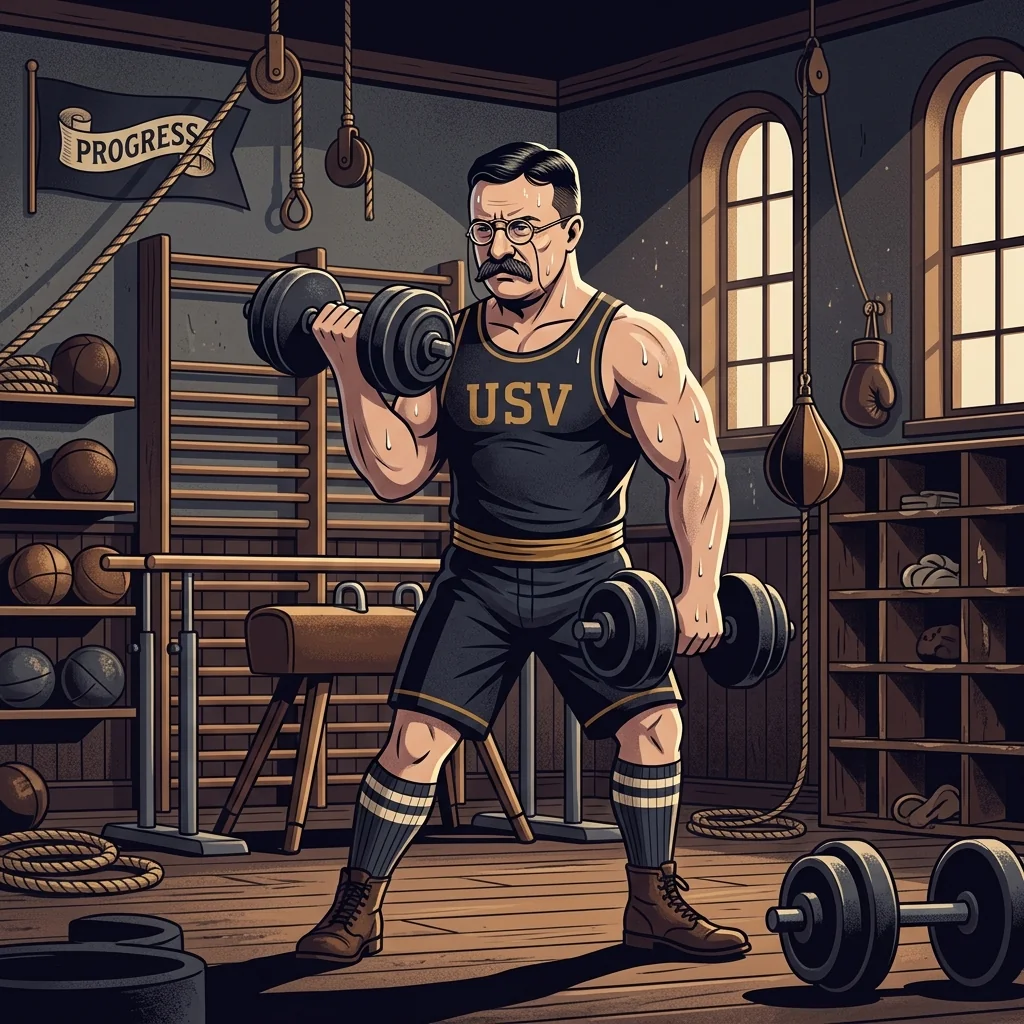
Theodore Roosevelt, the 26th President of the United States, assumed office as the youngest president in American history, championing progressive reforms and establishing global leadership. To overcome severe childhood asthma and a frail physique, he engaged in intense physical training every morning, lifting heavy weights to his limits. This explosive morning exercise habit transformed a frail boy into a formidable leader, fueling his iron willpower and brain alertness throughout his presidency.
In this post, we explore the cognitive science principles behind his habit of ‘intense morning physical training in the gym’ and introduce a 3-step practical guide for modern individuals.
Historical & Academic Evidence
This content is based on Historical biographies and autobiographical records of Theodore Roosevelt & Cognitive Neuroscience research.
 BuildSelf
Inspired by historical greats? Make it your daily habit!
BuildSelf
Inspired by historical greats? Make it your daily habit!

















1. Neuroscientific Principles Driving His Success
Short bursts of intense morning exercise overcoming resistance rapidly expand oxygen saturation and blood flow to the cerebral cortex and prefrontal cortex. This stimulus maximizes the secretion of Brain-Derived Neurotrophic Factor (BDNF), which drives neuronal network formation, supports hippocampal cognitive neurogenesis, and clears fatigue-inducing cortisol to awaken peak decision-making capability.
2. 3-Step Practical Routine for Modern Professionals
Step 1: Environment Setup and Tool Preparation
Select one high-intensity physical movement, such as bodyweight squats, push-ups, or fast stair climbing, every morning before leaving or at a set time. Complete breathing alignment.
Step 2: Full Sensory Focus and Execution
Perform the chosen exercise for 3 minutes at a brisk pace where your breathing quickens and clear muscle resistance feedback is felt, immersing all senses.
Step 3: Objective Review and Meta-Synthesis
Immediately after finishing the exercise, drink a glass of cool water, observe your pounding pulse, and notice the refreshing sensation of clear blood flow awakening every brain cell.
3. Behavioral Science Advice for Successful Implementation
Do not drain your physical stamina and willpower battery with excessively long training before even starting your workday. A light, intense 3-minute micro-exercise is more than sufficient to stimulate brain alertness.
📌 Frequently Asked Questions (FAQ)
I feel sleepy after finishing intense morning training. ▼
That occurs when overexertion causes fatigue-accumulating substances to surge. You must strictly limit the exercise to a 3-minute timer as soon as you reach the breathlessness threshold so that only refreshing, awakening dopamine charges your brain.
How should beginners with significantly low physical fitness get started? ▼
Any aerobic or strength training—such as brisk marching in place or light jogging on the spot—will produce equivalent brain-awakening benefits as long as it reaches an intensity that causes slight sweating based on your current cardiopulmonary fitness.