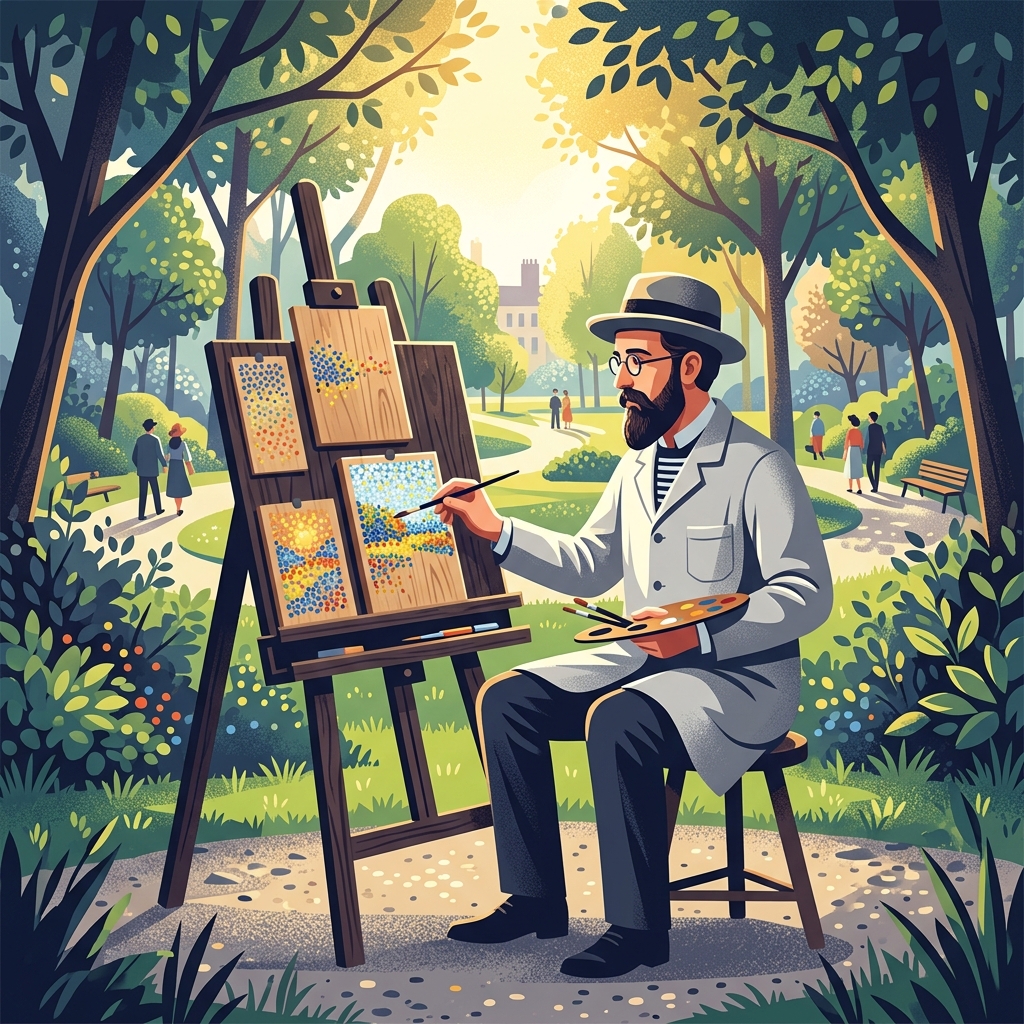
Joseph Mallord William Turner (1775–1851), a prominent 19th-century British Romantic painter known as the ‘Painter of Light’ for his ability to capture subtle changes in light and atmosphere, woke up earlier than others every dawn to observe the majestic sunlight and cloud scattering at sunrise. This dawn light observation reset his circadian rhythm and provided him with profound artistic inspiration.
In today’s post, we introduce the cognitive scientific principles behind painter Turner’s dawn sunrise observation routine.
This routine is not a mere one-time habit, but is based on a thorough scientific mechanism that reduces prefrontal cognitive overload and strongly engraves long-term memory synaptic circuits. Based on verified historical facts and cutting-edge neuroscience research, we analyze concrete practical methods.
Historical & Academic Evidence
This content is based on Historical biographies and autobiographical records of J.M.W. Turner & Cognitive Neuroscience research.
 BuildSelf
Inspired by historical greats? Make it your daily habit!
BuildSelf
Inspired by historical greats? Make it your daily habit!

















1. Gradual Changes in Light Stimulating the Visual Cortex
The sky at sunrise undergoes a rapid change in color temperature within a short time, shifting from low blue light to bright natural daylight. This gradual visual stimulation highly trains the contrast sensitivity of the brain’s visual cortex.
Training oneself to elaborate visual information in the mind and engrave it in the ‘mind’s eye’—rather than immediately painting the stimulus on canvas—connects the parietal lobe and frontal lobe of the brain, enhancing visuospatial working memory. This serves as the neurological foundation for capturing the essence of light and nature in three dimensions and unleashing creative brilliance.
2. 3-Step Practical Routine for Modern Professionals
Admiring the Dawn Sky
Go outdoors or stand by a window just before sunrise, and comfortably observe the unique transition of the sky where faint reddish hues and cool blue light meet in the atmosphere.
Gazing at Scattered Light and Color Transitions
Attentively gaze for 5 minutes at the gradients created as light scatters against clouds or mist. Engrave the detailed subtle changes of sky contrast and colors into your eyes and mind.
Writing a One-Line Record of Visual Impressions
After observing, write a short single-sentence note in a notebook or smartphone about the most striking contrast of colors or feeling of mist to consolidate your visual cognitive perception.
3. Caution: Do Not Gaze Directly at Intense Sunlight
The core of Turner’s routine is not to look directly at the strong light source of the sun. It is to observe the soft scattered light spreading through the faint sky, mist, or clouds just before sunrise. To prevent retinal damage, avoid looking directly at intense sunlight for extended periods.
📌 Frequently Asked Questions (FAQ)
Should I practice this routine even on cloudy or foggy days? ▼
It is actually better. Turner preferred observing the scattered atmospheric light on cloudy, snowy, or foggy days over bright sunny days. On overcast days, you can capture the subtle shade transitions created by light and atmospheric moisture much better.
Is it okay to observe sunlight during the day if I struggle to wake up early at dawn? ▼
Intense daylight during the day is too harsh for the retina and can easily cause eye damage, while its constant color temperature offers lower contrast sensitivity training benefits. The gentle shift from cool blue to warm orange just before sunrise is the safest and maximizes neuro-stimulation effects.