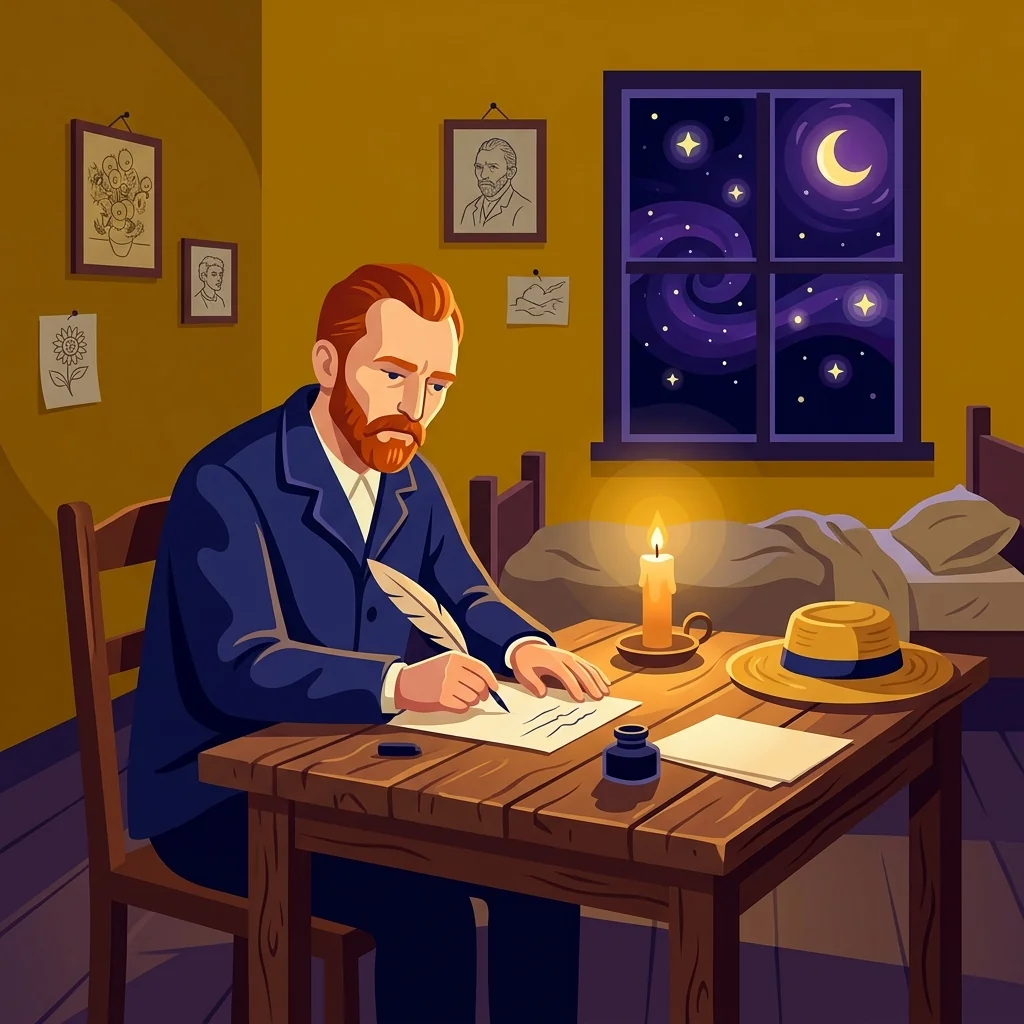
Vincent van Gogh (1853–1890), one of the greatest painters in late 19th-century art history and a pioneer of Expressionism, sold only a single painting during his lifetime amid extreme poverty and mental isolation, yet left behind immortal masterpieces that captivate humanity today. As a master of French Post-Impressionism, he wrote over 660 letters to his brother Theo throughout his life to overcome loneliness and internal torment. Every night, stepping away from his canvas, he lit a candle in his room and poured out his agonizing thoughts and color inspirations in epistolary form to purify his mind.
In today’s post, we introduce the cognitive scientific principles behind his habit of ‘late-night letter writing to release complex emotions and creative anguish’, along with a 3-step practical guide for modern individuals.
Historical & Academic Evidence
This content is based on Historical biographies and autobiographical records of Vincent van Gogh & Cognitive Neuroscience research.
 BuildSelf
Inspired by historical greats? Make it your daily habit!
BuildSelf
Inspired by historical greats? Make it your daily habit!

















1. Neuroscientific Analysis of Emotional Purification and Focus
Epistolary reflection that objectifies and records emotions through writing strengthens prefrontal cognitive control and regulates excessive anxiety in the amygdala. Translating emotions into sophisticated language suppresses limbic system arousal in a top-down manner, enhancing metacognitive resolution to restore mental clarity and psychological resilience.
2. 3-Step Practical Routine for Modern Professionals
Step 1: Environment and Tool Setup
Every evening or after work, prepare a light notebook and handwrittenly record 3 negative thoughts or emotional cues weighing on your mind without filtering.
Step 2: Objective Observation and Emotional Deconstruction
Look coolly at the written thoughts as if viewing them from a third-person perspective, face the emotional discomfort directly for 2 minutes, and qualitatively deconstruct it.
Step 3: Metacognitive Resolution and Action Planning
Write down a single-line micro action plan for tomorrow to overcome these thoughts in your diary, instilling clear execution power in your brain.
3. Behavioral Science Advice for Successful Habit Formation
Do not try to exhaustively write about every emotional wound experienced during the day in a lengthy diary. A light 3-minute exercise of noting emotional cues to objectify them is sufficient. Rather than relying solely on willpower, designing a physical environment and habit cues that naturally trigger action is key to sustainability.
📌 Frequently Asked Questions (FAQ)
Is it necessary to have an imaginary recipient like Theo for the letter? ▼
Yes. Writing as if addressing someone who will listen without judgment, like an imaginary Theo, maximizes the honest verbalization of emotions and the brain detoxification effect.
Can I use a digital note app instead of handwriting? ▼
For emotional purification, handwriting is far more beneficial as it heightens somatosensory cortex engagement and calms the prefrontal cortex, so an analog notebook is strongly recommended.