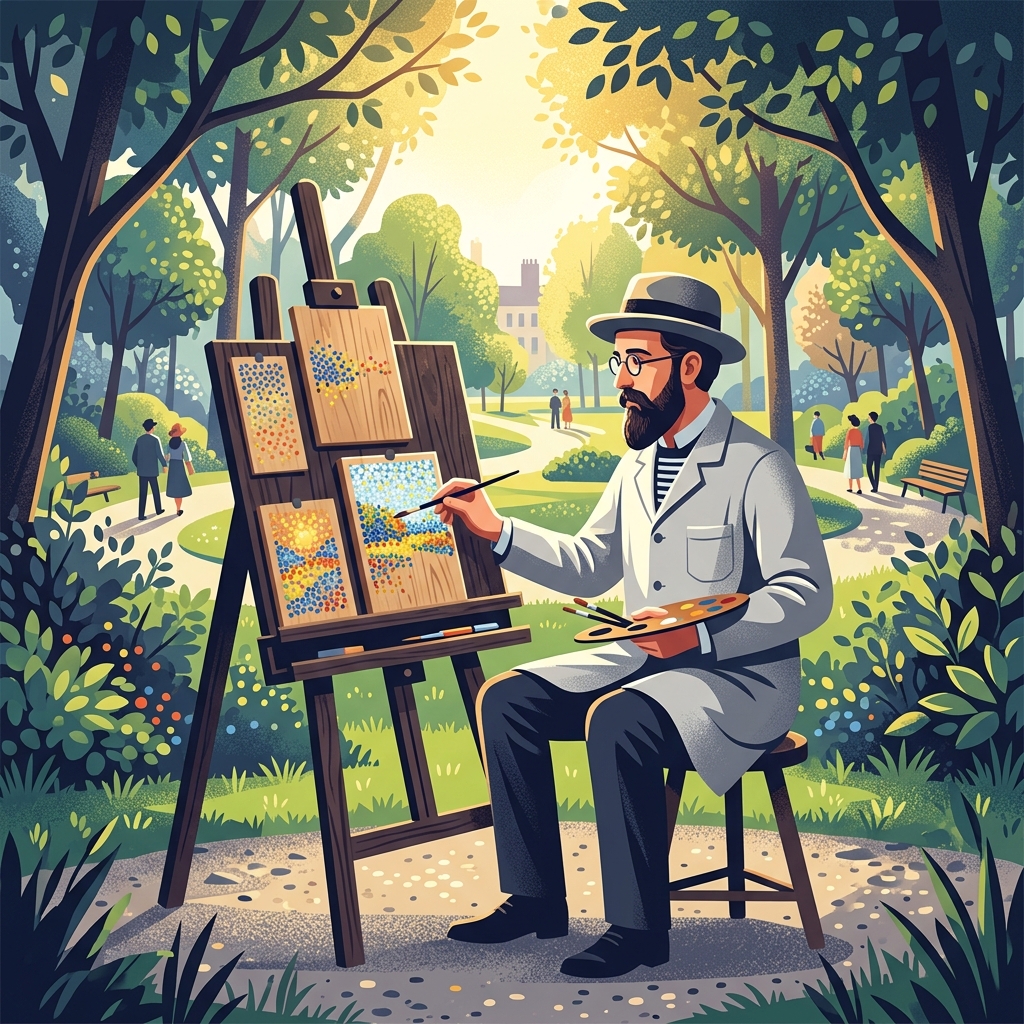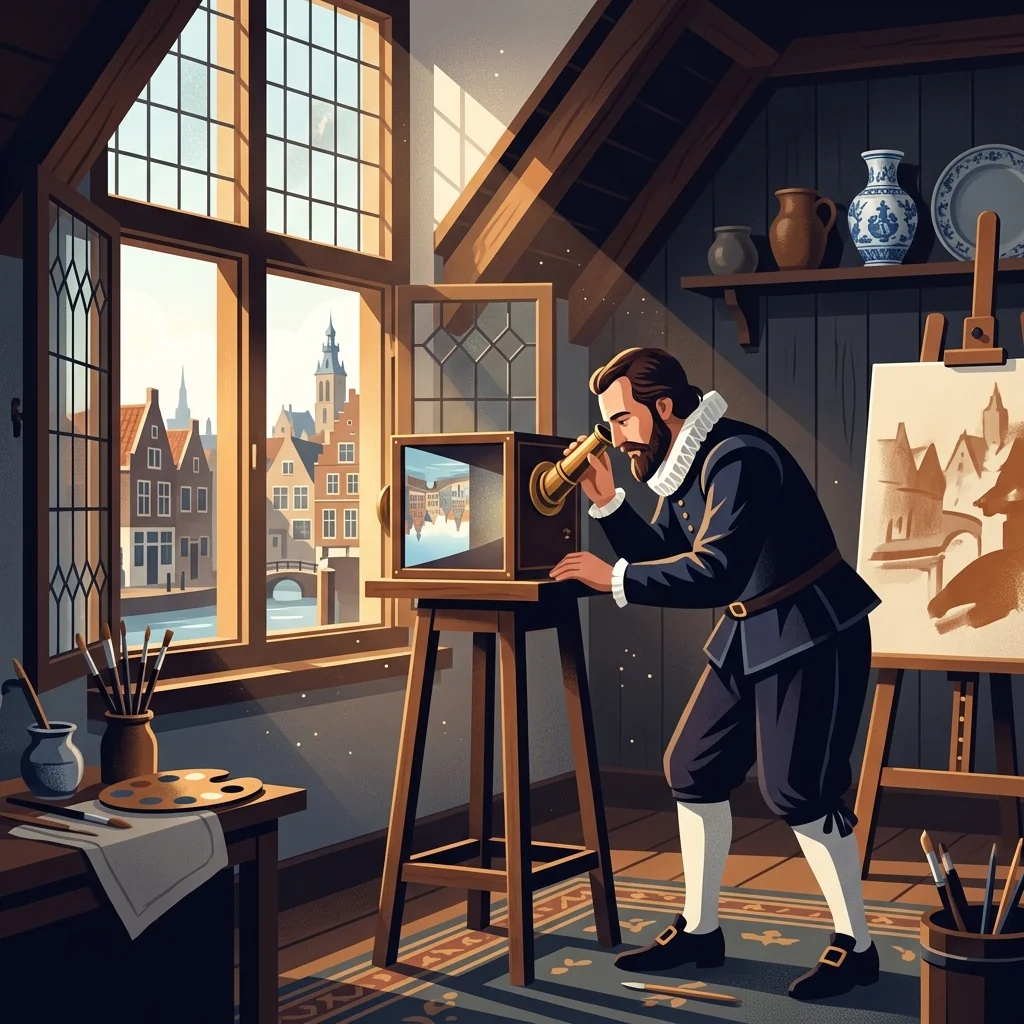
Johannes Vermeer, a 17th-century Dutch Baroque master painter who created quiet, luminous masterpieces such as ‘Girl with a Pearl Earring’ and ‘The Milkmaid.’ By the window of his studio in Delft sat a ‘Camera Obscura,’ an optical device projecting light particles precisely. Before painting, he quietly observed the incoming sunlight through the lens and the fine silver specks of light forming on the wall for tens of minutes in silence. Quietly gazing at the refraction of light and softly focused shadows was a supreme brain-rest habit that stilled mental chatter and guided the brain into extreme serenity.
In today’s post, we introduce the science of soothing the Default Mode Network (DMN) and visual micro-rest embedded in Vermeer’s camera obscura light-observation routine.
Historical & Academic Evidence
This content is based on Vermeer historical biographies & autobiographical records validation & Cognitive Neuroscience research.
 BuildSelf
Inspired by historical greats? Make it your daily habit!
BuildSelf
Inspired by historical greats? Make it your daily habit!

















1. High-Level Cognitive Recovery Provided by Visual Contrast Sensitivity & Autonomic Calm
Modern eyes and brains suffer from continuous fatigue accumulation due to exposure to flickering artificial stimuli and fast frames on monitors. Quietly contemplating morning natural sunlight and subtle shadows like Vermeer is a ‘visual mini-meditation’ that stimulates the contrast sensitivity of the visual cortex while activating the parasympathetic nervous system. Visual noise is blocked and cognitive reset occurs, allowing one to perceive essential shapes and inspirations.
2. 3-Step Practical Routine for Modern Professionals
Set Up a Quiet Observation Spot by the Morning Window
After getting up in the morning, place a comfortable chair by a window at home or office where natural sunlight seeps in nicely.
5 Minutes of Silence Immersion in Sunlight & Shadows
Turn off screens and fix your gaze for 5 minutes on the sunlight outside, shadows on the wall, or light particles forming on a cup's surface.
Sketch Essential Ideas with a Calmed Mind
Immediately after visual relaxation when your mind is clear, note down the design or key concept of today's core task.
3. Put Away the Smartphone and Observe Pure Untouched Light
The core of the camera obscura is receiving light projected through the lens as it is without hastily interpreting objects. For 5 minutes, refrain from holding any digital device and quietly appreciate light particles as they are.
📌 Frequently Asked Questions (FAQ)
How do I do this routine on rainy or cloudy days? ▼
Even the subtle, soft milky light of a cloudy day is a wonderful subject for observing illumination. You may also observe the light refractions forming through raindrops on window panes.
Is this effective even if I don't work in art or design like Vermeer? ▼
Yes! Quietly observing visual illumination is the fastest physical rest method to halt complex mental chatter in the brain.