Émile Zola, the titan of 19th-century French literature who pioneered Naturalism and Realism, leaving behind masterpieces like ‘Nana’, ‘L’Assommoir’, and the historical manifesto ‘J’Accuse…!’ against the injustice of the Dreyfus affair. Where did the explosive creative power originate for an author who published dozens of monumental volumes and built sophisticated social critiques throughout his life? ✒️
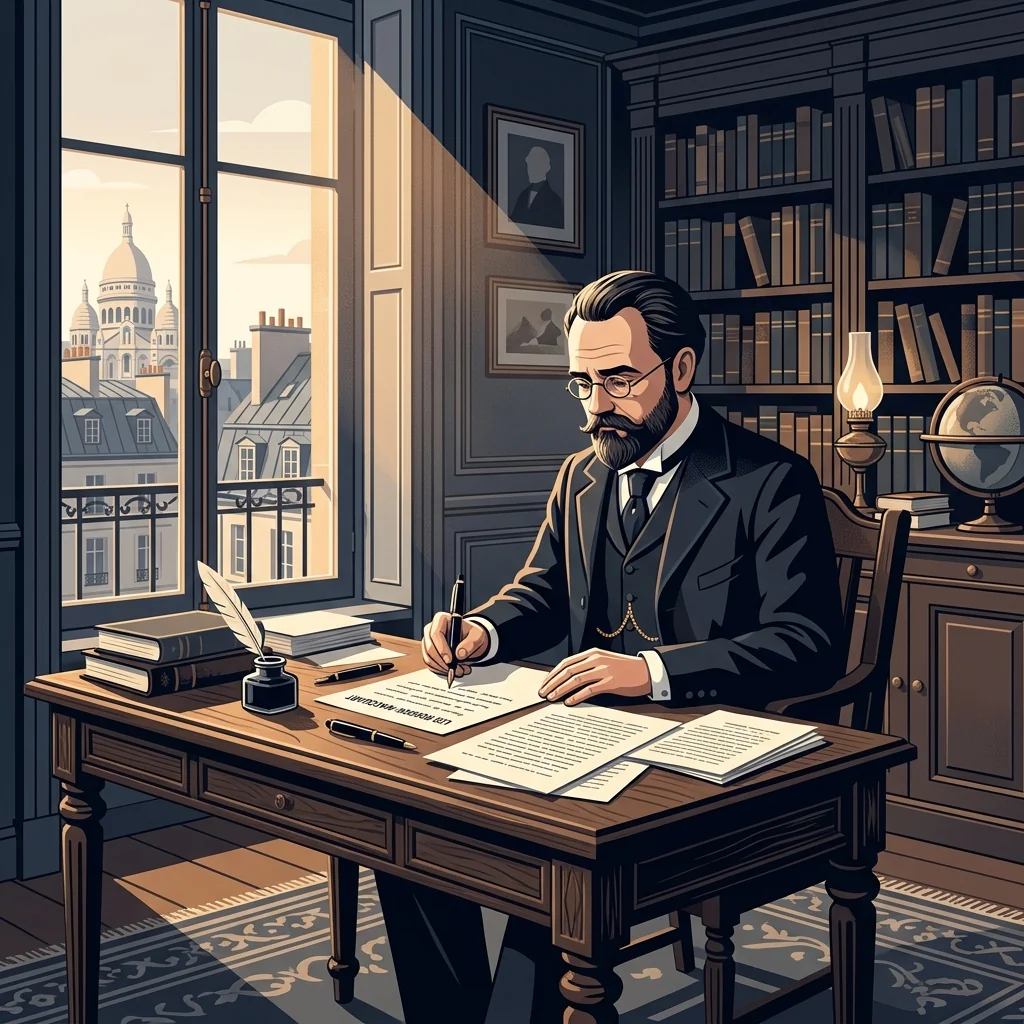
Émile Zola engraved the ancient Roman motto “Nulla dies sine linea” (Not a day without a line) in large letters above his desk and practiced a strict 3-hour immersion routine every morning. At 9 AM sharp, with visitors, letter checking, and external noise completely blocked out, he sat alone before pen and paper. Even on days when inspiration faltered, he never left his desk, keeping his brain fully in writing mode for the designated 3 hours. This resolute spatiotemporal isolation forged him into a master writer of the century.
In today’s post, we explore the scientific working principles of Émile Zola’s morning deep work time-blocking routine and modern 3-step action methods that reduce prefrontal ego depletion to zero.
Historical & Academic Evidence
This content is based on Émile Zola historical biography & record examination & Cognitive Neuroscience research.
 BuildSelf
Inspired by historical greats? Make it your daily habit!
BuildSelf
Inspired by historical greats? Make it your daily habit!

















1. Preventing Willpower Depletion and Basal Ganglia Automation via Environmental Isolation
Constantly debating ‘Should I start work now?’ wastes prefrontal glucose and willpower.
Behaving consistently at set times and blocked locations like Émile Zola through ‘Time Blocking’ reduces brain energy spent on choice to zero. When the brain’s Basal Ganglia recognizes work mode automatically, entry barriers vanish and hyper-focus is instantly triggered.
2. 3-Step Practical Routine for Modern Professionals
Setting a 1-Hour Morning Deep Work Timeblock
Designate 1 hour during your clearest morning hours on your calendar as your personal do-not-disturb timeblock.
Complete Isolation from Digital Distractions
During the timeblock, leave your smartphone in another room or switch to Do Not Disturb mode and close all browser tabs.
Recording Unbroken Minimum Daily Consistency
Immediately after finishing work, place a 'Nulla dies sine linea' completion mark on your calendar or checklist and encourage yourself.
3. Focus More on Strict Time Blocking Than Output Volume
The essence of Émile Zola’s motto is ‘unbroken daily consistency’. Prioritize establishing the habit of staying isolated from external distractions for the designated 1 hour rather than straining to write perfectly. Do not rely solely on willpower; pre-designing physical environments and habit cues that naturally trigger action is key to sustainability.
📌 Frequently Asked Questions (FAQ)
What if I feel anxious about urgent emails or calls coming in the morning? ▼
Truly urgent contact will always come via a direct phone call. Simply delaying email and message checks until after your 1 hour of morning deep work increases work quality tenfold.
How should office workers who cannot spare a full 3 hours apply this? ▼
More important than the number '3 hours' is 'uninterrupted isolation'. Performing deep work in complete isolation for even 30 minutes before work or 45 minutes after work is completely sufficient.