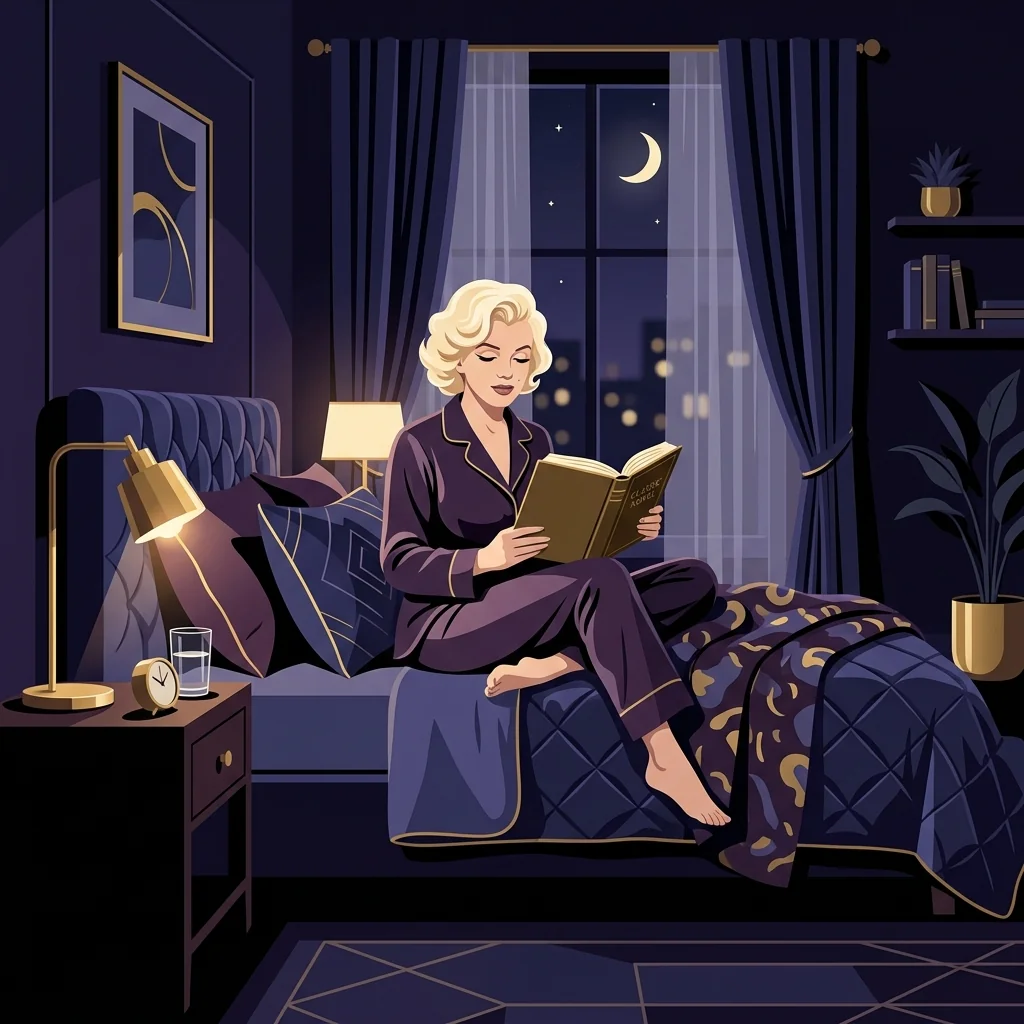
“When I quietly turn on the lamp in my room and read the classics, only then do I meet my true soul behind the silver screen.” 📖
Marilyn Monroe (1926–1962) was the most enchanting icon in 20th-century pop culture history and the paramount star of her era. Gracing the silver screen in classic films such as ‘Gentlemen Prefer Blondes’, ‘The Seven Year Itch’, and ‘Some Like It Hot’, she captivated global audiences with her radiant smile and iconic platinum glamour.
Yet behind the spotlights, forced to live as public property, Monroe suffered from intense psychological stress, identity fragmentation, severe anxiety, and insomnia. Contrary to superficial public stereotypes, the true Marilyn was a deeply passionate bibliophile who amassed a personal collection of over 400 literature and philosophy books—including James Joyce’s ‘Ulysses’, Oscar Wilde, Sigmund Freud, Walt Whitman, and Marcel Proust. Every night after studio lights dimmed, she sat under the soft warm glow of her bedroom lamp, immersing herself in classic literature and penning personal poems and emotional journals.
In today’s post, we examine the neuroscientific mechanisms of nervous system relaxation and identity preservation behind Monroe’s nightly reading routine, offering a reflective reading guide for weary modern individuals.
Historical & Academic Evidence
This content is based on Historical critical biographies and autobiographical records of Marilyn Monroe & Cognitive Neuroscience research.
 BuildSelf
Inspired by historical greats? Make it your daily habit!
BuildSelf
Inspired by historical greats? Make it your daily habit!

















1. Autonomic Nervous System Relaxation and Hippocampal Memory Consolidation Through Literary Reading
When the brain is exposed to prolonged external evaluation and performance stress, sympathetic nervous system hyperarousal leads to chronic fatigue and sleep disorders. According to cognitive studies in the UK, reading literary works quietly for just 6 minutes reduces muscle tension and slows heart rate, slashing stress levels by up to 68%. Immersing oneself in classical narratives allows the brain to disengage from its own ego and reach a restorative state through narrative empathy. Furthermore, post-reading journaling prompts the hippocampus in the cerebral cortex to consolidate stressful memories peacefully, optimizing glymphatic brain cleansing during sleep.
2. 3-Step Practical Routine for Modern Professionals
Bedroom Lighting and Book Setup
Remove smartphones and electronic devices completely from around your bed, setting up a soft warm yellow lamp and a single classic literature book.
15 Minutes of Quiet Narrative Immersion
Without looking at digital devices, open your book and quietly focus on reading for 15 minutes, empathizing with the characters and stories to calm your nervous system.
Writing a One-Sentence Reflection and Emotional Journal
After finishing reading, write down a memorable passage or 1–2 light sentences about your core emotions of the day in a journal before going to sleep.
3. Cautions and Practical Tips
The most important behavior to avoid during nighttime reflective reading is reading under bright fluorescent light or staring at smartphone screens. Bright artificial blue light blocks the secretion of melatonin, the sleep-inducing hormone, worsening insomnia. Therefore, when reading at night, use only a single indirect lamp with a warm yellow tone, maintaining environmental control so your brain can safely transition into sleep mode.
📌 Frequently Asked Questions (FAQ)
Does reading before bed stimulate the brain and interfere with sleep? ▼
Reading paper books instead of blue-light emitting smartphones—especially lighter humanities, poetry, or contemplative essays under soft indirect lighting—induces alpha brain waves that actually promote deep sleep.
How can I record favorite passages during night reading without disrupting sleep? ▼
Avoid turning on computers or screens before bed. Instead, attach sticky notes or fold book page corners, then transfer and organize them into your digital archive during the morning or afternoon the following day.