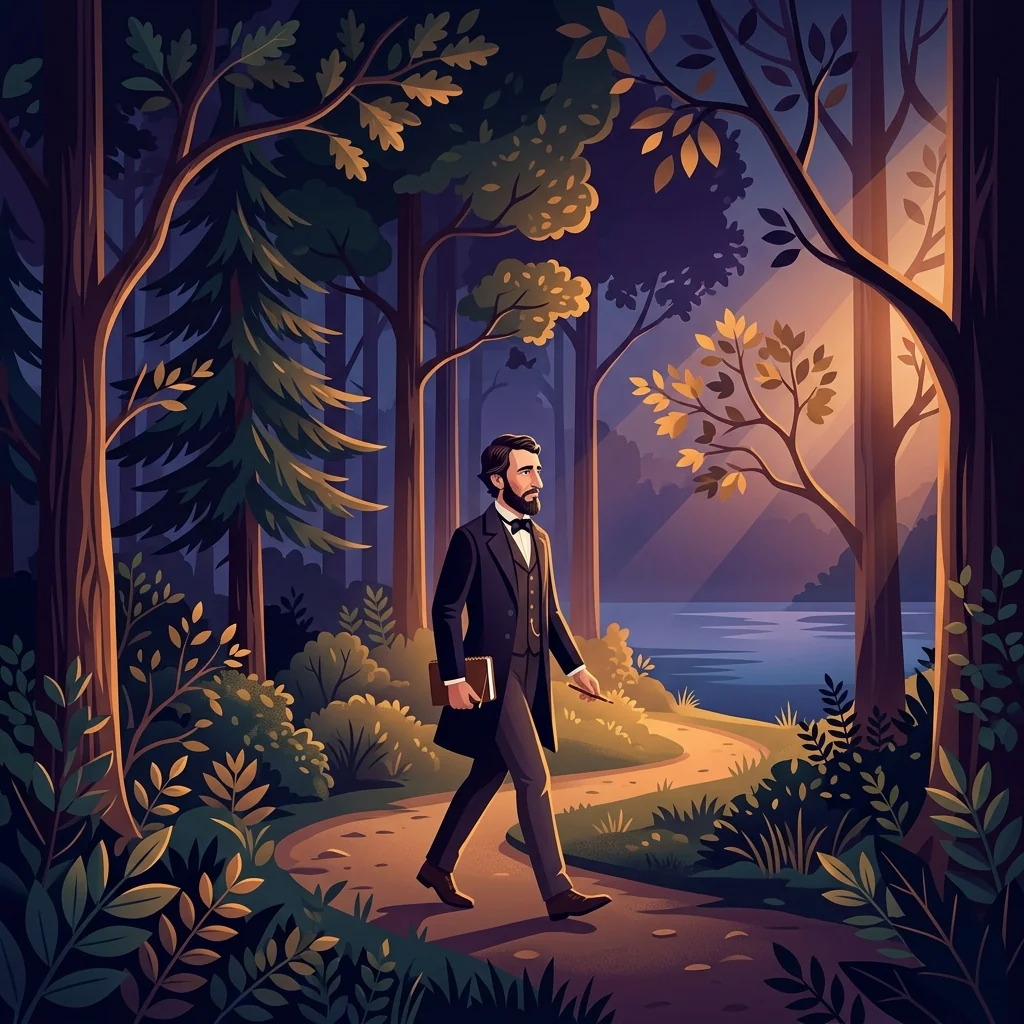
“I think that I cannot preserve my health and spirits, unless I spend four hours a day at least—and it is commonly more than that—sauntering through the woods and over the hills and fields, absolutely free from all worldly engagements.” 🚶♂️
Henry David Thoreau, the eminent American philosopher, essayist, and author of the environmental classic Walden, practiced living in harmony with nature. Behind his profound reflections on life and brilliant inspiration lay a habit of walking through the woods for four hours every afternoon, regardless of the weather. He did not simply walk; he observed nature and actively applied the brain activation gained from walking to his writings. Discover the neuroscientific principles of how walking in nature heals the modern brain and activates creative ideas.
Historical & Academic Evidence
This content is based on Historical biographies and autobiographical records of Henry David Thoreau & Cognitive Neuroscience research.
 BuildSelf
Inspired by historical greats? Make it your daily habit!
BuildSelf
Inspired by historical greats? Make it your daily habit!

















1. Attention Restoration Theory (ART): The Healing Effect of Walking in Nature on the Fatigued Prefrontal Cortex
According to the Cognitive Science ‘Attention Restoration Theory (ART)’, urban environments filled with complex artificial stimuli (traffic lights, screen information, etc.) constantly deplete the brain’s directed attention resources. In contrast, natural environments like forests or parks provide ‘Soft Fascination’ stimuli—such as trees swaying in the wind or the rustling of leaves—allowing the fatigued prefrontal cortex to rest. Furthermore, walking activates the brain’s Default Mode Network (DMN), combining scattered thoughts beneath conscious awareness and unlocking new intellectual breakthroughs.
2. 3-Step Practical Routine for Modern Professionals
Establish a Park or Forest Trail Route with Trees and Soil
Designate a quiet park or trail route near your home or office where you can feel trees, grass, or soil. The richer the visual green stimuli, the faster the brain's recovery.
Completely Isolate Your Smartphone and Focus on Walking and the Five Senses
Completely stop using your smartphone during your walk and keep it hidden in your pocket. Direct your attention solely to the physical sensation of feet touching the earth, the cool breeze, and the sound of rustling leaves.
Immediately Jot Down Ideas That Arise During the Walk in a Pocket Notebook
Carry a small analog notebook and pen. In those moments when the brain relaxes and brilliant intellectual ideas emerge, record them immediately on paper rather than turning on your smartphone.
3. Completely Disconnect from Digital Noise During Your Walk
For Henry David Thoreau, walking in nature was a sacred ritual of solitary dialogue with the natural world. If you walk while looking at smartphone screens or responding to real-time notifications, the brain’s attention restoration mechanism will not function. During your walk, stay offline, completely disconnected from devices and networks, and open all your senses to the surrounding plants and seasonal changes.
📌 Frequently Asked Questions (FAQ)
How did Thoreau write notes while walking for 4 hours? ▼
He walked with a small, handmade leather notebook and pencil in his coat pocket. When a thought occurred, he paused, stood under a tree, and captured the details of plants or raw sentences immediately.