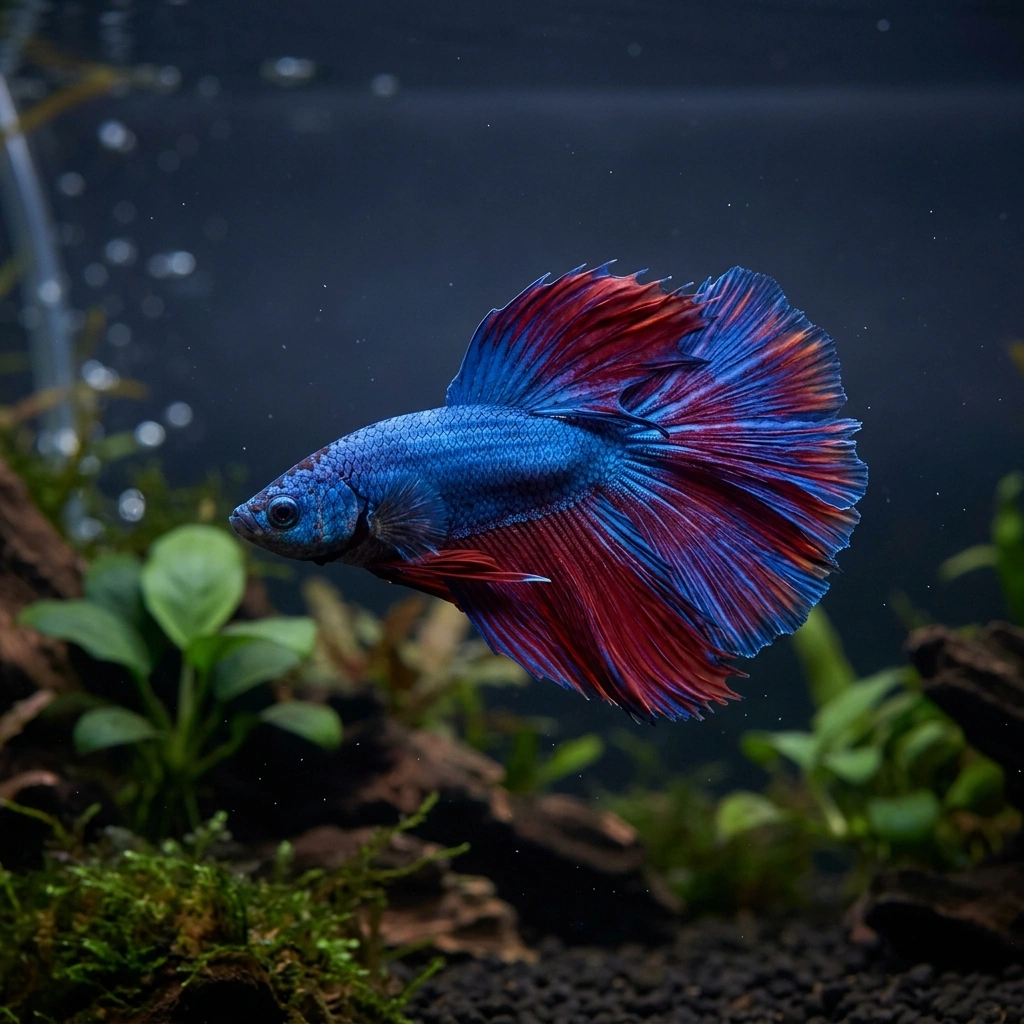
Boasting magnificent gown-like fins and regal swimming elegance, the Betta fish is a jewel-like companion among aquatic pets. According to WSAVA aquatic guidelines, Bettas possess a specialized ‘labyrinth organ’ allowing them to breathe atmospheric oxygen directly at the surface, making resting aquatic plants or leaf beds near the surface essential. Maintaining low water currents and stable water temperatures (24°C ~ 26°C) is key to preventing debilitating Fin Rot.
Veterinary & Behavioral Evidence
This content is based on World Small Animal Veterinary Association (WSAVA) Aquatic Animal Health Standards and Ornamental Fish Clinical Standards.
 FreshSelf
Keep pet food and supplements perfectly fresh!
FreshSelf
Keep pet food and supplements perfectly fresh!








1. Betta Communication: Deciphering Gill Flaring & Surface Resting Behavior
Betta Communication: Deciphering Gill Flaring & Surface Resting Behavior
Flaring—expanding gill covers and fully fanning out fins—is a strong territorial warning and excitement display. Controlled 5-minute daily flaring provides beneficial exercise for fin health, but constant flaring leads to chronic stress and weakened immunity.
2. Betta Fish (Betta splendens / Siamese Fighting Fish)‘s Body Language & Behavioral Signals
Gill Covers Expanded & Fins Fully Fan-Out (Flaring)
A territorial alert against intrusion or an aggressive stress response triggered by seeing their own mirror reflection.
Remove mirrors or reflective objects beside the tank to ensure flaring episodes do not exceed 5 minutes.
Lying Still on Leaves Near Water Surface (Labyrinth Resting)
Normal resting behavior easing fin weight while breathing atmospheric air via the labyrinth organ during deep sleep.
This is not an illness; dim the aquarium lights and adjust the sponge filter to ensure the current is not too strong.
3. Customized 3-Step Home Care Routine for Betta Fish (Betta splendens / Siamese Fighting Fish)
Morning: Water Temperature (24°C ~ 26°C) & Low Current Flow Inspection
Inspect the thermometer and verify heater operation, ensuring there are no strong currents making it difficult for the Betta to swim.
Afternoon: High-Protein Pellet Feeding & Siphon Waste Removal
Feed 3 - 4 high-protein Betta-specific pellets in divided portions, and siphon out any uneaten food within 5 minutes using a dropper.
Evening: Bubble Nest Observation & 5-Minute Flaring Exercise
Inspect bubble nest construction on the surface, and place a mirror nearby for 3 - 5 minutes to exercise fin muscles and prevent fin clumping.
📌 Frequently Asked Questions (FAQ)
Why are the edges of my Betta's fins splitting and turning black? ▼
This is a classic symptom of Fin Rot caused by poor water quality (inadequate filtration) or stress. Perform frequent partial water changes (20-30%) and administer veterinary-prescribed treatments if needed.
Can I keep my Betta in a small bowl without a filter? ▼
While Bettas can breathe atmospheric oxygen, unfiltered small bowls lack nitrifying bacteria, causing water quality to deteriorate rapidly. A tank of at least 15 liters with a low-flow sponge filter is strongly recommended.