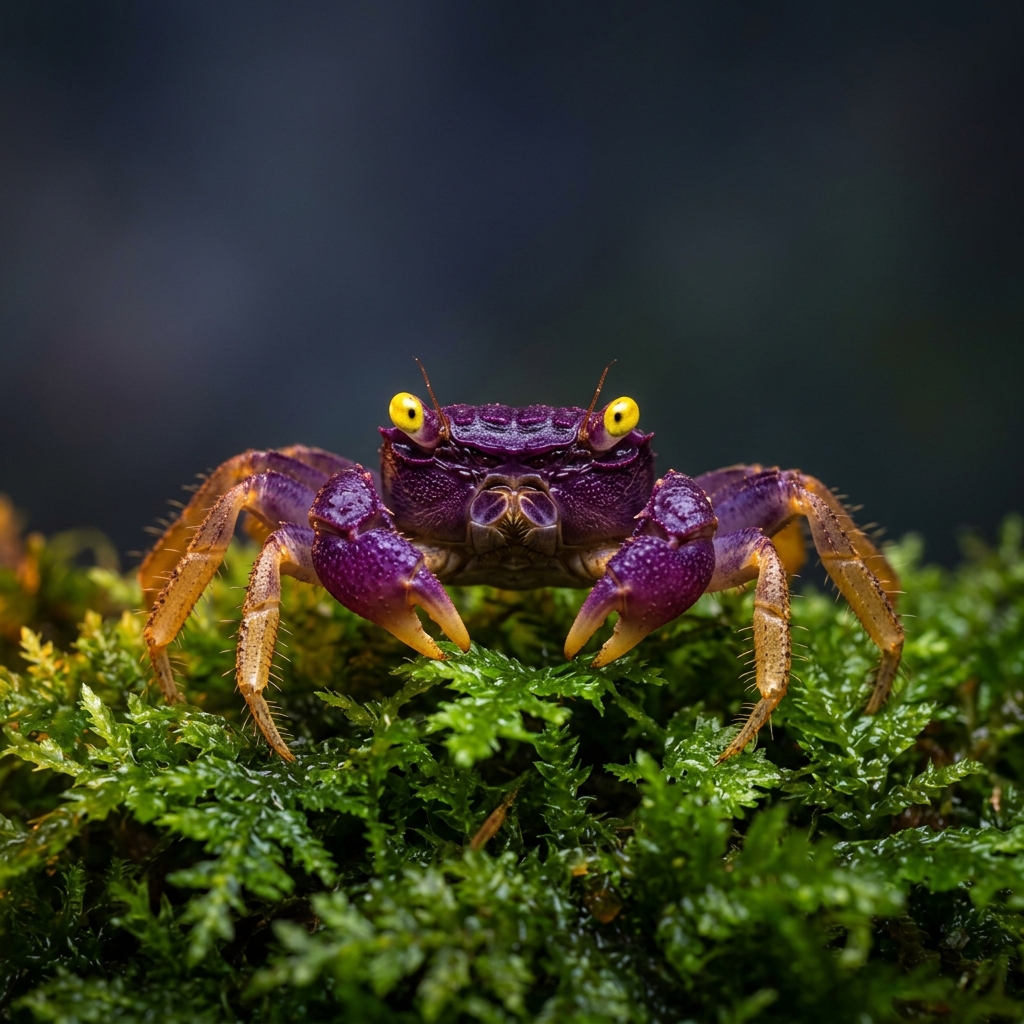
Vampire Crabs (Geosesarma dennerle, Geosesarma hagen, etc.) are small, semi-terrestrial land crabs famed worldwide among paludarium and vivarium enthusiasts for their striking yellow eyes and brilliant purple or orange carapaces. Native to the tropical rainforests of Southeast Asia, they thrive in high-humidity enclosures with a land-to-water ratio of roughly 80:20. Unlike land hermit crabs, Vampire Crabs are fully freshwater species that complete their entire lifecycle—including hatching fully formed spiderlings from eggs—without needing saltwater. High humidity (75–85%), calcium nutrition for molting, and ample hides to reduce male territorial conflict are essential. In this guide, breaks down Vampire Crab behaviors and offers a 3-step daily care routine.
Veterinary & Behavioral Evidence
This content is based on The Crustacean Society Guidelines & Vivarium Veterinary Medicine Clinical Protocols.
 FreshSelf
Keep pet food and supplements perfectly fresh!
FreshSelf
Keep pet food and supplements perfectly fresh!








1. Vampire Crab Communication: Claw Raising and Moss Burrowing
Vampire Crab Communication: Claw Raising and Moss Burrowing
When defending territory against rival males, Vampire Crabs raise their claws high in a 'Claw Raising' posture. Conversely, when preparing to molt or seeking security, they retreat deep into damp moss or soil ('Moss Burrowing').
2. Vampire Crab (Geosesarma spp.)‘s Body Language & Behavioral Signals
Raising Claws High & Lowering Body (Claw Raising)
A territorial warning posture aimed at rival males or perceived intruders to defend their space.
Provide extra hides, live moss, and adequate space (at least 30 cm) to minimize territorial conflicts.
Retreating Deep into Damp Moss or Caves (Moss Burrowing)
Indicates preparation for ecdysis (molting), moisture rehydration, or seeking emotional security.
Never disturb a molting crab, as its soft soft-shell body is extremely fragile; keep humidity above 80%.
3. Customized 3-Step Home Care Routine for Vampire Crab (Geosesarma spp.)
Morning: Paludarium Climate Check (22-28°C / 75-85% Humidity) & Freshwater Area
Maintain 75-85% humidity for gill hydration. Inspect the shallow freshwater pool (2-3 cm deep) for water clarity.
Afternoon: Land Area Moisture Audit & Hide Inspection
Misting live moss and coco-fiber substrate to keep land zones humid. Ensure each crab has access to its own hide.
Evening: Protein & Calcium Night Feeding & Activity Observation
Offer protein sources (bloodworms, freeze-dried gammarus), calcium powder, and small fruit bits before nocturnal foraging begins.
📌 Frequently Asked Questions (FAQ)
Do Vampire Crabs require saltwater like land hermit crabs? ▼
No. Vampire Crabs (*Geosesarma*) are strictly freshwater species. They spend their entire lives in moist land and clean freshwater. They hatch directly as fully formed miniature crabs from eggs, eliminating the need for marine saltwater entirely.
Can multiple Vampire Crabs be cohabitated together? ▼
Yes, but with proper male-to-female ratios. A ratio of 1 male to 2-3 females is ideal. Because males are fiercely territorial, provide an enclosure at least 30 cm wide with abundant moss, driftwood, and caves to avoid fighting.