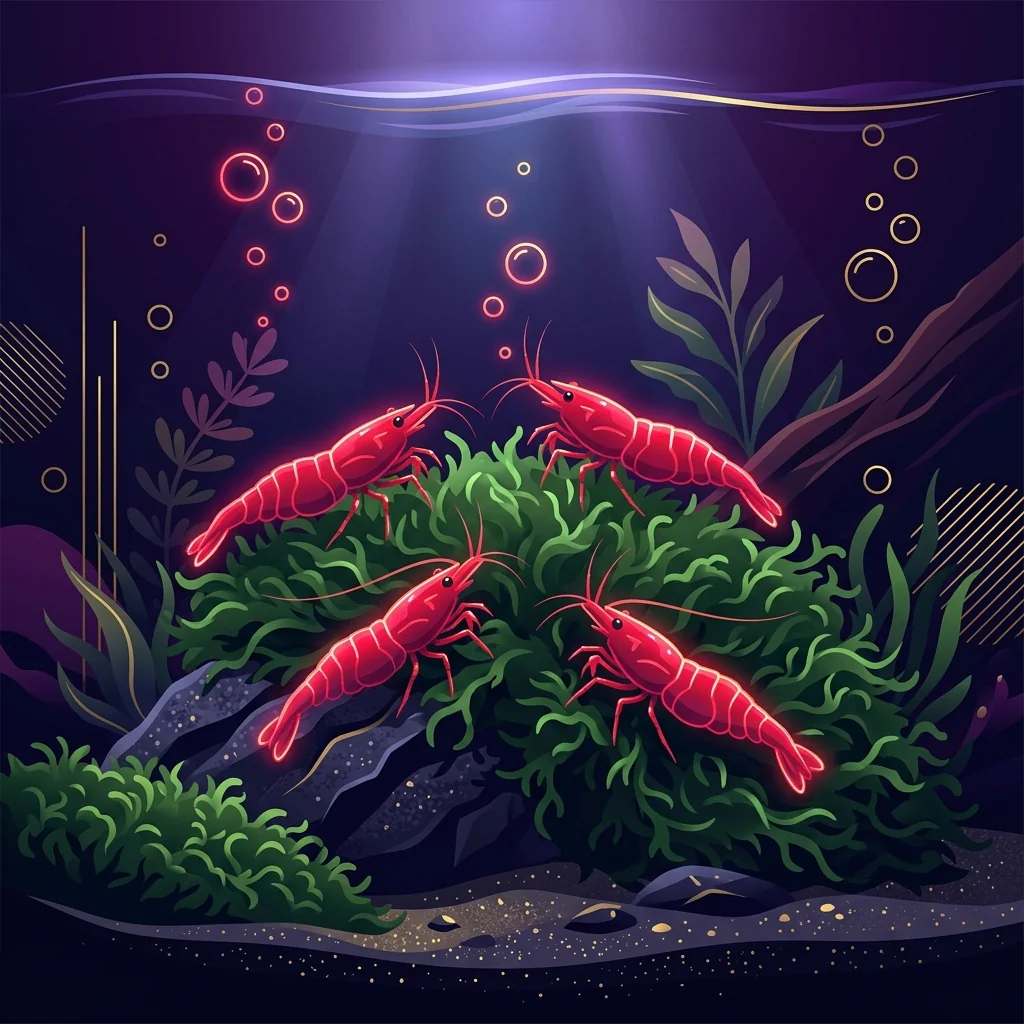
Cherished for their brilliant red coloration against green aquatic plants, the Cherry Shrimp (Neocaridina davidi) is an iconic freshwater dwarf shrimp widely kept as an algae grazer and cleanup crew. While relatively hardy, their crustacean nature requires careful mineral management (GH, KH, TDS). Sudden water parameter shifts or calcium/magnesium deficits cause the fatal ‘White Ring of Death’ (molting failure). Furthermore, they are hypersensitive to copper and heavy metals—medications containing copper can wipe out an entire colony within minutes. In this guide, presents a 3-step daily care routine to decode your shrimp’s physical signals and maintain pristine water parameters.
Veterinary & Behavioral Evidence
This content is based on Ornamental Fish International (OFI) & Dwarf Shrimp Invertebrate Care Protocols.
 FreshSelf
Keep pet food and supplements perfectly fresh!
FreshSelf
Keep pet food and supplements perfectly fresh!





1. Cherry Shrimp Body Language: White Ring of Death and Frantic Glass Swimming
Cherry Shrimp Body Language: White Ring of Death and Frantic Glass Swimming
Cherry Shrimp communicate environmental stress and breeding readiness through exoskeleton appearance and swimming patterns. A clear white gap or separation between the carapace and abdomen 'White Ring of Death' is a critical warning of a failed molt due to mineral imbalance or osmotic shock. Conversely, when male shrimp swim frantically along the glass wall and water column 'Frantic Glass Swimming', it indicates either a female releasing mating pheromones or dangerous ammonia/copper toxicity in the water.
2. Cherry Shrimp / Neocaridina (Neocaridina davidi)‘s Body Language & Behavioral Signals
White Gap Between Carapace and Abdomen (White Ring of Death)
A critical molting failure signal caused by mineral deficits (GH/Calcium) or osmotic shock, often resulting in mortality.
Do not attempt to peel the shell manually; adjust GH (4–8 dGH) and TDS (150–250 ppm) gradually using shrimp mineral supplements.
Frantic Swimming Along Glass and Water Column (Frantic Glass Swimming)
A natural male response to a freshly molted female's mating pheromones, or an urgent warning of ammonia/copper toxicity.
Check for saddled/berried females; test water immediately for ammonia or heavy metals, and perform a slow drip water change if parameters are off.
3. Customized 3-Step Home Care Routine for Cherry Shrimp / Neocaridina (Neocaridina davidi)
Morning: Water Temp (20°C–25°C) & Mineral (GH 4–8 / TDS 150–250) Check with Feeding
Verify temperature stability and mineral parameters, feeding a small portion of specialized shrimp food or spirulina consumed within 1–2 hours.
Afternoon: Sponge Filter Current Check & Moss Cover Maintenance
Use sponge filtration to prevent tiny shrimplets from being sucked in, providing dense java moss as hiding spots during post-molt soft shell phases.
Evening: Uneaten Food Removal & Drip Water Change Routine
Siphon out food scraps to prevent planaria and nitrate build-up, using a slow drip-acclimation system during water changes to avoid pH/TDS shock.
📌 Frequently Asked Questions (FAQ)
Why did all my shrimp die after adding aquarium medication or algaecide? ▼
Dwarf shrimp have extreme copper (Cu) sensitivity. Copper blocks oxygen transport in their hemocyanin-based blood, causing instant mortality. Common fish medications for Ich, snail eradicators, and algaecides contain copper sulfate. Never use copper-based treatments in a shrimp tank.
My female shrimp is carrying eggs (berried)—how do I protect the baby shrimp? ▼
When a female carries yellow or green eggs under her pleopods, shrimplets will hatch in about 3–4 weeks. Since tiny shrimplets are easily eaten by fish (guppies, tetras), provide dense moss cover or house them in a dedicated species-only shrimp tank.