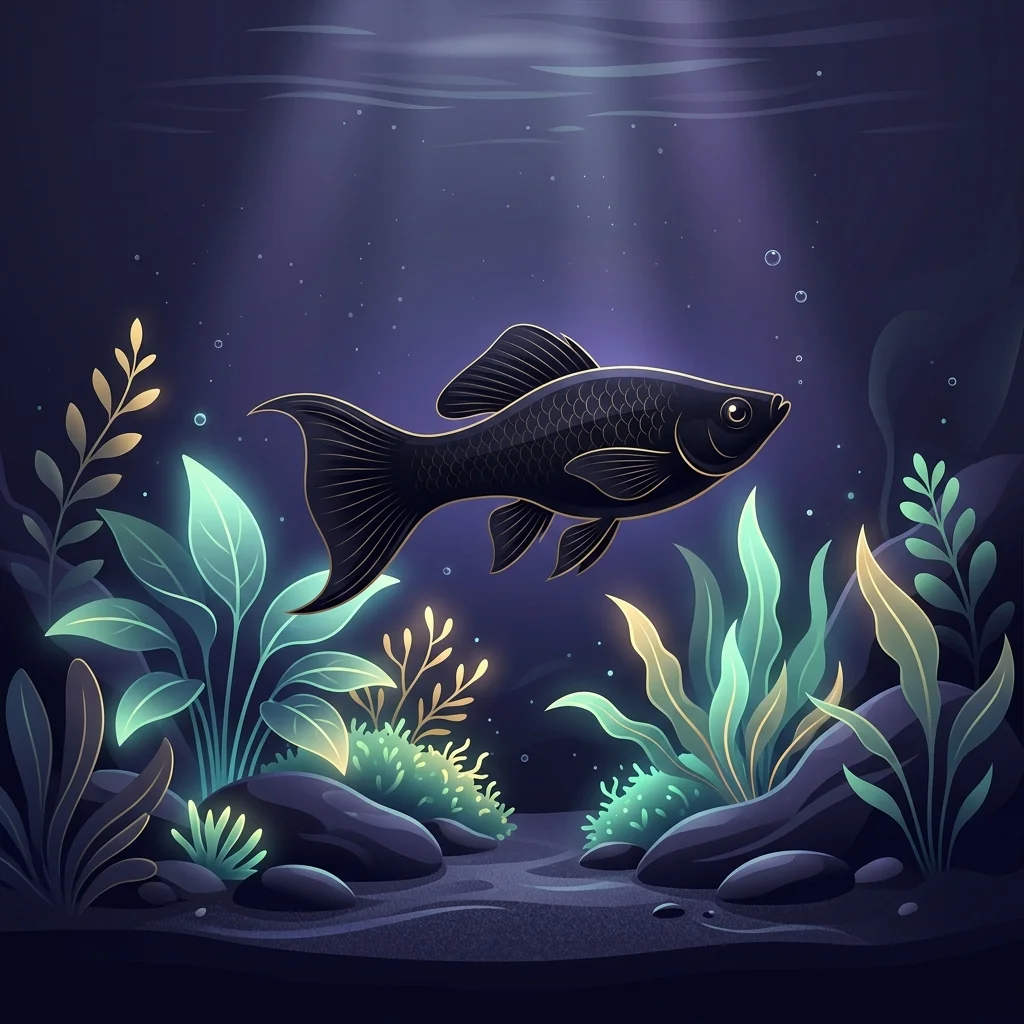
Beloved by aquarium hobbyists for its striking velvety black scales and graceful fins, the Black Molly (Poecilia sphenops) is a popular livebearing tropical freshwater fish. While generally considered easy to care for, Black Mollies are exceptionally sensitive to cold water temperatures and soft, acidic water conditions, which frequently trigger ‘The Shimmies’ and white spot disease (Ich). They naturally thrive in hard, slightly alkaline to brackish water (pH 7.5–8.2). Rapid water parameter shifts or ammonia spikes rapidly suppress their immune system. In this guide, presents a 3-step daily care routine to decode your Black Molly’s behavioral signals and protect its health.
Veterinary & Behavioral Evidence
This content is based on Ornamental Fish International (OFI) & World Aquatic Veterinary Medical Association (WAVMA) Care Standards.
 FreshSelf
Keep pet food and supplements perfectly fresh!
FreshSelf
Keep pet food and supplements perfectly fresh!





1. Black Molly Body Language: Shimmying and Surface Gasping
Black Molly Body Language: Shimmying and Surface Gasping
Black Mollies signal water quality issues and physiological stress through distinct swimming postures and tank positions. Clamping their fins and rapidly rocking their body side-to-side in place 'Shimmying' is a classic distress signal caused by low temperature, acidic water, or mineral deficiency. Conversely, hovering at the waterline while rapidly gulping air 'Surface Gasping' indicates acute oxygen depletion or ammonia/nitrite poisoning.
2. Black Molly (Poecilia sphenops)‘s Body Language & Behavioral Signals
Clamping Fins and Rocking Body Side-to-Side in Place (Shimmying)
A distress signal caused by low water temperature, soft/acidic water (low pH), or osmotic shock.
Check water temperature (24–28°C) and pH (7.5–8.2) immediately, adding aquarium salt if necessary to restore minerals.
Hovering directly below surface with open mouth (Surface Gasping)
Indicates severe hypoxia (lack of dissolved oxygen) or toxic ammonia/nitrite spikes in the aquarium.
Increase aeration immediately and perform a 20–30% water change with conditioned water.
3. Customized 3-Step Home Care Routine for Black Molly (Poecilia sphenops)
Morning: Water Temperature (24–28°C) & pH (7.5–8.2) Check, Plant-Rich Flake Feeding
Maintain stable thermal conditions to prevent Ich outbreaks, feeding spirulina or plant-based flakes suited to their omnivorous/algae diet.
Afternoon: Filter Flow & Aeration Check, Excess Waste Removal
Ensure vigorous aeration for high dissolved oxygen levels and scoop out uneaten food to maintain pristine water clarity.
Evening: Water Change (10–20% Weekly) & Fry Protection Zone Maintenance
Perform regular water changes using dechlorinated water, checking dense plant zones to protect newborn livebearer fry from adults.
📌 Frequently Asked Questions (FAQ)
Why is my Black Molly shaking its body side-to-side without swimming forward (Shimmying)? ▼
This phenomenon is known as 'The Shimmies,' a classic symptom of osmotic stress and water maladaptation. Mollies thrive in hard, mineral-rich alkaline water (pH 7.5–8.2). If kept in soft or acidic water, or if temperatures drop below 24°C, they lose osmoregulatory control and experience muscle tremors. Elevating the temperature to 25–27°C and adding aquarium salt usually resolves the issue quickly.
Is it safe to add aquarium salt to a Black Molly tank? ▼
Yes, it is highly beneficial! Mollies naturally inhabit freshwater to brackish water environments. Adding approximately 5 to 10 grams of non-iodized aquarium salt per 10 liters of water enhances slime coat production, prevents Ich and velvet parasites, and reduces osmotic stress.