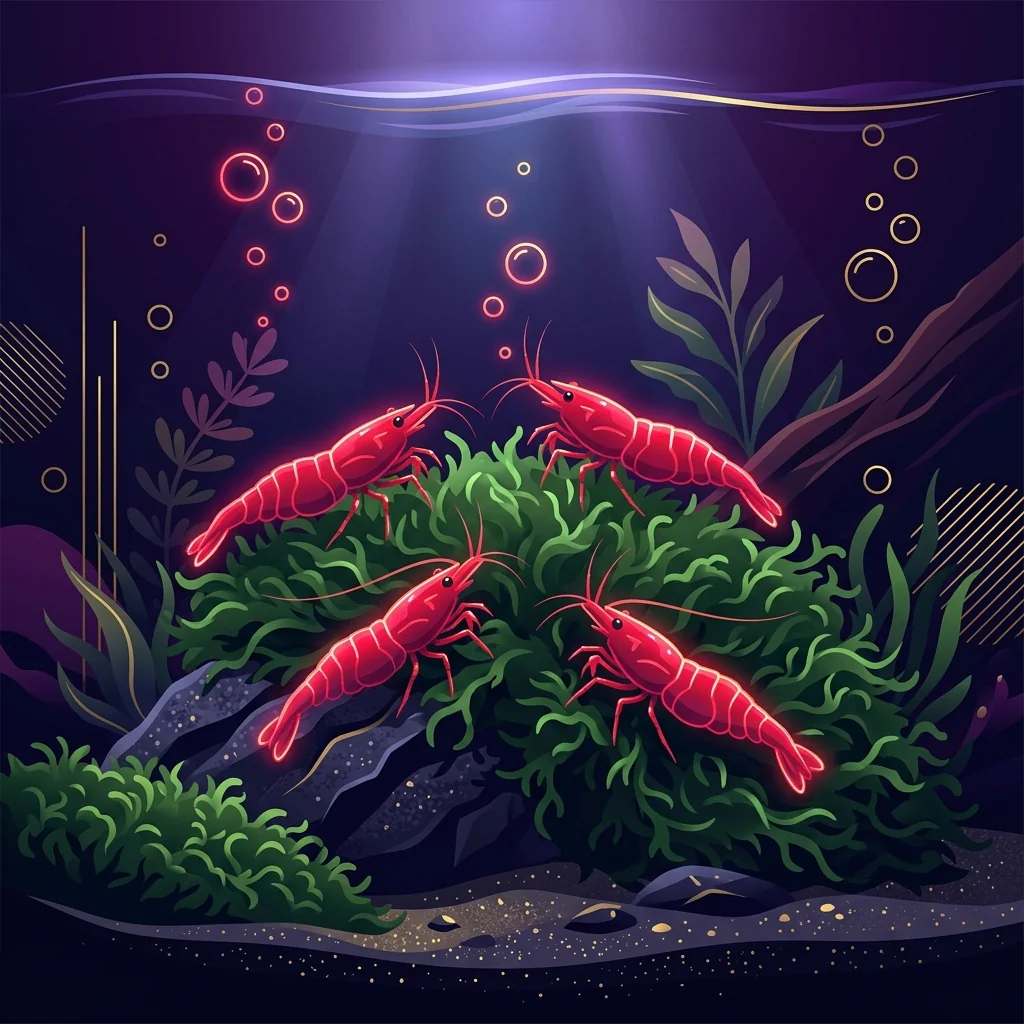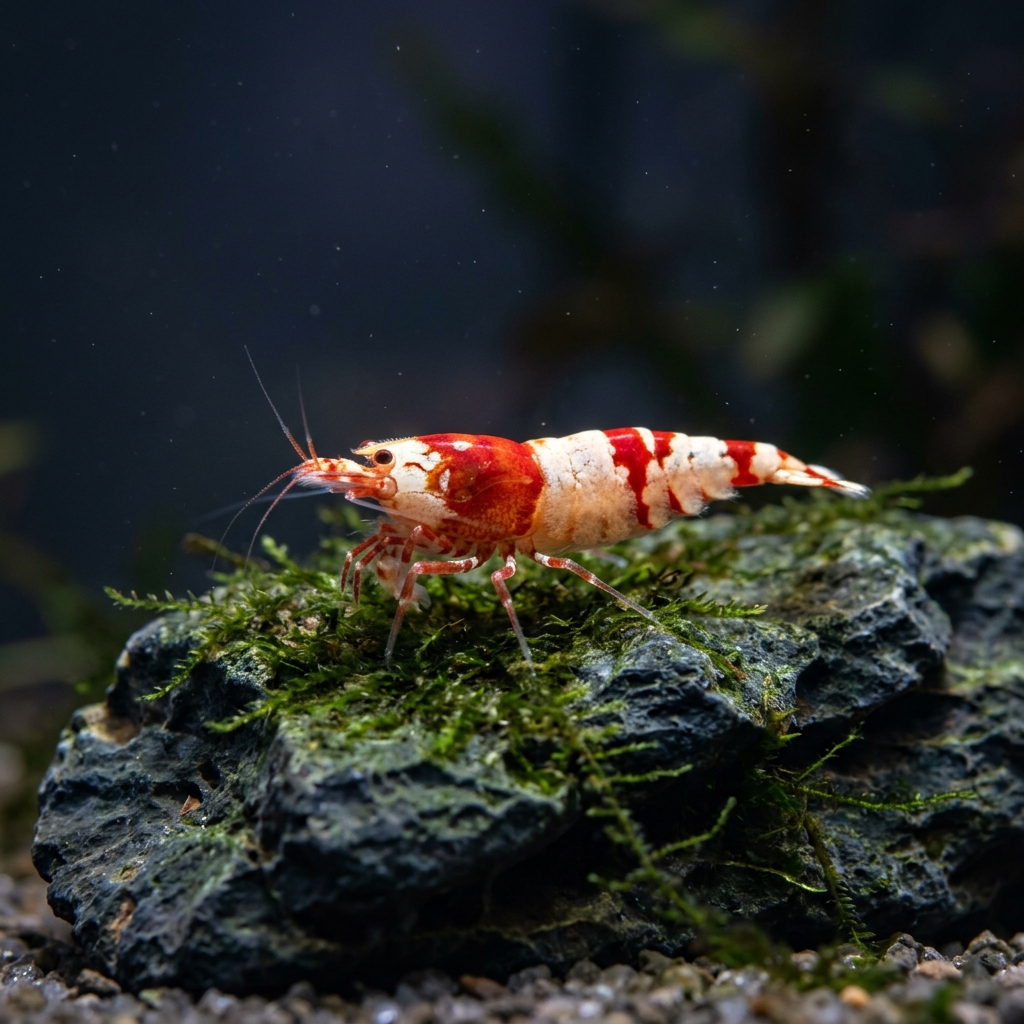
The Crystal Red Shrimp (Caridina logemanni var. ‘Crystal Red’, commonly known as CRS) is a premium freshwater dwarf crustacean celebrated globally for its striking red and white banded patterns. Continuously grazing on micro-biofilm across aquarium plants and substrate, CRS offer captivating visual appeal. However, they are exceptionally sensitive to minute fluctuations in water parameters and temperature. In particular, improper levels of nitrogenous wastes (ammonia, nitrite), Total Dissolved Solids (TDS), or General Hardness (GH) during the molting process often result in fatal dysecdysis (molting failure). Maintaining an active soil substrate that buffers water to a slightly acidic pH, pairing it with sponge filtration, and using Remineralized Reverse Osmosis (RO) water are vital to their survival. In this guide, we explain CRS behavioral signals, precise water parameter controls, and a 3-step daily care routine.
Veterinary & Behavioral Evidence
This content is based on Ornamental Aquatic Trade Association (OATA) Guidelines and International Freshwater Invertebrate Care Standards.
 FreshSelf
Keep pet food and supplements perfectly fresh!
FreshSelf
Keep pet food and supplements perfectly fresh!




1. CRS Behavioral Signals: Breeding Dance vs. Water Quality Distress (Fading & Lethargy)
CRS Behavioral Signals: Breeding Dance vs. Water Quality Distress (Fading & Lethargy)
When a female CRS molts and releases pheromones, male shrimp engage in an energetic 'Breeding Dance', swimming rapidly across the aquarium. Conversely, pale coloration or gathering near the water surface indicates severe nitrogen toxicity or water parameter shock.
2. Crystal Red Shrimp (CRS / Caridina logemanni)‘s Body Language & Behavioral Signals
Shrimp Breeding Dance (Frantic Swimming)
A natural mating behavior triggered by female pheromones immediately after a successful molt.
Avoid disturbing the tank; maintain stable temperature and parameters to encourage successful egg-bearing.
Color Fading & Surface Clustering
A critical distress signal caused by elevated nitrate levels, low dissolved oxygen, or sudden shifts in TDS/GH.
Immediately verify TDS and parameters of replenishment RO water, and increase aeration to stabilize water quality.
3. Customized 3-Step Home Care Routine for Crystal Red Shrimp (CRS / Caridina logemanni)
Morning: Water Temperature (20-24°C) & TDS (100-150 ppm) Measurement
Check water parameters using a digital TDS meter and thermometer, confirming steady sponge filter output and oxygenation.
Afternoon: Active Soil Buffering & Biofilm State Inspection
Ensure active soil maintains a slightly acidic pH (6.0–6.8) and supply small amounts of mineral powder or biofilm activators.
Evening: Sinking Pellet Feeding & Exuviae (Molt Shell) Inspection
Provide specialized shrimp pellets consumable within 2 hours, remove leftover food, and check for intact shed exoskeletons.
📌 Frequently Asked Questions (FAQ)
Why do CRS die during molting (Molting Failure / Dysecdysis)? ▼
Molting failure occurs when General Hardness (GH) or TDS levels are outside safe ranges or when osmotic shock takes place. Without sufficient minerals (calcium and magnesium), the new exoskeleton cannot properly separate, trapping the shrimp. Keep GH at 3–6 dGH and TDS at 100–150 ppm.
Why should I use remineralized RO water instead of tap water? ▼
Tap water fluctuates in TDS, GH, heavy metals, and chloramines depending on season and region, which can be lethal to sensitive dwarf shrimp. Re-mineralizing pure Reverse Osmosis (RO) water with a specialized GH mineral powder ensures absolute parameter consistency.