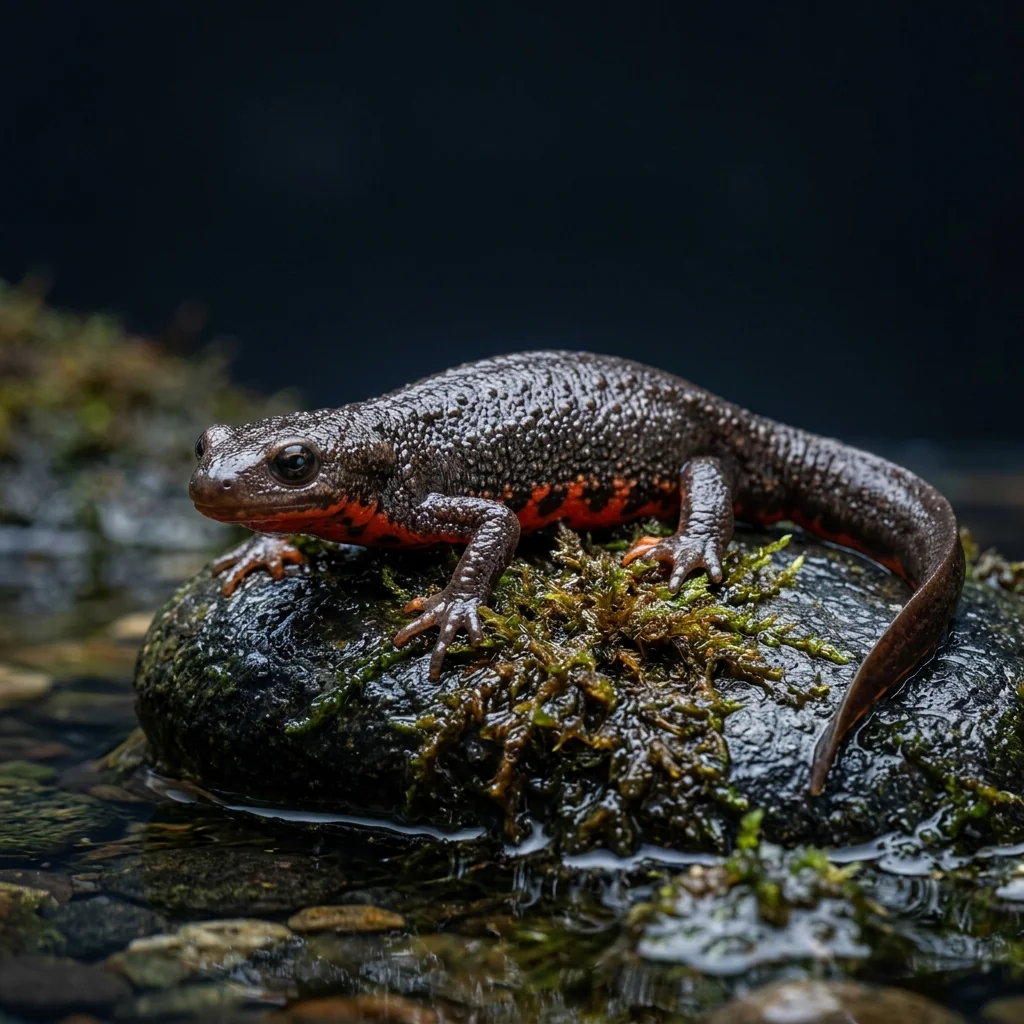
The Fire-Bellied Newt (Cynops species) is one of the most beloved small aquatic amphibians worldwide, renowned for its striking red or orange-red aposematic belly pattern and hardy nature. Naturally protected by mild defensive skin toxins, these semi-aquatic creatures split their time between shallow water and moist land. Because they are weak swimmers, strong filter currents easily exhaust them. Furthermore, exposure to water temperatures above 24°C (75°F) rapidly suppresses their immune system and can prove fatal. Maintaining a gentle water flow, cool temperatures (18–22°C / 64–72°F), a well-balanced paludarium layout, and target feeding using tweezers are essential for their health. In this guide, decodes Fire-Bellied Newt behavioral signals and presents a 3-step daily homecare routine for water management, habitat enrichment, and nutrition.
Veterinary & Behavioral Evidence
This content is based on Association of Reptilian and Amphibian Veterinarians (ARAV) and Amphibian Conservation Guidelines.
 FreshSelf
Keep pet food and supplements perfectly fresh!
FreshSelf
Keep pet food and supplements perfectly fresh!









1. Fire-Bellied Newt Instincts: Aposematic Belly Display and Wall Climbing
Fire-Bellied Newt Instincts: Aposematic Belly Display and Wall Climbing
Fire-Bellied Newts possess distinct physical survival signals. When feeling threatened by predators, they exhibit a reflex posture (Unkenreflex) by arching their back to display their bright red warning belly. Conversely, climbing glass walls or remaining exclusively on land indicates poor water quality, high water temperatures, or exhaustion from strong filter currents.
2. Fire-bellied Newt (Cynops orientalis / Cynops pyrrhogaster)‘s Body Language & Behavioral Signals
Belly Warning Pose & Back Arching (Unkenreflex)
An instinctual defensive reflex warning predators of toxic skin secretions, indicating severe environmental stress or fear.
Stop all handling immediately, dim ambient lighting, and keep the surrounding area quiet so the newt can calm down.
Glass Climbing & Excessive Land Staying
A distress signal caused by elevated water temperatures (>24°C), dangerous ammonia/nitrite buildup, or exhausting water currents.
Check the water thermometer immediately to lower temp to 18–22°C, baffle filter flow using spray bars or sponges, and perform a partial water change.
3. Customized 3-Step Home Care Routine for Fire-bellied Newt (Cynops orientalis / Cynops pyrrhogaster)
Morning: Water Temperature Check (18–22°C) & Filter Flow Baffling
Ensure water temperatures stay cool using cooling fans if necessary, and adjust spray bars or sponge filters to keep water currents gentle.
Afternoon: Paludarium Land/Aquatic Plant & Humidity Inspection
Inspect floating cork platforms, driftwood land areas, and aquatic plants to ensure easy water-to-land access and proper moisture in land hides.
Evening: Tweezer Feeding of Frozen/Live Foods & Leftover Cleanup
Target-feed frozen bloodworms or carnivore pellets by wiggling them on tweezer tips in front of their snout, removing uneaten food within 30 minutes.
📌 Frequently Asked Questions (FAQ)
Why is high water temperature dangerous in summer, and how should it be managed? ▼
Fire-Bellied Newts originate from cool mountain streams and ponds. Water temperatures exceeding 24°C (75°F) cause thermal stress, anorexia, fatal fungal infections, and organ failure. During summer, use aquarium cooling fans, keep the tank in a climate-controlled room, or place sealed ice packs against the outside glass to maintain 18–22°C.
Can I handle a Fire-Bellied Newt with my bare hands? ▼
No. Human skin temperature ( ~ 36.5°C / 98°F) can cause thermal burns on delicate, permeable amphibian skin suited for ~20°C environments. Additionally, their skin secretes mild toxins (tetrodotoxin family). Always use a soft aquarium net to move them, and wash your hands thoroughly if accidental contact occurs.