Have you ever stored fresh artichokes only to find their flower buds dried out and their outer petals turned tough and woody? 🌿
Artichokes possess a unique flower bud structure that undergoes vigorous transpiration post-harvest, leading to rapid water loss through stems and leaves. As moisture evaporates, their key antioxidant compound, cynarin, oxidizes and breaks down, causing the bracts (petals) to harden and lose flavor. Submerging stem ends in water or maintaining an ultra-cold temperature (0–2°C / 32–35°F) with relative humidity above 95% is the scientific secret to suppressing transpiration.
In this guide, we share a scientifically proven 3-step artichoke storage guide based on guidelines from the USDA, EFSA, and MFDS to safely preserve their tender texture and valuable nutrients. 🛡️
Food Safety & Scientific Evidence
This content is based on USDA & EFSA & MFDS.
 FreshSelf
Zero waste! Your smart storage assistant
FreshSelf
Zero waste! Your smart storage assistant







1. Scientifically Proven Storage Guide
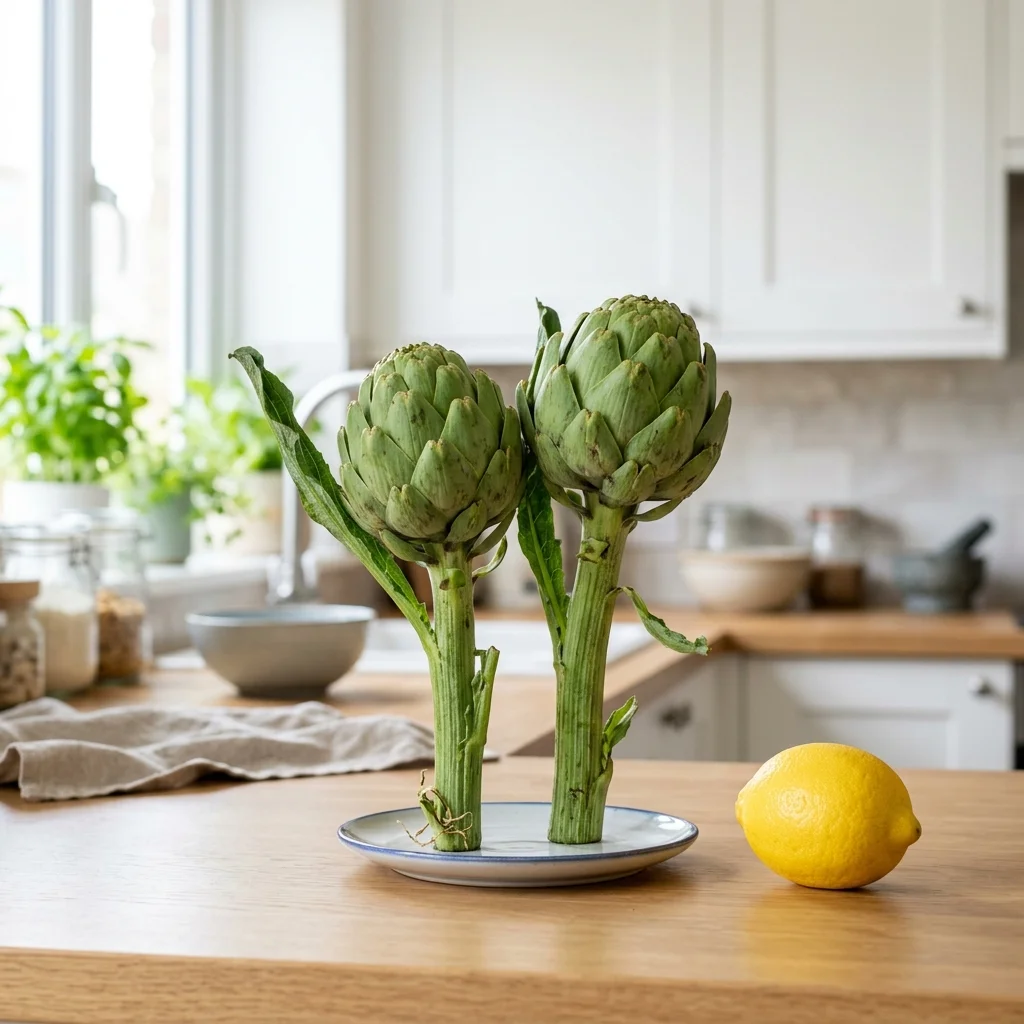
Submerge stem ends in water for short-term vase storage — Hydroponic Room Temp (1–2 Days) 💐
For short-term keeping, trim the bottom of the stem and stand the artichoke upright in a cup or jar of cold water. 💡 Storage Tip: Treating artichokes like cut flowers replenishes water lost through rapid transpiration, keeping buds plump for 1 to 2 days.
Wrap in perforated plastic and store ultra-cold (0–2°C) — Cold Refrigerated Storage (7–14 Days) ❄️
To preserve artichokes for 1 to 2 weeks, ultra-cold sealed storage is required to prevent moisture evaporation. 💡 Storage Tip: Lightly mist artichokes with water, wrap in damp paper towels, and place in a perforated plastic bag in the coldest crisper drawer (0–2°C / 32–35°F, 95% RH) to protect cynarin from oxidation.
Trim, blanch in lemon water, and flash freeze — Frozen Storage (180 Days) 🧊
For long-term storage, blanching trimmed artichoke hearts stops enzymatic activity before freezing. 💡 Storage Tip: Trim outer bracts, blanch hearts in boiling lemon water for 3 to 5 minutes, pat completely dry, and freeze in airtight containers or freezer bags below -18°C (0°F) for up to 6 months.
2. Essential Storage Rules and Cautions
Transpiration occurs rapidly in artichoke flower buds. Water loss causes the key active antioxidant, cynarin, to oxidize while bracts become woody and hard. Never leave artichokes exposed in dry ambient conditions.
Cutting artichoke stems or hearts exposes Polyphenol Oxidase (PPO) to atmospheric oxygen, causing rapid black browning. Immediately rub cuts with lemon juice or submerge trimmed hearts in lemon water to suppress enzyme activity.
📌 Frequently Asked Questions (FAQ)
Why did my artichoke petals dry out and become tough? ▼
This is due to high post-harvest transpiration! Artichoke flower buds lose water rapidly through respiration and evaporation. Moisture loss oxidizes cynarin antioxidants and causes bracts to harden. Storing them in perforated plastic bags at 95% relative humidity or standing stems in water prevents this drying out.
What is the scientific purpose of using lemon juice or lemon water when trimming artichokes? ▼
Exposing cut artichoke tissues activates Polyphenol Oxidase (PPO), causing black browning upon contact with oxygen. The citric acid in lemon juice lowers pH, creating an acidic environment that strongly inhibits PPO enzymes and protects the natural light color and nutrients.