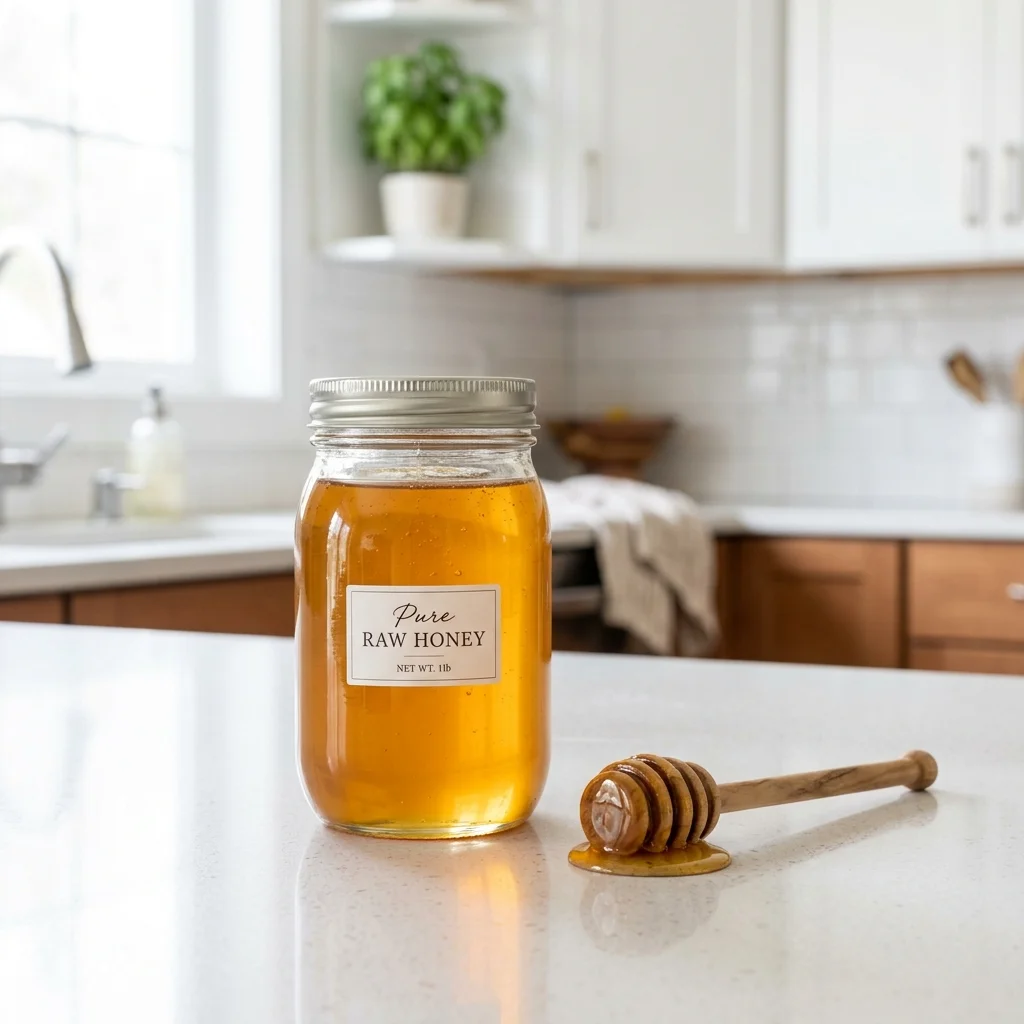
Have you ever stored leftover honey in the refrigerator, only to find it hardened into a solid, white crystalline block that couldn’t be scooped? 🍯
With a moisture content under 18% and high natural sugar concentration, pure honey is a unique antimicrobial food that virtually never spoils when stored correctly. However, storing honey in cold environments (10–15°C / 50–59°F) or inside a refrigerator accelerates crystallization, turning it grainy and hard. Furthermore, unsealed honey readily absorbs atmospheric moisture, leading to fermentation.
In this guide, introduces a scientifically proven 3-step honey storage guide recommended by USDA and food safety experts to preserve its nutritional value and rich sweetness indefinitely. 🛡️
Food Safety & Scientific Evidence
This content is based on USDA & MFDS.
 FreshSelf
Zero waste! Your smart storage assistant
FreshSelf
Zero waste! Your smart storage assistant


1. Scientifically Proven Storage Guide
Store in an airtight glass or food-grade container — Block Moisture & Odors 📦
The key to preserving honey is blocking atmospheric moisture and oxygen. 💡 Storage Tip: Keep honey sealed in glass jars or food-safe BPA-free plastic containers. Glass is preferred as it is completely non-reactive.
Keep in a cool, dark pantry at 18–24°C — Block Direct Sunlight & Heat ☀️
Direct sunlight and heat above 45°C (113°F) destroy delicate enzymes, antioxidants, and vitamins in honey. 💡 Storage Tip: Store honey in a dark, cool cupboard or pantry away from stovetops and sunny windowsills.
Reliquefy crystallized honey in a warm water bath — Restore Smooth Texture ♨️
Crystallized white honey is not spoiled; it is a natural physical process of glucose precipitation. 💡 Storage Tip: Place the sealed honey jar in a warm water bath (40–45°C / 104–113°F) and stir gently until it turns clear and liquid again without damaging nutrients.
2. Essential Storage Rules and Cautions
Honey crystallizes fastest at temperatures between 10–15°C (50–59°F). Refrigeration speeds up sugar crystallization, causing the honey to become hard, coarse, and grainy. Always store honey at room temperature.
Honey is highly hygroscopic (moisture-attracting). Dipping wet or saliva-contaminated spoons into honey increases its water content, allowing yeast and microbes to multiply, which triggers fermentation and souring.
📌 Frequently Asked Questions (FAQ)
What is the actual shelf life of pure honey? ▼
When stored in an airtight container free from water contamination, pure honey has an indefinite shelf life and never truly spoils. For optimal flavor and aroma, consuming it within 2–3 years is generally recommended.
Is it safe to give honey to infants under 1 year old? ▼
No, never give honey to infants under 12 months old. Honey can naturally contain trace spores of Clostridium botulinum, which can cause infant botulism—a serious foodborne illness—due to their underdeveloped digestive and immune systems.