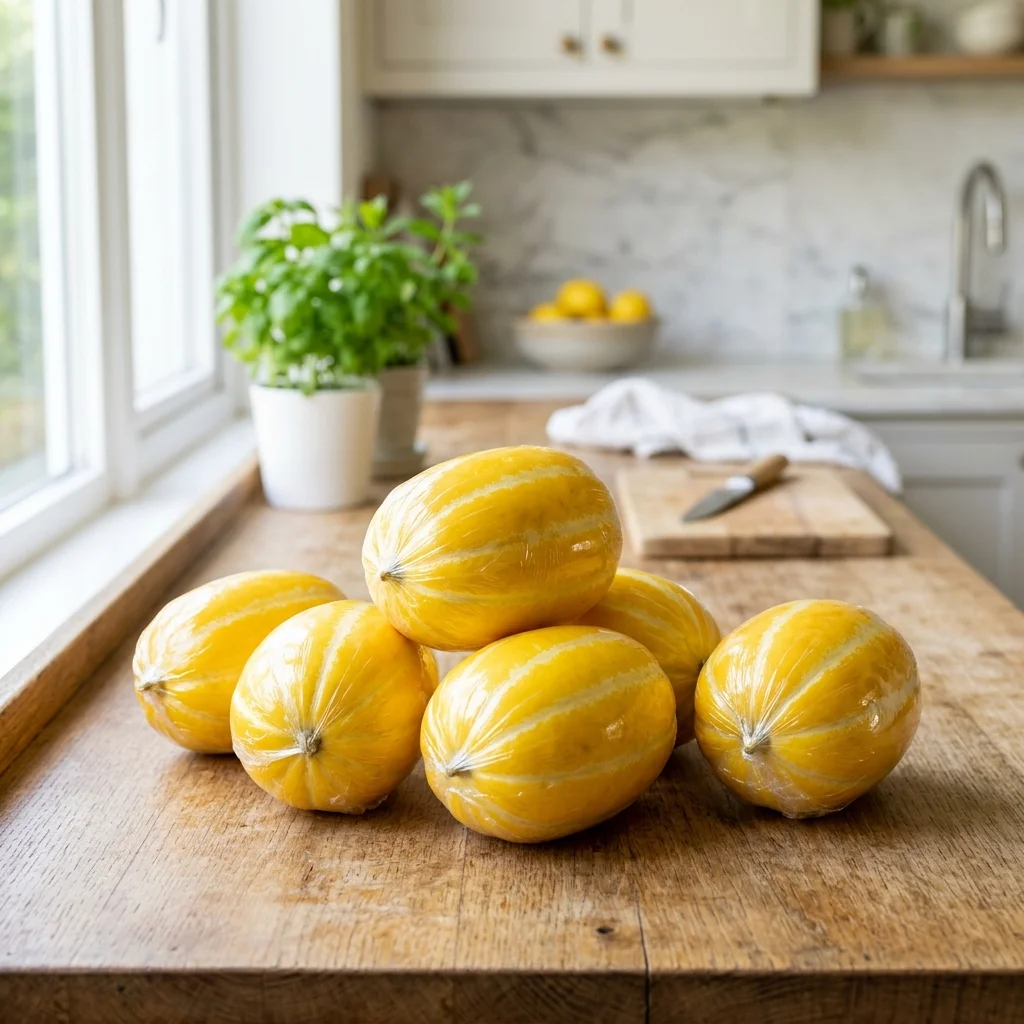
Oriental melons (Korean melons) are a beloved summer fruit with vibrant yellow skin, crisp white flesh, and a sweet seed center (placenta)! 💛
Have you ever bought a box of Korean melons, left them out or in the fridge, only to find their skins wrinkled and the inner seed cavity fermented with a sour smell?
Oriental melons have over 90% water content and high sugar levels. The inner seed cavity (‘placenta’) is particularly concentrated with moisture and sugar, making it the most vulnerable area where spoilage bacteria and yeasts proliferate first. Furthermore, exposing them directly to ambient air causes continuous moisture loss through the rind, ruining their signature crunch. In this guide, introduces a scientifically proven 3-step storage guide based on expert standards to protect the seed core and preserve sweetness and crispness for over 2 weeks (14 to 20 days). 🛡️
Food Safety & Scientific Evidence
This content is based on RDA & USDA & MFDS.
 FreshSelf
Zero waste! Your smart storage assistant
FreshSelf
Zero waste! Your smart storage assistant


1. Scientifically Proven Storage Guide
Wrap unwashed melons individually with food-grade plastic wrap — Moisture Barrier 📦
The key secret to maintaining signature crispness. 💡 Storage Tip: Keep dry, unwashed melons and wrap each one tightly with food-grade plastic wrap without leaving gaps. The wrap blocks moisture evaporation through the skin, preventing wrinkling or mealy texture.
Place in airtight Ziploc bags and refrigerate at 0–5°C — Cold Storage (14–20 Days) ❄️
The cold sealing step to prevent seed cavity decay and fermentation. 💡 Storage Tip: Place plastic-wrapped melons in airtight Ziploc bags for double sealing and store in the refrigerator crisper drawer (0–5°C / 32–41°F). Slows down placenta fermentation, keeping them farm-fresh and crisp for over 2 weeks.
Chill thoroughly at 2–5°C for 2–3 hours before serving — Maximize Sweetness 🧊
Fructose in fruit tastes noticeably sweeter at cold temperatures. 💡 Storage Tip: Chill stored melons thoroughly in the fridge (2–5°C) for 2 to 3 hours before eating. The structural property of fructose enhances the perception of sweetness when cold.
2. Essential Storage Rules and Cautions
Trapping moisture in the white grooves and stem end of the melon creates an ideal breeding ground for mold and bacteria. Wipe off surface dust with a dry cloth before storing, and wash right before eating.
At room temperature (above 20°C / 68°F), the inner seed cavity undergoes rapid self-fermentation, developing an alcoholic odor and mushy flesh. Cold refrigeration is mandatory to keep the flesh firm and crisp.
📌 Frequently Asked Questions (FAQ)
When I cut an oriental melon, the seed cavity is watery, translucent, or smells sour. Is it safe to eat? ▼
If the inner seed cavity is translucent, filled with water, or smells sour/alcoholic, it has undergone internal fermentation ('fermented melon'). Microbes have likely invaded the inner flesh, so it is safer to discard the entire melon rather than just cutting away the seeds.
How should leftover cut oriental melon be stored? ▼
Sliced oriental melon exposes high moisture to air, triggering rapid bacterial growth. Scoop out the seeds and soft placenta completely with a spoon, cube the firm white flesh, store in an airtight container in the fridge, and consume within 2 to 3 days.