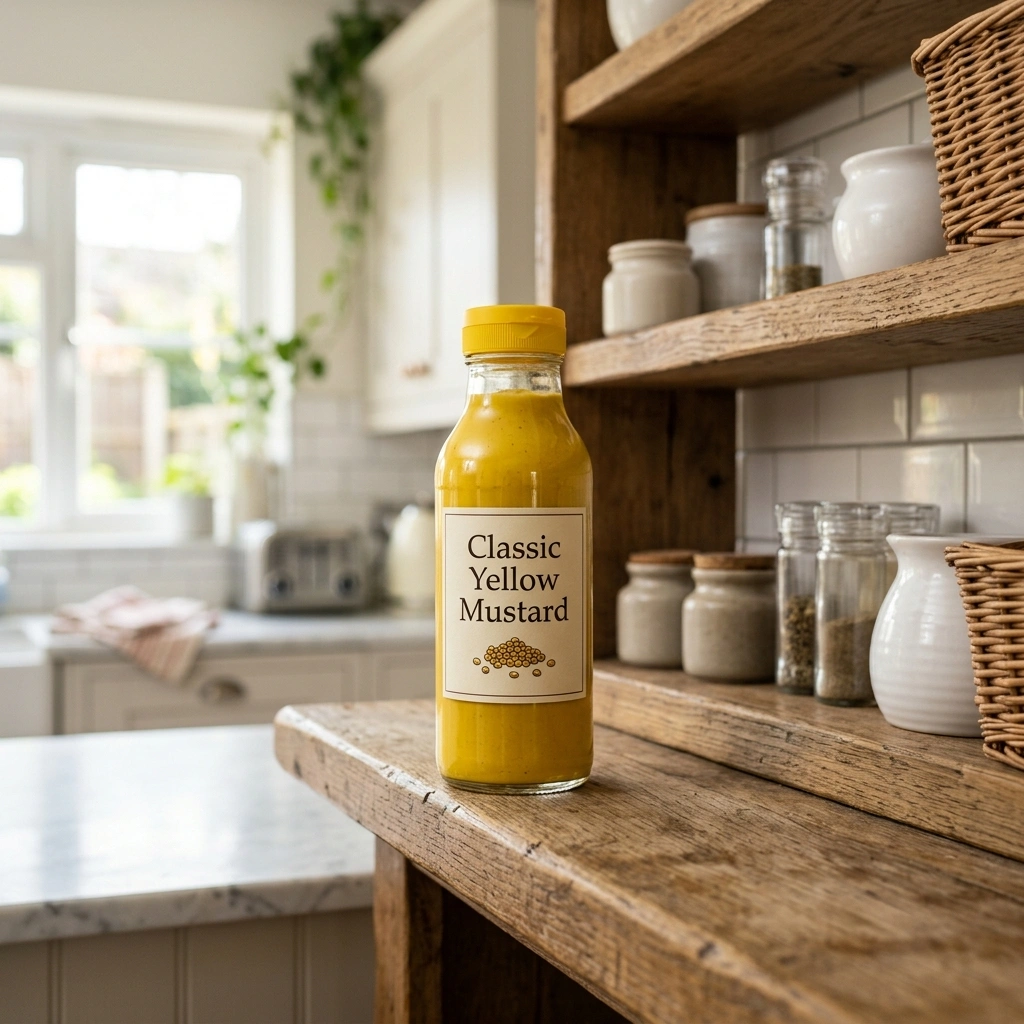
Have you ever kept a bottle of yellow, Dijon, or whole-grain mustard sitting out on your dining table or in a pantry cabinet long after opening it? 🌭
Thanks to its high acid content from vinegar and salt, mustard is a naturally self-preserving condiment with high resistance to microbial growth. However, once opened, exposure to oxygen rapidly dissipates its signature pungent flavor compounds (allyl isothiocyanate), causing the mustard to darken, lose its sharp kick, and separate into liquid and solids.
In this guide, introduces a scientifically proven 3-step mustard storage guide based on safety guidelines from food safety authorities to help preserve its sharp kick and vibrant color. 🛡️
Food Safety & Scientific Evidence
This content is based on FDA & MFDS & USDA.
 FreshSelf
Zero waste! Your smart storage assistant
FreshSelf
Zero waste! Your smart storage assistant








1. Scientifically Proven Storage Guide
Store unopened bottles in a cool pantry away from heat — Pantry Storage (15–25°C) 📦
Unopened mustard maintains stability at room temperature thanks to natural preservatives like vinegar and salt. 💡 Storage Tip: Keep unopened bottles in a dark, cool cabinet away from direct sunlight.
Wipe the nozzle and seal the cap tightly — Preserve Pungency & Flavor 🧴
Minimizing oxygen exposure stops the volatile sharp kick from evaporating and prevents liquid separation. 💡 Storage Tip: Wipe off excess sauce around the squeeze tip before snapping the lid shut.
Refrigerate at 0–4°C after opening — Cold Storage (1–2 Years After Opening) ❄️
Refrigeration drastically slows down chemical oxidation and flavor loss. 💡 Storage Tip: Store opened mustard in the refrigerator door or shelf (0–4°C). Classic yellow mustard lasts 1–1.5 years in the fridge, while Dijon or whole-grain mustard maintains peak quality for up to 1 year.
2. Essential Storage Rules and Cautions
While unopened mustard is shelf-stable, leaving opened mustard at room temperature accelerates the evaporation of volatile spicy compounds, resulting in a dull flavor and dark brown discoloration.
Mustard residue left around the squeeze cap or rim dries into hard crusts when exposed to air, creating potential pathways for mold or bacterial contamination. Always wipe the spout clean after use.
📌 Frequently Asked Questions (FAQ)
Watery liquid came out first when squeezing the mustard bottle. Has it gone bad? ▼
No! This is a natural physical process called syneresis (liquid separation), where vinegar and water separate from the solid mustard solids over time. Simply shake the bottle thoroughly or knead squeeze pouches before use to restore consistency.
Can you freeze mustard? ▼
Freezing mustard is not recommended. Freezing breaks the emulsion structure, causing extreme separation of oil, vinegar, and water upon thawing, leaving behind a lumpy, watery texture that cannot be re-emulsified easily.