Barley is one of the world’s top four cereal crops alongside wheat, rice, and corn, widely used in everything from hearty grains and bread to healthy beverages and teas! However, have you ever stored barley in bulk only to find it absorbing moisture, becoming stale, or developing grain pests? 🌾
Barley is rich in beta-glucan, a key soluble dietary fiber, alongside a dense starch structure. When exposed to high humidity, barley’s intrinsic alpha- and beta-amylase enzymes become rapidly activated. This triggers auto-hydrolysis of starches, resulting in nutrient loss, elevated water activity, mycotoxin risk, and pest proliferation.
In this guide, we introduce a scientifically proven 3-step barley storage guide based on guidelines from agricultural and food safety authorities to strictly control moisture content and water activity to preserve flavor and nutrition. 🛡️
Food Safety & Scientific Evidence
This content is based on RDA & USDA & MFDS.
 FreshSelf
Zero waste! Your smart storage assistant
FreshSelf
Zero waste! Your smart storage assistant








1. Scientifically Proven Storage Guide
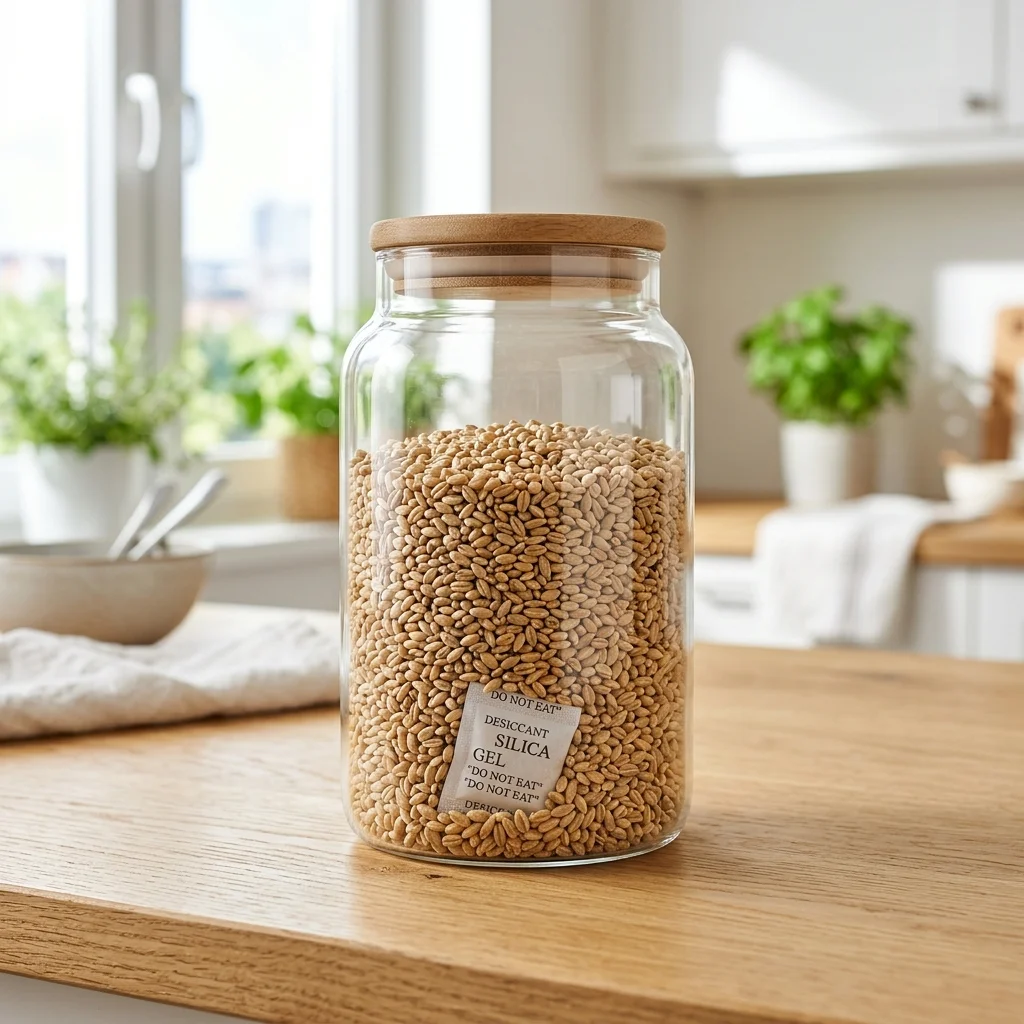
Add silica gel and store in airtight containers — Water Activity Control (water activity (Aw) < 0.60) 📦
For dried barley grain, blocking air and moisture ingress is essential. 💡 Storage Tip: Place barley in high-barrier airtight containers or PET bottles along with food-grade desiccant packets (silica gel). Controlling water activity (Aw) below 0.60 suppresses amylase enzyme activity and blocks microbial growth.
Store in a cool, dark pantry below 10–15°C — Cool Pantry Storage (1–2 Years) 🧺
Keep barley away from direct sunlight and warmth to slow enzymatic reactions and starch staling. 💡 Storage Tip: Store containers in a well-ventilated, dark cabinet away from stove heat (below 10–15°C / 50–59°F). This preserves beta-glucan and flavor for 1 to 2 years.
Refrigerate during humid seasons or long-term bulk storage — Cold Storage (2+ Years) ❄️
During humid summers or when storing large quantities long-term, refrigeration is the most reliable method. 💡 Storage Tip: Store airtight containers in the refrigerator (0–5°C / 32–41°F). Low temperatures completely halt enzyme activity and pest development, keeping barley fresh for over 2 years.
2. Essential Storage Rules and Cautions
Washing raw barley grain before storage elevates internal moisture content and water activity, triggering amylase enzyme activity and creating an ideal environment for mold and grain weevils. Wash only right before cooking.
High relative humidity and warm temperatures accelerate starch breakdown in barley and increase the risk of mycotoxin production. Maintain moisture content below 12% and water activity (Aw< 0.60) in a dry, cool environment.
📌 Frequently Asked Questions (FAQ)
What should I do if grain pests (weevils) appear in my barley? ▼
Pests indicate elevated moisture levels. If infestation is minor, spread barley on a sheet in a shaded, ventilated area to let pests crawl out, then place barley in an airtight container in the freezer (-18°C / 0°F) for 48 hours to destroy remaining insects and eggs. Discard if severe or moldy.
Is roasted barley for tea stored differently than raw barley? ▼
Yes. Roasted barley has undergone heat treatment which inactivates amylase enzymes and microbes, but it is far more hygroscopic (moisture-absorbent) than raw barley. It absorbs ambient humidity quickly, becoming stale and rancid. Always seal tightly with silica gel in a cool place.